
Deputy Minister Bui Hoang Phuong: Digital product passport is not the burden for businesses
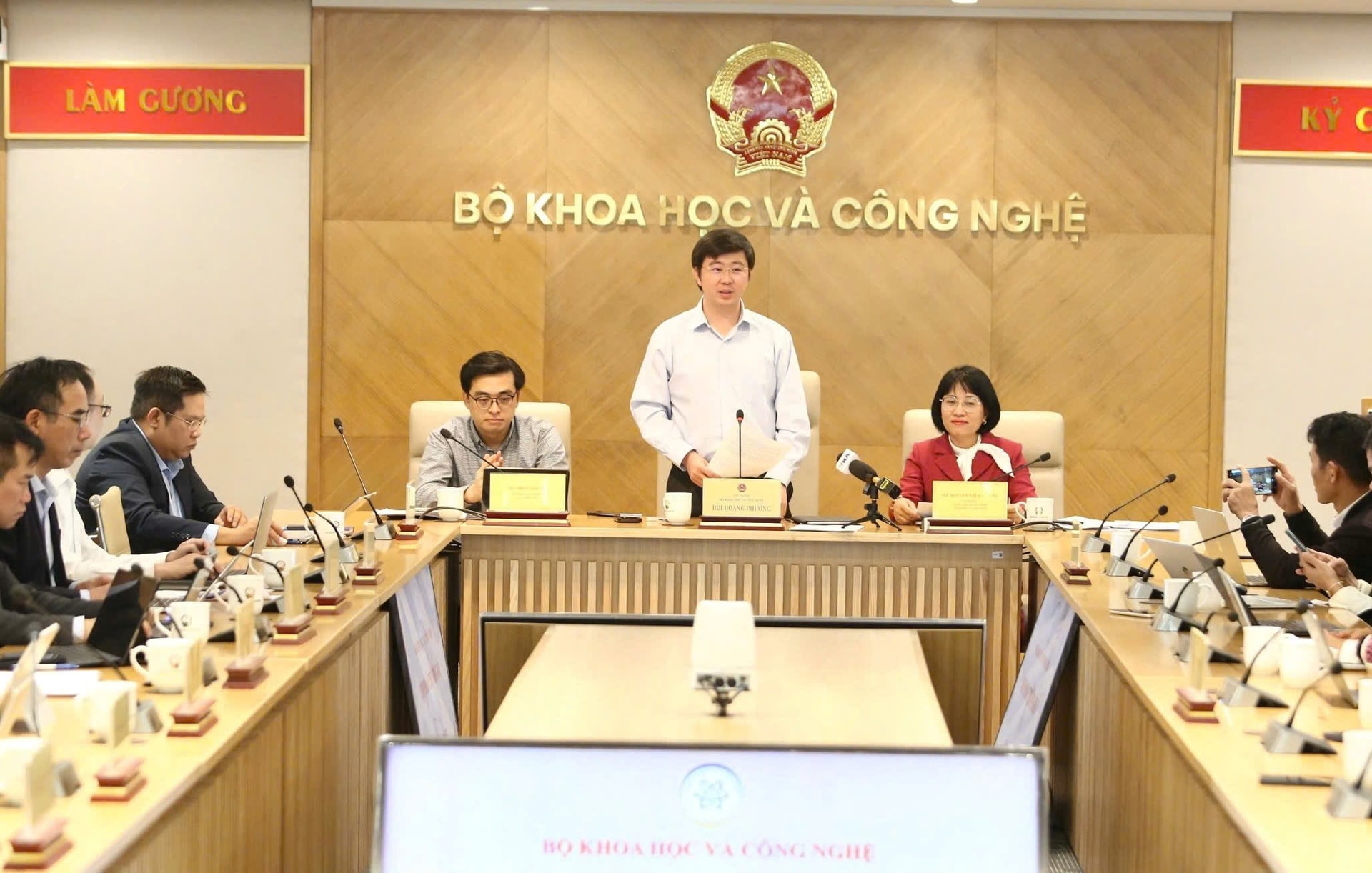
Speaking with the press on 31 December, Deputy Minister of Science and Technology Bui Hoang Phuong affirmed that the consistent orientation of the Ministry of Science and Technology (MST) is to avoid creating additional barriers to production and business activities. “The digital product passport is not intended to make it difficult for businesses, but to transparentize information...".
On the afternoon of 31 December, a press conference was held at the headquarters of the Ministry of Science and Technology to provide information on the activities of the Science and Technology (S&T) sector in December 2025 and the implementation plan for the Ministry's key tasks in the coming period. It also served as a platform to discuss issues related to the Ministry's activities of interest to the press and public.
Beyond being an occasion to review a year of work, the event clearly demonstrated how the Ministry of Science and Technology is repositioning the role of science and technology in state management and market development for the future.
From administrative management to governance through science and technology
According to the Ministry of Science and Technology, 2026 is identified as the year for the synchronized implementation of key tasks across all areas of state management, with a consistent requirement to improve governance effectiveness and place science, technology, and innovation at the heart of developmental governance.
In the field of S&T, the Ministry will focus on promoting comprehensive digital transformation in technology assessment, appraisal, and inspection activities, considering this a key step to shorten processing times, increase transparency, and enhance management quality.
On this basis, the number of dossiers for investment project appraisal and technology transfer registration is expected to increase significantly compared to 2025.
Alongside innovating management methods, the Ministry will synchronously implement approved S&T laws and programs, promoting the development of strategic technology and industry while linking research with the practical needs of the economy.
Cooperation activities, investment attraction, and technology transfer from major technology corporations continue to be promoted to serve green and digital transformation goals.
Regarding the innovation pillar, the Ministry of Science and Technology aims to maintain Vietnam's position in the group of the top four ASEAN countries in the Global Innovation Index, while developing a network of innovation centers with a business-centric approach.
In parallel, the perfection of digital infrastructure, standards, measurement, quality, and intellectual property is identified as the foundation for forming market operating standards and improving the competitiveness of the economy.
New standards formed from policy dialogue
The discussion with the press at the conference took place in a frank atmosphere, focusing on content of particular interest to the business community, research circles, and the public.
Many questions revolved around the implementation of new management tools, especially the digital product passport, in the context of increasing technical standards and market requirements.
Some opinions expressed concern that applying digital passports could lead to compliance costs, especially for small and medium-sized enterprises.
Addressing this issue, Deputy Minister of Science and Technology Bui Hoang Phuong affirmed that the Ministry's consistent orientation is not to create more barriers for production and business activities. “The digital product passport is not intended to make it difficult for businesses, but to transparentize information, improve quality management capacity, and help businesses better meet domestic and international market standards”, the Deputy Minister emphasized.

According to Deputy Minister Bui Hoang Phuong, the implementation of digital passports will follow an appropriate roadmap, taking into account the actual capacity of each group of enterprises and the characteristics of each product category.
The Ministry will coordinate closely with relevant ministries and sectors to ensure consistency in application, while minimizing potential negative impacts during the initial implementation phase.
Regarding the national standards system, particularly standards for electric vehicle (EV) charging stations and pillars, many reporters raised questions about the synchronization between technical standards and actual investment in localities. Responding to this, the Deputy Minister stated that standards must be one step ahead to ensure the market develops in an orderly manner, avoiding a fragmented "everyone for themselves" situation.
“Without unified standards, the risks regarding safety, quality, and social costs will be very high. Standards are not meant to tighten control, but to pave the way for investment and sustainable development”, Deputy Minister Bui Hoang Phuong clearly stated.
Following this orientation, the Ministry of Science and Technology will continue to perfect institutions, develop national quality infrastructure, and synchronously implement issued policies. Science and technology are expected not only to keep up with development requirements but also to play a leading role, creating a foundation for innovating the growth model and enhancing the economy's competitiveness in the new phase.
Concluding message, taking practical efficiency as the consistent measure
Concluding the press conference, Deputy Minister Bui Hoang Phuong emphasized that science and technology in the coming period must be placed in a direct relationship with socio-economic development goals, rather than existing only as a specialized management field.
According to the Deputy Minister, in the context of limited investment resources for S&T, the requirement is to use every cent of the budget and every research task effectively.
“We cannot spread resources nor chase after the quantity of research topics. The quality and impact of research results must be the most important measure”, the Deputy Minister affirmed.
Deputy Minister Bui Hoang Phuong believes that science and technology only truly fulfill their role when they solve specific practical problems, from improving business competitiveness and promoting digital and green transformation to enhancing the quality of state management. Preferential policies and support mechanisms for scientists must therefore be closely linked to output requirements and social efficiency, avoiding formality or following trends.
The Deputy Minister also emphasized the direction of strongly shifting state management of science and technology from a management mindset to an enabling and accompanying mindset.
In this regard, the State plays the role of establishing the rules of the game, setting standards, and creating a favorable environment for science, technology, and innovation to flourish, while enterprises and the market remain at the center of the application process./.
Copyright belongs to the Vietnam Journal of Science and Technology (VJST-MOST).