The Vietnam Journal of Science and Technology Party cell holds thematic meeting on digital transformation and AI applications in professional duties
On February 27, 2026, the Party cell of the Vietnam Journal of Science and Technology (VJST-MOST), under the Vietnam Institute of Science, Technology Strategy of the Ministry of Science and Technology, organized its first quarter thematic meeting of 2026. The session focused on the theme: “Applying digital transformation and artificial intelligence (AI) to enhance the quality of professional duties of Party members, officials, and employees of VJST-MOST”.
The meeting was held against the backdrop of rapid digital transformation across all socio-economic sectors, particularly in science, technology, and scientific communication activities.
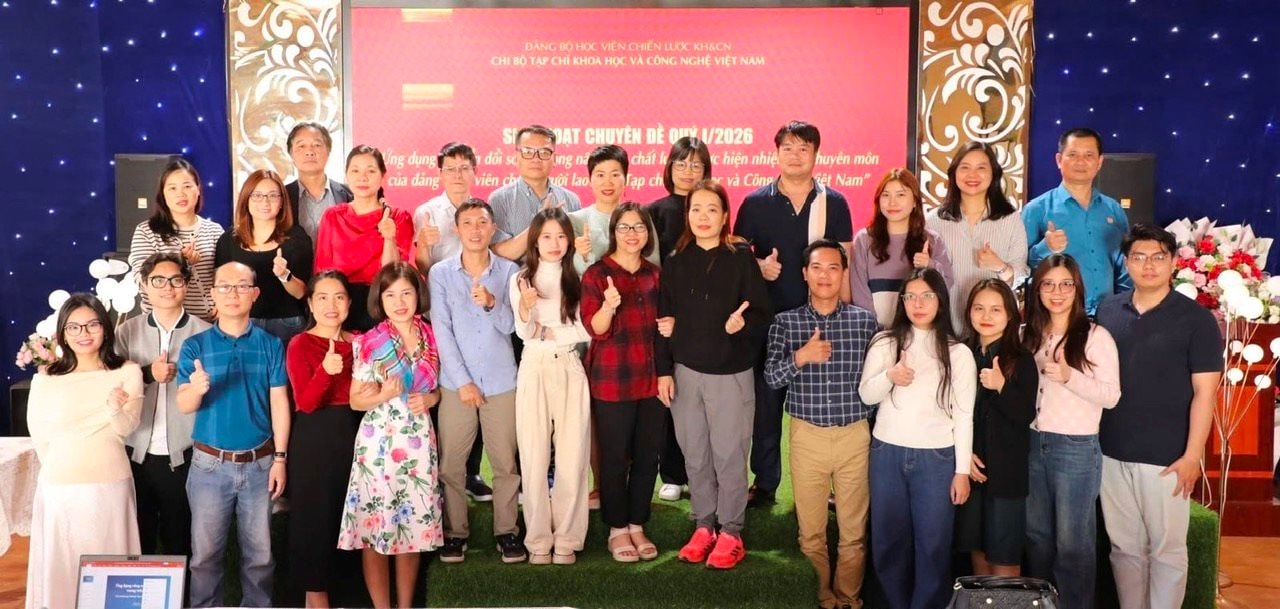
This event served as a significant political and professional activity aimed at raising awareness, responsibility, and the digital application capacity of officials and Party members in fulfilling their assigned tasks. Attendees included all Party members of the cell along with VJST-MOST officials and employees. The session took place in a serious and democratic atmosphere, promoting a sense of responsibility and collective intelligence.
Applying digital transformation and AI to enhance professional performance
During the session, delegates heard thematic presentations from VJST-MOST departments, which clarified various aspects ranging from awareness and practical implementation to specific proposed solutions.
The presentation titled “AI in the modern newsroom” provided a comprehensive overview of AI application trends in journalism. It emphasized that AI does not replace journalists but acts as a “super assistant” throughout the news production process. From developing topics through data analysis and suggesting new trends to supporting drafting, spell-checking, SEO optimization, and recommending suitable headlines and sections, AI significantly reduces processing time and alleviates repetitive workloads.
Furthermore, AI assists in monitoring reader behavior 24/7, personalizing content, and supporting pre-censorship before manual approval by editors. Practical evidence from major press agencies such as Tuoi Tre, VnExpress, VietnamPlus, and VTC News indicates that integrating AI into content management systems can increase productivity by 50 to 150 percent and enhance interaction efficiency.
The presentation also touched upon future trends such as agentic AI, multimodal AI, and smart newsroom models, while proposing a roadmap for AI application tailored to the unit's practical conditions.
Following this, Mr. Luong Ngoc Quang Hung, Head of the General Administration Department, presented on applying digital transformation and AI to improve the quality of administrative duties.
Given the increasing workload demands, digitizing processes, utilizing document management software, implementing electronic storage, and providing data-driven consultations are seen as essential solutions to enhance accuracy, timeliness, and governance efficiency.
Representing the Electronic Magazine Department, journalist Le Thi Tuyet Hanh analyzed the current status and orientation of AI applications at vjst.vn. Amidst powerful digital transformation, the electronic magazine must not only improve in-depth content quality but also accelerate publication speed, expand coverage, and optimize internal management.
Recently, the department has upgraded its CMS system, optimized mobile interfaces, and applied AI for spell-checking, headline suggestions, content summarization, illustration generation, and SEO optimization. Based on these results, the department proposed deeper AI integration into research processes, terminology standardization, and automated generation of summaries and keywords, alongside intensified digital skills training for reporters and editors.
The presentation by the Science Magazine Department regarding the application of the ScholarOne Manuscripts (SM) system highlighted the role of professional manuscript management platforms in enhancing prestige and international integration.
The implementation of SM helps standardize the processes of submission, double-blind peer review, progress tracking, and transparent data statistics. Consequently, Editions C and D have attracted submissions from numerous countries, consolidating their position in international databases and improving publication governance quality according to international standards.
Representatives from the Communication Support Department clarified the role of communication in the comprehensive digital transformation process. AI is currently applied in editing, summarizing, standardizing writing styles, analyzing access data, producing multi-platform content, and supporting the drafting of reports and Party activity documents.
The application of technology can help shorten the processing time for primary content by 30 to 50 percent and enhance communication efficiency while imposing strict requirements on information security and responsible AI use.
Closing the series of presentations, Mr. Vu Van Hung, Head of the Technology, Policy, and Management Department, presented technical standards for editing Edition A.
The report detailed requirements for headlines, leads, subheadings, content presentation, images, tables, and references to ensure consistency and professionalism. He also proposed “training” AI according to Edition A's specific criteria to assist in spell-checking, format verification, and reference reviews to minimize technical errors, contributing to improved editorial quality and synchronization across the entire Journal.
Utilizing digital technology and virtual assistants to optimize work

Representing the Vietnam Journal of Science and Technology’s leaders, Deputy Editor-in-Chief Tran Anh Tu presented specific solutions to synchronize workflows.
Currently, the editorial processes between different publications lack consistency, particularly with the monthly journal still maintaining manual manuscript processing, paper printing, direct editing, and physical signing, which is time-consuming and causes delays when leaders are on business trips.
Consequently, Deputy Editor-in-Chief Tran Anh Tu proposed moving the monthly journal to the same Content Management System (CMS) as the electronic magazine, creating a “common floor” for reporters, editors, and leaders to process articles in a digital environment.
Approval will be conducted through internal account authentication and electronic tracing mechanisms, gradually replacing traditional handwritten signatures to ensure transparency, convenience, and the ability to process work anytime and anywhere.
Besides procedural solutions, AI can also be used as a “diligent assistant” to support spell-checking, content summarization, headline suggestions, and reference translation, helping to reduce technical workloads and enhance editorial efficiency.
Digital transformation and AI application as core development tasks
Following the presentations, the meeting dedicated time for discussion. Many participants expressed high consensus with the thematic topic while sharing practical experiences in applying digital technology and AI in daily work.
Opinions also suggested the early formulation of specific regulations and guidelines on AI usage, increased investment in technical infrastructure, and guaranteed information security.
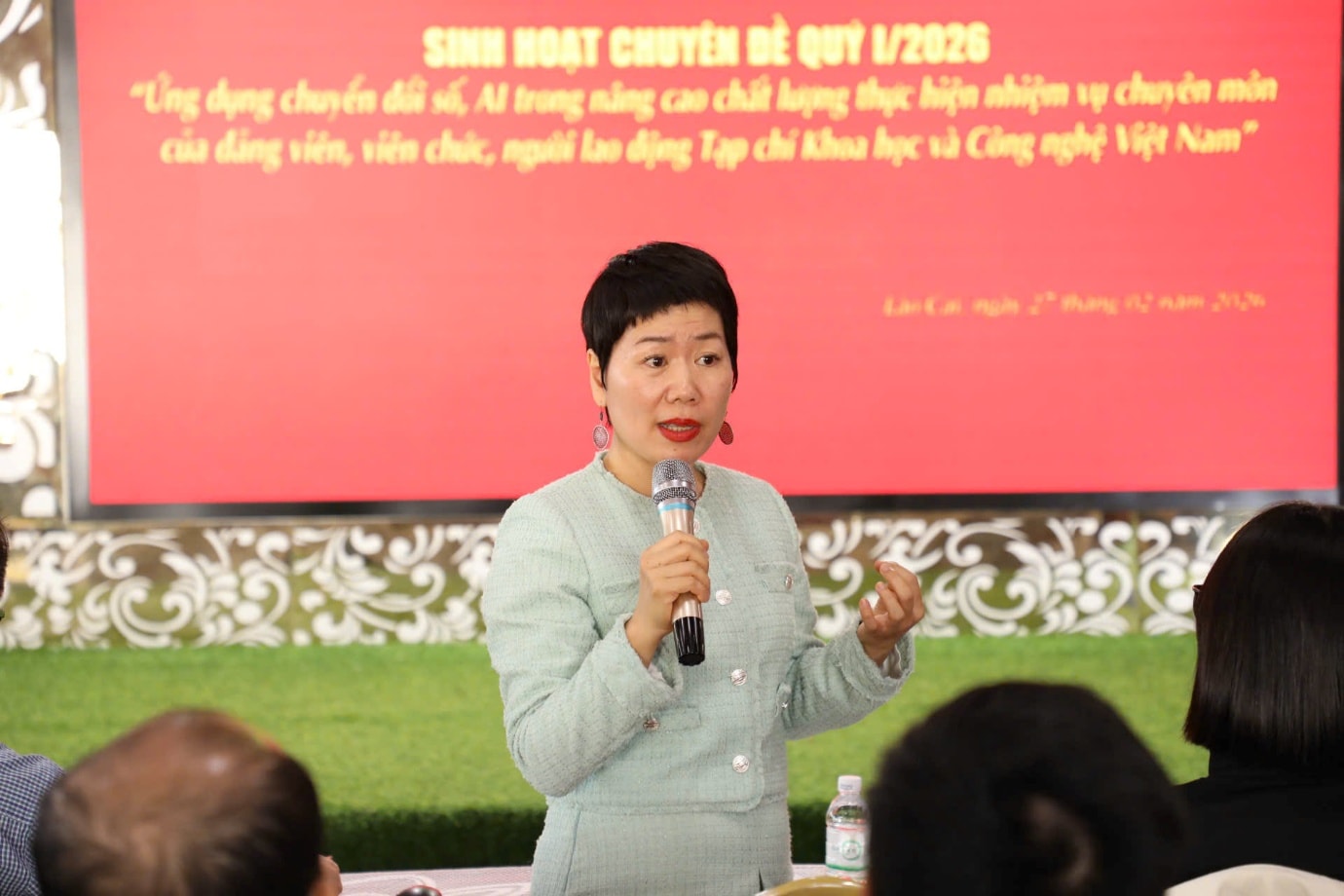
Concluding the meeting, Dr. Nguyen Thi Huong Giang, Vice President of the Vietnam Institute of Science, Technology Strategy, Editor-in-Chief and Secretary of the Journal’s Party Cell, acknowledged and highly appreciated the serious preparation of the presentations as well as the responsible and enthusiastic discussions from Party members and officials.
Dr. Nguyen Thi Huong Giang emphasized that digital transformation and AI application must be defined as a central and regular task inseparable from the political duties of the unit. Each Party member must uphold a pioneering and exemplary role in learning, researching, and applying new technologies while maintaining principles, discipline, and ensuring the quality, accuracy, and ideological orientation of scientific products.
The first quarter thematic meeting of 2026 has contributed to raising awareness and creating unity within the Party cell of the Vietnam Journal of Science and Technology regarding the role and significance of digital transformation and AI in the current period. The results of the meeting serve as an important foundation for the Party cell to continue leading and directing the implementation of specific solutions, gradually modernizing the magazine's operations to meet development requirements in the new situation./.
Copyright belongs to the Vietnam Journal of Science and Technology (VJST-MOST)