
Techfest Haiphong 2026: Realizing the goal of becoming a global innovation hub
Not lacking innovative ideas or valuable research findings, what Vietnam still lacks is an effective pathway to take technology from the laboratory to the market. That was also the central theme of the International Innovation Forum titled "From Idea to Market", held as part of Techfest Haiphong 2026.
At the event, domestic and international experts shared various successful models for developing innovation ecosystems, incubating tech enterprises, and commercializing research results, offering numerous suggestions for Hai Phong City to realize its goal of becoming a regional innovation hub.
The journey of turning ideas into valuable products
On the morning of August 4, at Vietnam Maritime University, the International Innovation Forum themed "From Idea to Market" took place within the framework of Techfest Haiphong 2026, drawing broad participation from scientists, experts, investors, businesses, universities, and domestic as well as international startup support organizations.
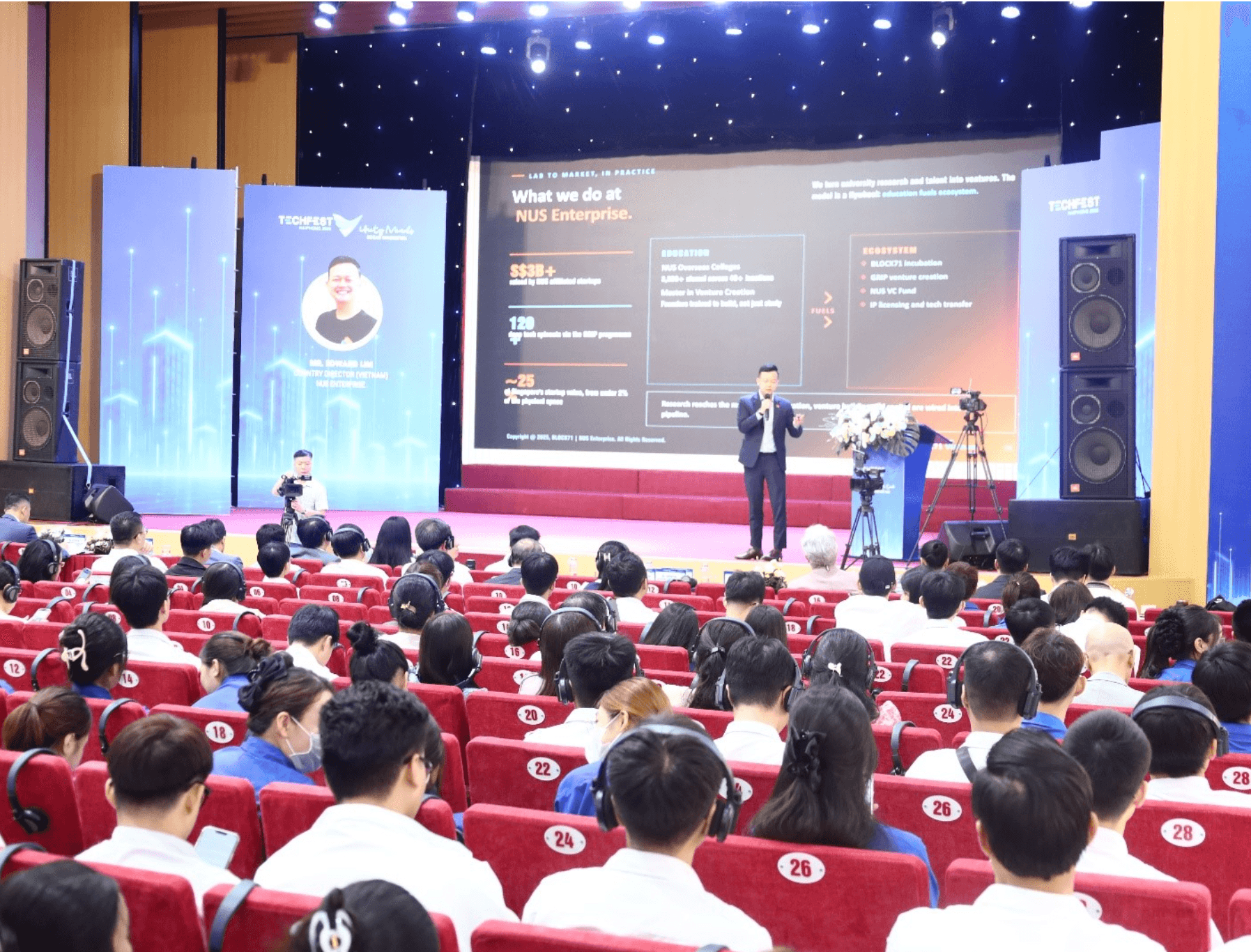
Unlike many forums that focus solely on introducing new technologies, this year's program placed its core focus on a problem considered a "bottleneck" in the innovation ecosystem: how to ensure that research ideas, inventions, and technologies do not remain trapped in laboratories, but instead become products and services capable of generating economic value and conquering the market.
The presentations at the forum offered a comprehensive picture of the process of forming a technology enterprise, from identifying market demand, developing solutions, incubating startups, and mobilizing investment resources, to commercialization and international market expansion.
According to experts, amid fierce global competition in science, technology, and innovation, the advantage no longer lies merely in possessing numerous inventions, but in the capability to turn those inventions into products that serve practical life.
A synchronized ecosystem is a prerequisite
One of the topics receiving significant attention was a presentation on Singapore's experience in building an innovation ecosystem.
According to experts, Singapore's success does not stem solely from large investment capital, but primarily from its ability to effectively connect the government, universities, research institutes, businesses, and investment funds.
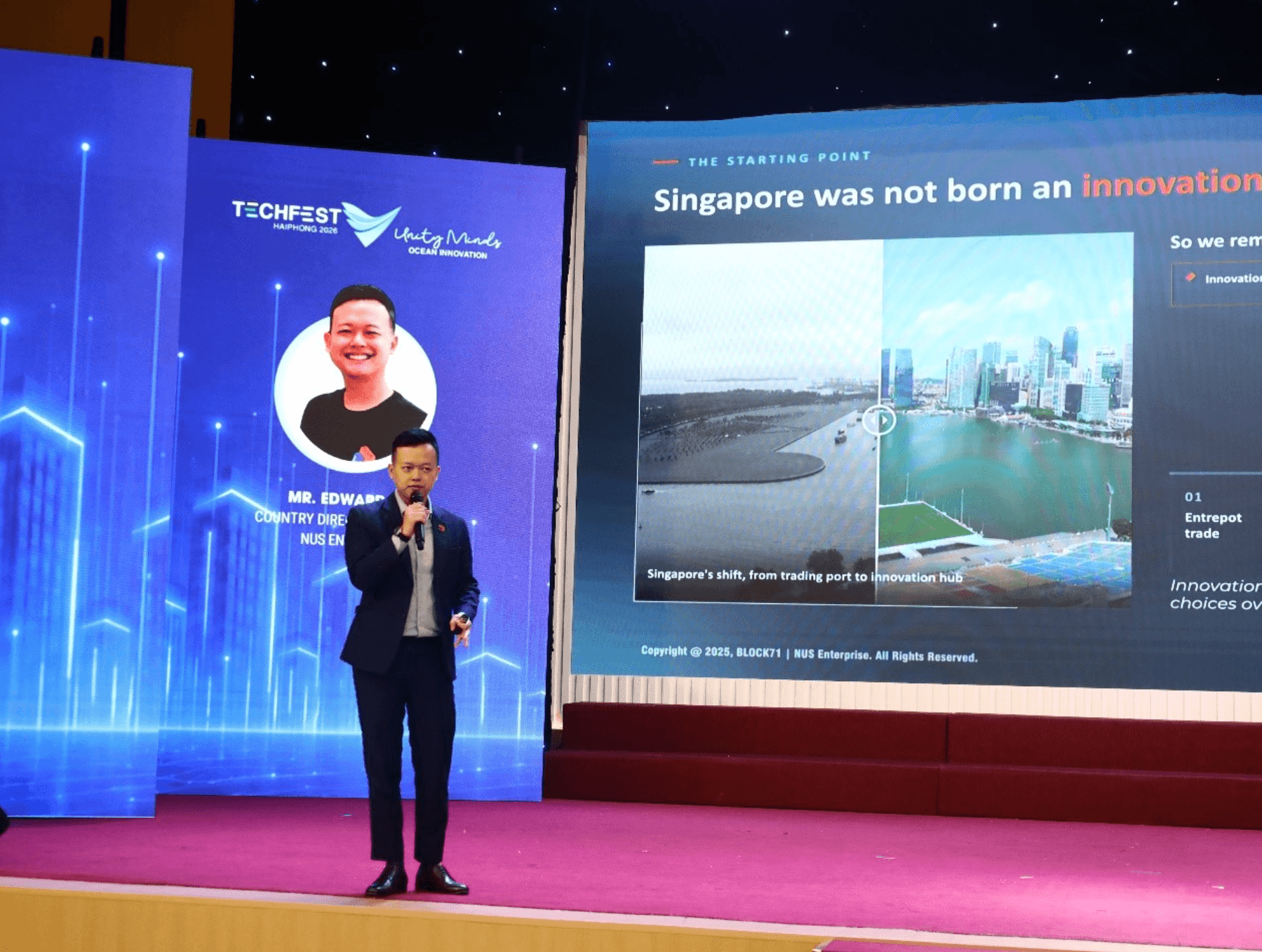
In this model, every stakeholder plays a distinct role. The government constructs policies and fosters a favorable environment; universities focus on research and talent training; businesses identify practical market needs; and investment funds help bring technology to the market.
Notably, the entire process does not operate as disconnected links, but is integrated into a unified ecosystem. This synchronization significantly shortens the gap between scientific research and technology commercialization.
For Hai Phong City - a locality aiming to become the innovation hub of the Northern Coastal Region - this serves as an important reference experience in formulating policy frameworks to support tech businesses.
Big data opens up new startup incubation methods
Another topic attracting keen interest was the experience in developing an artificial intelligence and big data ecosystem from the Guangxi Zhuang Autonomous Region (China).
Mr. Zhou Houyan, Chief Engineer of the Guangxi Zhuang Autonomous Region Big Data Development Bureau, China, stated that the locality has established a comprehensive support system for the AI industry, covering research, technology development, startup incubation, and international market expansion.
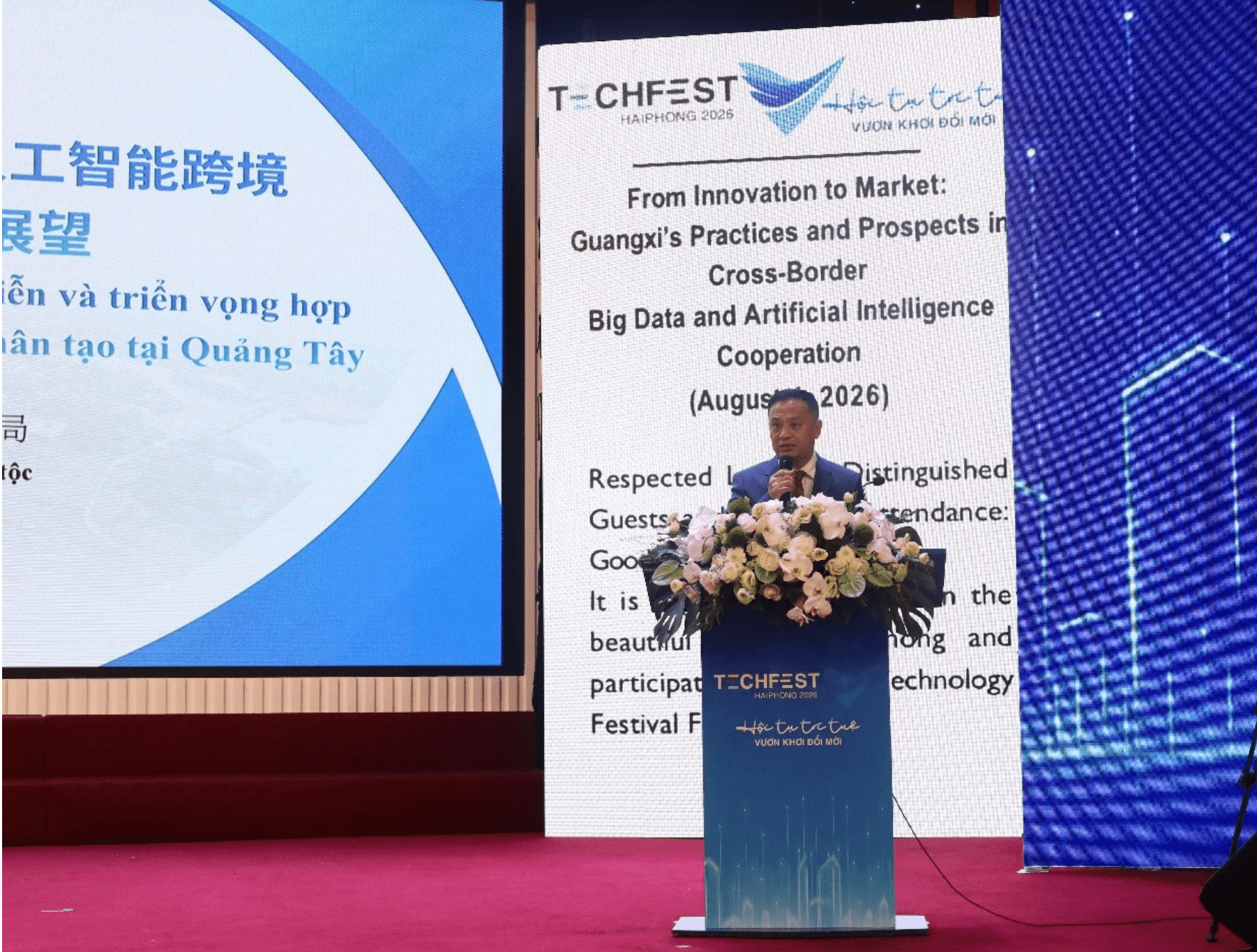
A standout feature of the Guangxi model is the "open listing and task-undertaking" mechanism for cross-border AI challenges targeting the ASEAN market.
Accordingly, practical demands from enterprises or ASEAN countries are publicly posted as problem statements. Businesses, research groups, and startups submit proposed solutions. Those meeting the requirements receive support in terms of resources, policies, and market connections. This mechanism ensures research activities are no longer spontaneous, but directly driven by real market demand.
At the same time, leveraging big data helps accurately identify fields with high growth potential, thereby improving investment efficiency for innovation activities.
This is considered a noteworthy lesson as many Vietnamese localities are actively promoting the development of the digital economy and artificial intelligence.
Startups cannot thrive without "orders"
Another presentation receiving strong attention at the forum was the proactive order-placing model to form high-quality startups, presented by Mr. Doan Hai Nam, Investment Director at ThinkZone Joint Stock Company.
According to Mr. Nam, Hai Phong City holds major advantages with its system of seaports, logistics, manufacturing industries, energy, shipbuilding, and circular economy. These are all sectors posing numerous technological challenges that require solutions.
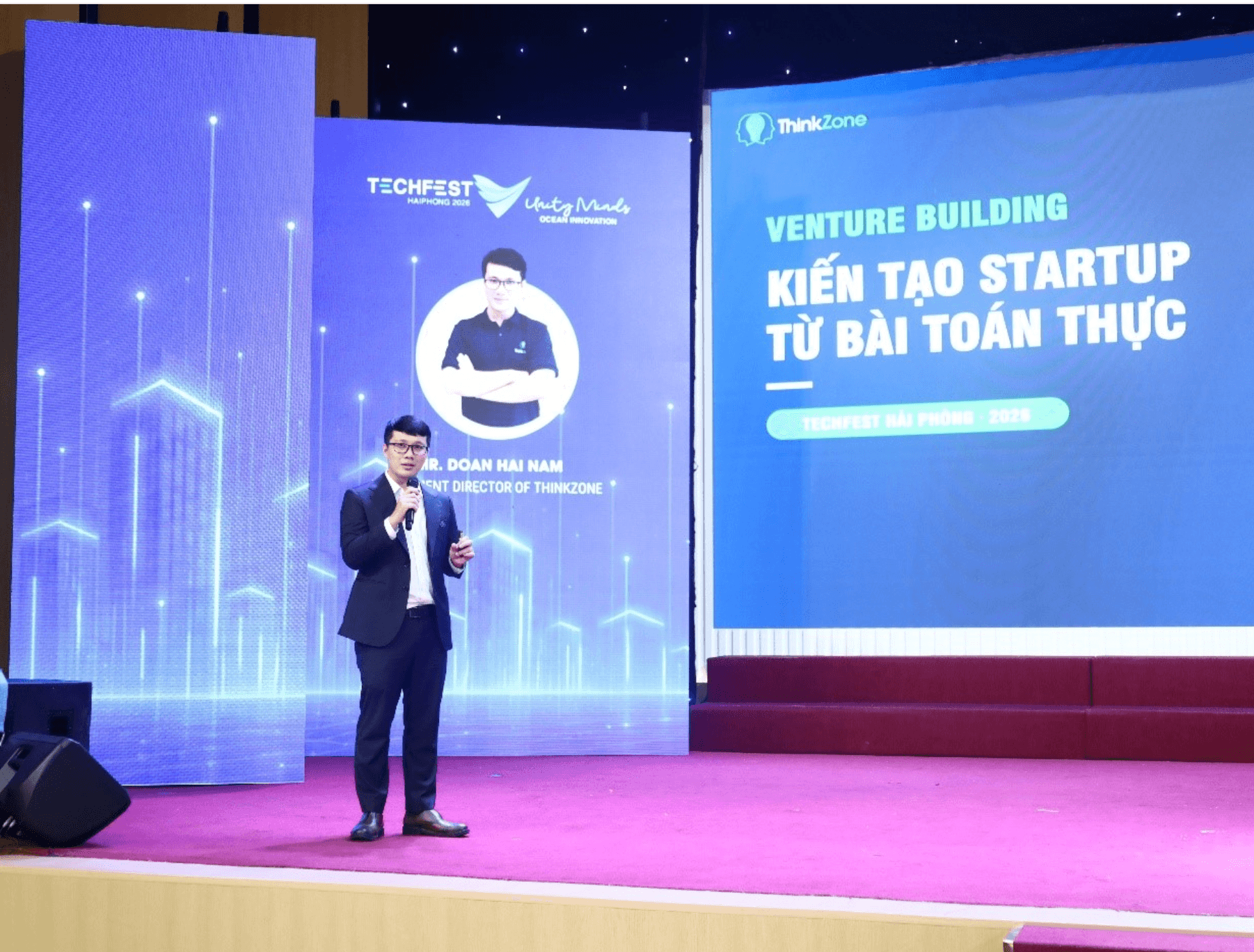
However, reality shows that the number of technology startups involved in solving these problems remains relatively modest.
According to him, the root cause is not a lack of ideas, but the fact that businesses and startups have yet to find each other. To build tech enterprises with competitive capacity, there must first be "orders" originating from the practical needs of businesses.
The proposed model involves coordination among business associations, innovation centers, universities, research institutes, startup networks, and investment funds. Businesses present the challenges. Innovation centers organize the selection of suitable research teams. Universities and research institutes participate in solution development. Following the incubation process, startups are connected with investors and customers to expand their market.
Mr. Doan Hai Nam emphasized that problem statements must be large enough to give startups the opportunity to scale into sizable enterprises, rather than remaining confined to small-scale, fragmented projects.
In parallel, it is essential to form a network of angel investors, venture capital funds, and success stories to build market confidence.
Technology commercialization is the benchmark of innovation
In addition to enterprise incubation models, the forum dedicated significant time to discussing the process of patent commercialization.
Mr. Tran Tri Dung, representative of the Swiss Entrepreneurship Program in Hanoi, shared experience in supporting scientists to bring products from laboratories to the global market. Accordingly, the value of an invention is not measured by the number of granted patents, but by its ability to generate products, enterprises, and revenue. To achieve this, scientists must clearly identify target customers, market demand, competitive edges, and production scalability right from the research phase. This requires early business involvement throughout the research process rather than entering only after technology is finalized.
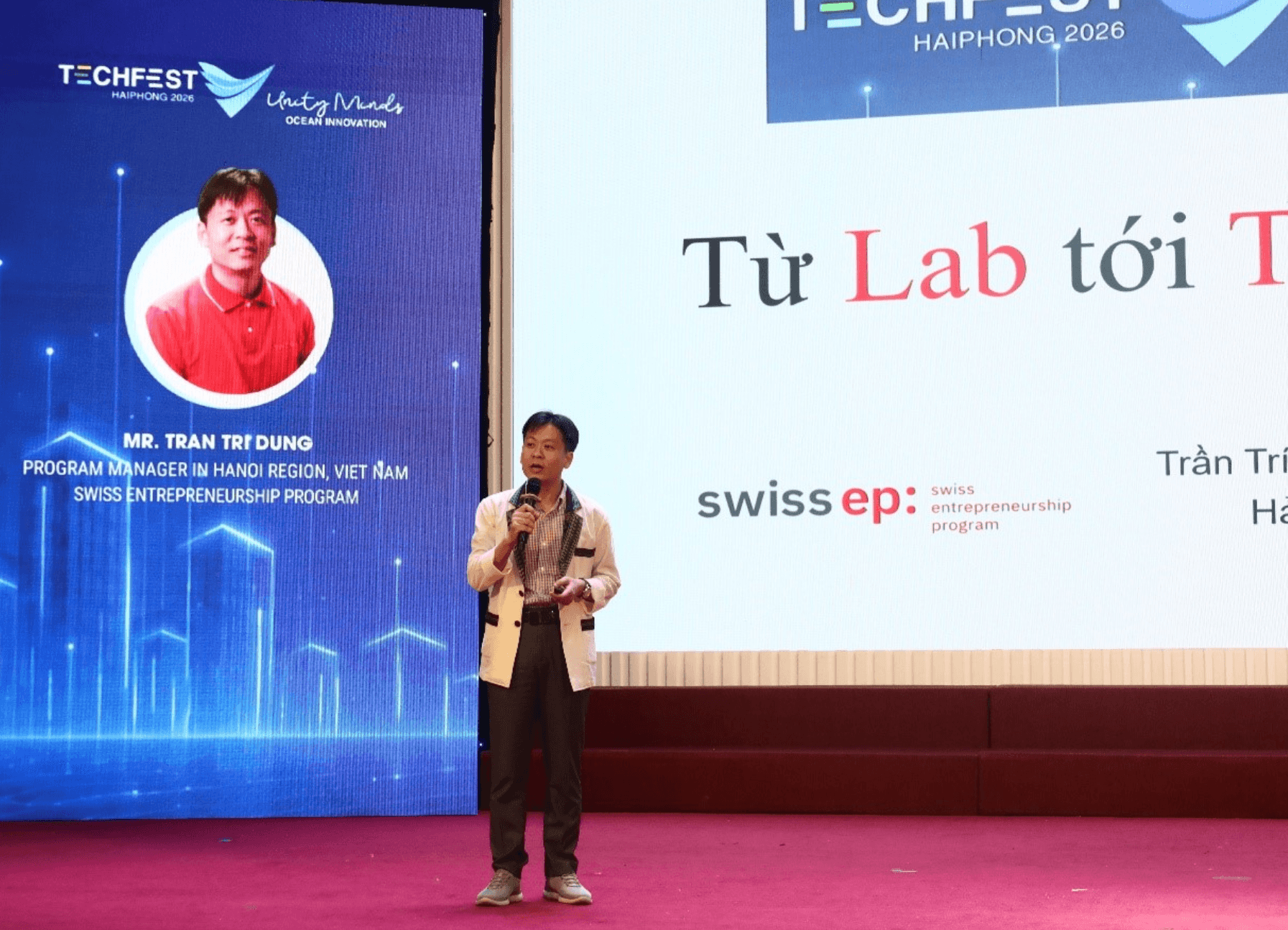
This is also a trend being actively promoted by many countries to bridge the gap between scientific research and economic growth.
Hai Phong City aims toward a regional-scale innovation ecosystem
Speaking at the forum, Director of the Hai Phong Department of Science and Technology Nguyen Cao Thang stated that the City stands before special development opportunities thanks to major policies and directives from the central government regarding science, technology, innovation, and digital transformation.
The insights shared at the forum will serve as an important source of reference for Hai Phong City to continue refining support policies for innovative enterprises and strengthening linkages among the government, universities, research institutes, businesses, and investment funds.
The city also aims to build a favorable environment to attract tech startups, research centers, and innovative enterprises to invest and grow.
This is regarded as an essential foundation for Hai Phong City to gradually assert its role as a regional center for research, technology transfer, and innovation in the Northern Coastal Region.
From forum to action
A notable aspect of the "From Idea to Market" Forum lies not only in the number of international experts attending or the insights shared, but also in the overarching message that innovation must be closely aligned with economic development needs.
In the context of Vietnam strongly promoting the development of science, technology, innovation, and digital transformation as new growth drivers, building an ecosystem capable of turning knowledge into commercial products will determine the competitiveness of each locality.
For Hai Phong City, the City possesses existing strengths in industrial infrastructure, logistics, seaports, and investment attraction. If effectively combined with scientific and technological resources, a system of universities and research institutes, alongside networks of investment funds and businesses, the locality has every basis to foster large-scale technology startups.
The discussions at the forum provided not only valuable international lessons but also practical suggestions for Hai Phong City to perfect its innovation ecosystem. From mechanisms for commissioning research and developing demand-driven incubation models to enhancing linkages between businesses, research institutes, universities, and regulatory agencies, all solutions point toward a shared goal: shortening the journey of bringing ideas, technology, and research results to the market.
That is also the foundation for Hai Phong City to realize its ambition of becoming a regional innovation center, while striving to enter the Top 200 global cities with leading innovation ecosystems by 2030./.
Copyright belongs to the Vietnam Journal of Science and Technology (VJST-MOST)