
Removing the "bottleneck", empowering local initiative: Making science and technology a driving force for development from the grassroots level
For many years, the centralized state management model has inadvertently created a situation where "the Central Government takes on all the work, and localities wait for allocation". This reality has become a bottleneck, hindering the initiative, creativity, and development speed of science and technology (S&T) in local areas.
To address this issue and realize the goal of making S&T a true development driver in every locality, the Government has taken decisive action: Issuing both Decree No. 132/2025/ND-CP and Decree No. 133/2025/ND-CP on 12 June, 2025.
This is not merely an administrative adjustment, but a strong institutional shift, building a modern, dynamic, responsive, and more citizen-centric model of state governance.
Strong devolution, substantive empowerment
Decree No. 132/2025/ND-CP was issued to clearly define the authority for the two-tier local government model, bringing S&T state management to the grassroots level (Communal People's Committees).
Accordingly, Communal People's Committees are for the first time assigned the authority to carry out groups of tasks in 4 fields: Metrology; Quality of products and goods; Information Technology; and Provision of information in the network environment.
Specifically, communal and ward governments will directly conduct state inspections on metrology (such as measurements, measuring instruments, pre-packaged goods) when circulating on the market; manage the quality of products and goods in the area; manage investment in IT application within their authority and be responsible for publicizing information about socio-economic development plans, organizational structures... in the network environment.
This delegation ensures no overlap and no neglected tasks, helping grassroots governments operate more effectively, practically, and supervise quality and safety for consumers right from the base level.
The focus of this reform is Decree No. 133/2025/ND-CP, which was chaired by the Ministry of S&T. The Decree stipulates strong decentralization and devolution in the field of state management of the Ministry of S&T to Provincial People's Committees and Chairpersons of Provincial People's Committees.
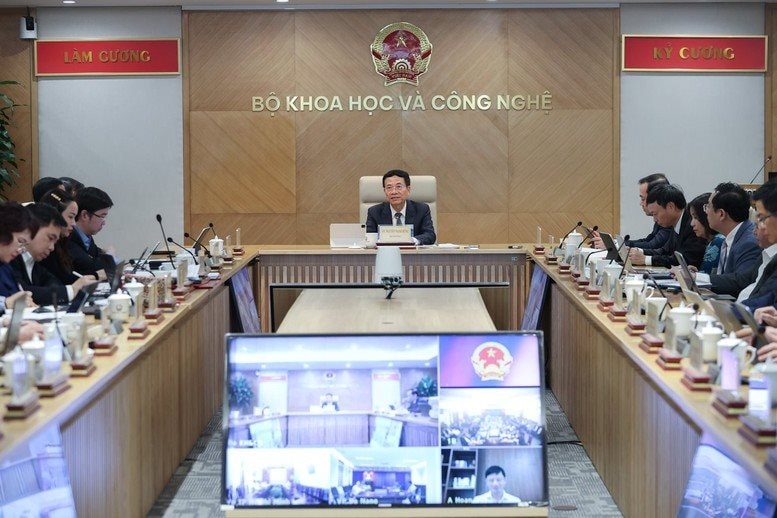
A total of 78 tasks are transferred from the Central Government to localities, including 16 devolved tasks and 62 decentralized tasks. This is a very high rate of decentralization and devolution, accounting for up to 52.5% of the Ministry's total state management tasks, demonstrating the strong determination and trust of the Central Government in the capacity of local authorities.
"Devolution" means transferring the authority to decide on certain issues to the Provincial People's Committees as prescribed by law. Localities now have real power in the following areas:
Self-determination in telecommunications: Licensing the provision of fixed terrestrial telecommunication services, proactively handling violations, and requiring the cessation of service provision activities.
Autonomy in digital transformation: Building and deploying their own digital transformation strategies, tailored to the province's characteristics and development goals.
Mastery of intellectual property: Deciding on the handling of invention registration applications, establishing ownership rights, and handling infringement acts right within the locality.
Proactiveness in S&T research: Self-appraisal and approval of S&T research tasks at the provincial level, ensuring that the topics closely follow the socio-economic development orientation of the locality.
Flexibility in technology transfer: Appraising and approving technology transfer contracts and allowing the establishment of foreign-invested science organizations and branches.
In parallel, 62 "decentralized" tasks are transferred in 7 key areas, granting localities the authority to organize the implementation of a huge volume of work:
Telecommunications: Localities will resolve disputes, handle the cessation of business services, manage the entire process of issuing, amending, and revoking certificates for content service connection on mobile networks, and directly organize auctions and revocation of H2H mobile subscriber numbers.
Radio frequency: Provincial People's Committees are granted the authority to manage the entire process of issuing, extending, and revoking frequency usage licenses for essential radio stations such as fishing vessel radios, amateur radios, domestic vessel radios, and internal wireless networks. The province is also the body that recognizes organizations eligible to issue radio operator certificates.
Information technology and digital transformation: This is one of the most deeply decentralized areas. The Provincial People's Committee becomes the focal point for organizing the appraisal of the basic and detailed designs of IT application investment projects in Group A using state budget funds in the locality. The appraisal content includes key factors such as compliance with the e-government architecture, data connectivity, interoperability, and system safety assurance capability.
Intellectual property: Localities play a pivotal role in important operations such as issuing copies and re-issuing protection titles, registering contracts for the transfer of usage rights, organizing the inspection of industrial property representation and assessment operations, as well as issuing and revoking corresponding practicing certificates.
Atomic energy: Provincial People's Committees are assigned the authority to license the use of complex, high-tech radiation equipment such as PET/CT, SPECT/CT, and X-ray generating devices used in analysis, security checks, or electron microscopy. The province also issues radiation staff certificates and receives equipment declarations.
Standards, Metrology, Quality: Local authorities are responsible for issuing, amending, and revoking certificates related to inspection, calibration, testing, assessment, and certification services for quality management systems.
Science and Technology (general): Localities will provide professional guidance to high-tech park management boards, issue certificates of eligibility to operate technology evaluation and assessment services, and issue various types of high-tech application certificates to organizations, individuals, and businesses.
The transfer of the 78 tasks mentioned above not only resolves the overload at the Central level but also fully institutionalizes the Party's policy according to the principle of "Locality decides - Locality implements - Locality takes responsibility."
The principle of devolution and decentralization is strictly designed: not to be spread-out, but based on technical nature, implementation capability, and local practical conditions. Only tasks with clear, stable technical procedures and where localities have sufficient capacity and experience are transferred. Conversely, tasks of a strategic nature, regional coordination, or those greatly affecting national defense, security, environment, and international treaties still fall under the authority of the Central Government.
Not only decentralization, but also comprehensive reform
What gives great significance to this round of decentralization is that it is accompanied by administrative procedure reform and a clear accountability mechanism.
First, regarding procedural reform, Decree 133 is accompanied by 6 Appendices, which cut 86 items related to submission documents and processing time. The fields that directly benefit include: Standards, Metrology, Quality (33 items), Intellectual Property (17 items), High Technology (15 items), Radio Frequency (9 items), S&T Activity Registration (8 items), and Technology Transfer (4 items). This is a substantive action to improve the business environment and enhance national competitiveness.
Second, regarding the implementation mechanism, the Ministry of S&T will maintain its role in strategic control, technical support, and implementation monitoring. The Ministry will issue specific professional guidelines, organize training and capacity building for local officials, and fully transfer the relevant database system. Simultaneously, the Ministry will conduct periodic inspection and supervision of the implementation process at the local level to maintain consistency and quality of sector management. On the local side, the Provincial People's Committees are responsible for building implementation plans, assigning focal points, and reporting periodically. The entire implementation process and results must be made public and transparent.
The issuance of Decree No. 132/2025/ND-CP and Decree No. 133/2025/ND-CP is a crucial institutional milestone in 2025. This is a specific, decisive step to realize the policy of devolution and decentralization, combined with enhancing management effectiveness and local accountability.
With the initiative granted, provinces and cities have a solid foundation to promote S&T, innovation, and digital transformation, developing S&T enterprises and tech startups based on their own needs and potential.
If implemented synchronously, this will be a strong institutional impetus, transforming S&T from a centrally managed sector into a powerful internal driving force for development in each locality, contributing to the successful realization of administrative reform and sustainable national development goals./.
Translated by Vietnam Journal of Science and Technology (VJST - MOST).