Minister Vu Hai Quan: Vietnam is gradually mastering the sea through knowledge, data, technology, and innovation
Minister of Science and Technology Vu Hai Quan emphasized that it is time to shift from researching the sea to mastering marine knowledge, from utilizing data to mastering data, and to gradually master and develop marine technology.
On August 21, in Khanh Hoa Province, the Ministry of Science and Technology (MoST) in coordination with the Vietnam Academy of Science and Technology (VAST) organized the Conference "Science, Technology, Innovation, and Digital Transformation in Implementing Resolution No. 20-NQ/TW on Building and Developing Vietnam into a strong Maritime Nation".
The Conference focused on identifying new requirements, key tasks, and action orientations for the science and technology sector in implementing Resolution No. 20-NQ/TW dated July 28, 2026, of the 14th Central Committee of the Communist Party of Viet Nam. It also served as a venue to exchange views on science and technology in aquaculture, dual-use marine S&T capabilities, high-quality marine human resources, national marine data, oil and gas exploration and exploitation, and the development of marine economic centers.
Shifting from applying technology to mastering marine
Delivering the opening address at the Conference, Minister of Science and Technology Vu Hai Quan emphasized that Resolution No. 20-NQ/TW sets forth new requirements of strategic significance for science, technology, innovation, and digital transformation.
According to Minister Vu Hai Quan, Vietnam must not only research and exploit the sea, but also gradually master it through knowledge, data, technology, and innovation. S&T is no longer just a supporting tool for individual marine economic sectors, but must become the foundation for integrated, unified governance of the national maritime space.
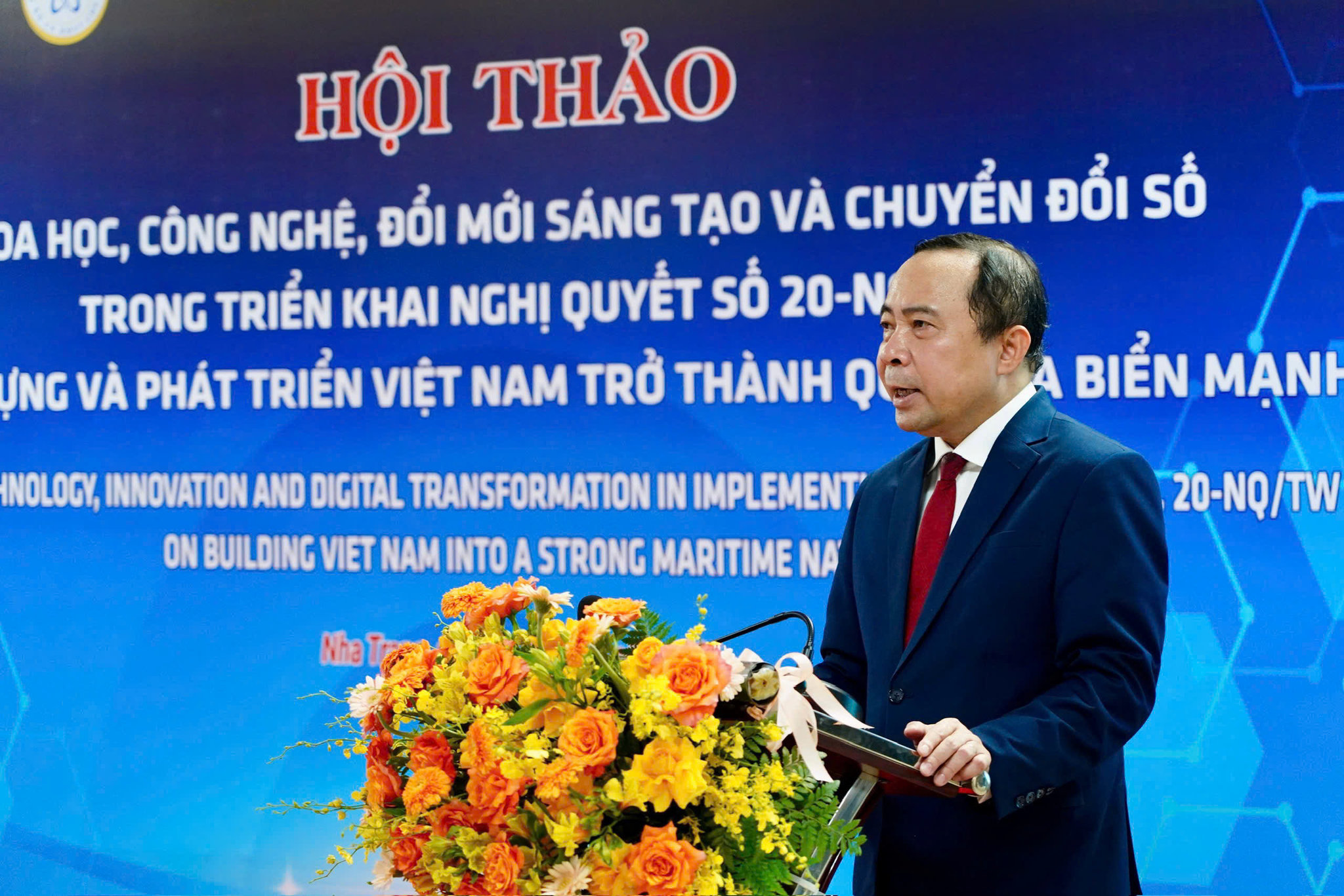
Vietnam must not only research and exploit the sea, but also gradually master it through knowledge, data, technology, and innovation
This foundation must serve the development of a modern, digital, sustainable, green marine economy, protect the environment, ensure national defense and security, and elevate Vietnam's position in marine and ocean governance.
On August 7, 2026, the Government issued Resolution No. 218/NQ-CP regarding the Action Program to implement Resolution No. 20-NQ/TW. Minister Vu Hai Quan affirmed that the tasks of MoST need to be implemented within an interconnected framework bridging scientific research, basic surveys, data, technology, innovation, human resources, research infrastructure, and international cooperation.
Minister Vu Hai Quan emphasized that during the 2026-2030 period, the S&T sector has identified five major orientations: forming strong marine research capabilities; considering marine data as national strategic infrastructure; shifting from "technology application" to "technology mastery"; taking enterprises and localities as core actors in the marine innovation ecosystem; and reforming the organization and execution of marine S&T tasks.
Accordingly, Vietnam needs to identify marine, ocean, and dual-use technologies of strategic significance to concentrate resources on research, acquisition, assimilation/adaptation, mastery, transfer, and gradual development.
Priority fields include ocean observation, monitoring, and forecasting technology; seabed and deep-sea surveys; underwater equipment, marine robotics, and unmanned vehicles; offshore engineering and energy technology; marine environmental technology; industrial aquaculture; marine biotechnology; and dual-use technologies serving economic development, environmental protection, search and rescue, and national defense and security.
Along with this, enterprises must participate in the entire process,
from problem definition, task commissioning, co-financing, testing, and verification to the commercialization of research results. Coastal localities should proactively identify demands, organize pilot testing, and foster markets for marine products and technologies.
Given that the ocean is an interconnected space, research activities can no longer remain fragmented across sectors, fields, or administrative boundaries. Marine S&T tasks must transition from isolated, scattered topics to solving major interdisciplinary and interregional challenges with clear deliverables.
Minister Vu Hai Quan stressed that the ultimate goal is not how many additional research topics or reports are generated, but which technologies Vietnam masters, what products are created, and what national capabilities are established.
Building research capabilities and marine data infrastructure
One of the central topics discussed at the conference was building leading-edge marine research capabilities. The target of establishing 2-3 research organizations in marine S&T and innovation on par with leading ASEAN countries is not merely a quantitative target, but must be viewed as a requirement for national capability.
These organizations must possess the ability to gather strong expert teams, own modern research infrastructure, master data and technology, solve major national problems, and participate in international research networks.
Alongside research capabilities, marine data must be considered national strategic infrastructure. Vietnam needs to build a unified, interconnected, updated, and secure marine data system, linking data from basic surveys, environmental monitoring, marine resources, infrastructure, and socio-economic activities at sea.
Data from research vessels, satellites, monitoring buoys, marine radar, underwater robots, and specialized databases need to be standardized, integrated, interconnected, and shared, while ensuring cybersecurity, safety, and data sovereignty. This serves as the foundation for developing digital maps of seas and oceans, modeling tools, ocean forecasting, artificial intelligence (AI) for oceans, "digital oceans", and advancing toward "ocean digital twins".
Prof. Dr. Tran Tuan Anh, Vice President of VAST, argued that a strong maritime nation is not evaluated solely by its number of seaports, ships, or the scale of its marine economy. More importantly, that nation must understand the ocean, forecast marine conditions, govern maritime space, sustainably exploit marine resources, and gradually master modern marine technologies.
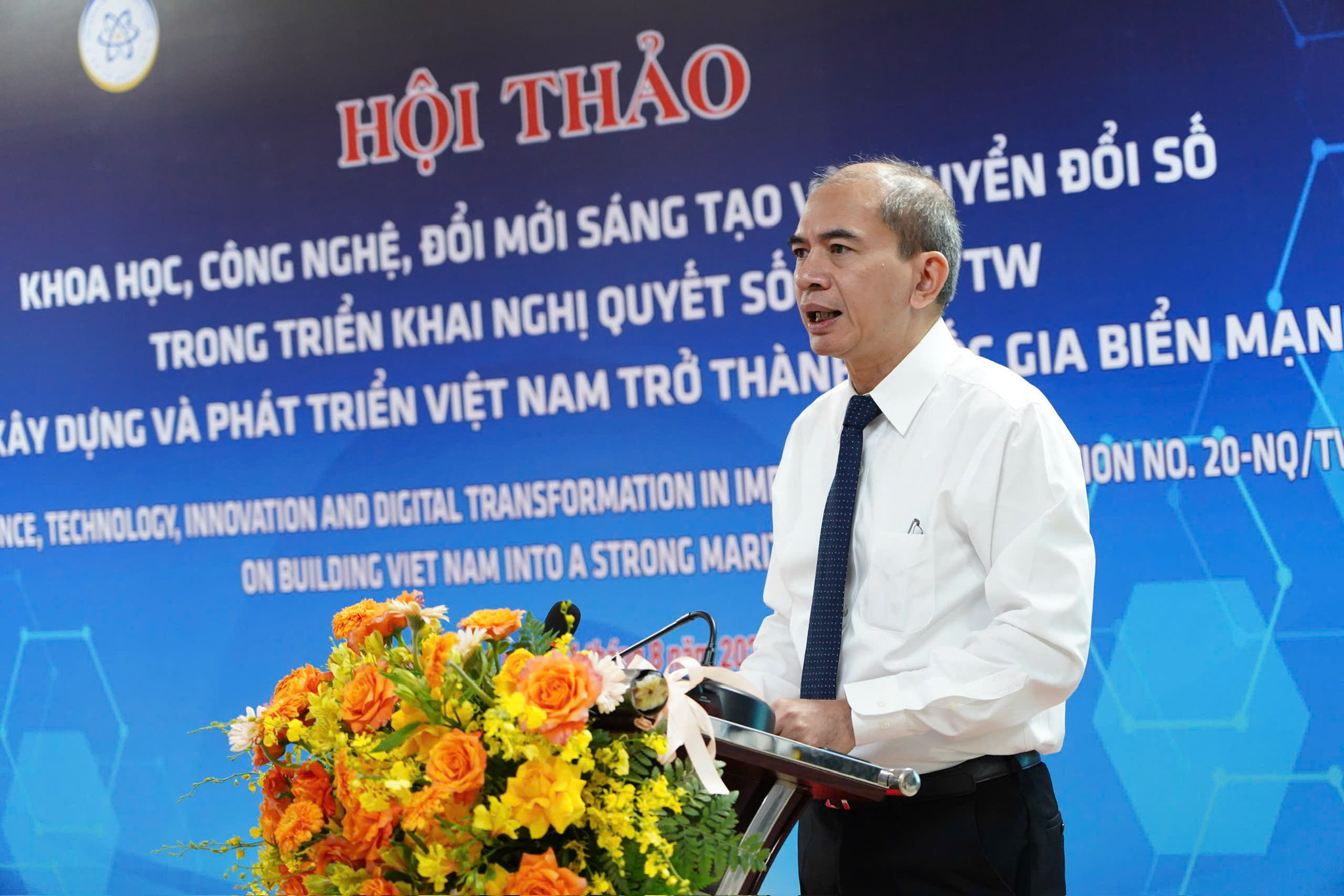
According to Prof. Dr. Tran Tuan Anh, the marine science sector needs to concurrently execute four transitions: from single-discipline to interdisciplinary and multidisciplinary research; from isolated topics to programs solving major national challenges; from fragmented data to shared marine data infrastructure; and from technology application to gradual mastery of strategic marine technologies.
From a practical local perspective, Mr. Nguyen Thanh Ha, Vice Chairman of the Khanh Hoa Provincial People's Committee, stated that implementing Resolution No. 20-NQ/TW requires a mindset shift from mere marine exploitation to modern ocean governance, and from fragmented coastal economic development to building a strong maritime nation.
Khanh Hoa Province boasts a 490-km coastline, over 200 islands, deep-water bays including Van Phong, Nha Trang, and Cam Ranh, as well as the Truong Sa island district. It is also home to numerous marine research and training institutions, such as the Institute of Oceanography, Research Institute for Aquaculture No. III, and Nha Trang University.
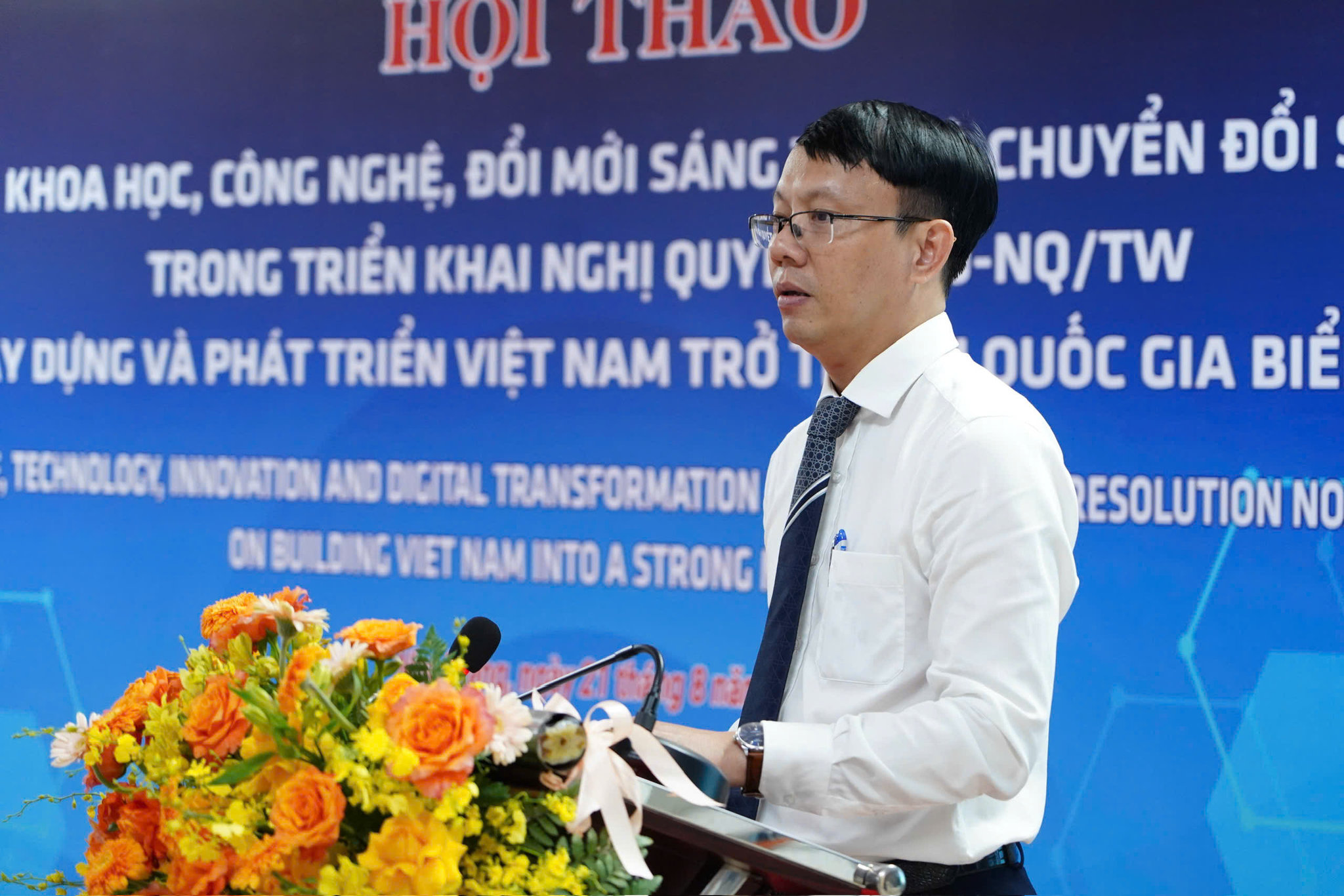
Identifying S&T, innovation, and digital transformation as the three pillars to transform natural endowments and knowledge into a long-term competitive edge, Khanh Hoa proposed that the Central Government support investments in national-level shared ocean research and development infrastructure in the province. This infrastructure includes deep-sea research vessels, key laboratories, and a network of smart monitoring stations integrated with AI and the Internet of Things (IoT).
Khanh Hoa Province also requested that MoST consider adding the National Research Center for Ocean Technology in Khanh Hoa to the national planning system of key centers and laboratories for strategic technologies. The province committed to prioritizing resources, preparing sites, frameworks, and infrastructure, and coordinating with institutes and universities to execute research and technology transfer projects.
At the conference, delegates proposed mechanisms to mobilize and coordinate resources among the State, research institutes, universities, enterprises, localities, and international partners, with an emphasis on mechanisms for commissioning major tasks, co-financing, piloting, risk-sharing, and commercializing research results. Through these measures, S&T, innovation, and digital transformation will serve as the foundation for building Vietnam into a strong maritime nation./.
Copyright belongs to the Vietnam Journal of Science and Technology (VJST-MOST)