
Minister Nguyen Manh Hung: Postal and Telecommunications sector begins to lead globally
The head of the Science and Technology sector, Minister Nguyen Manh Hung, expressed his desire for the postal and telecommunications sector to innovate its approach and state management, and to participate in leading the field on a global scale.
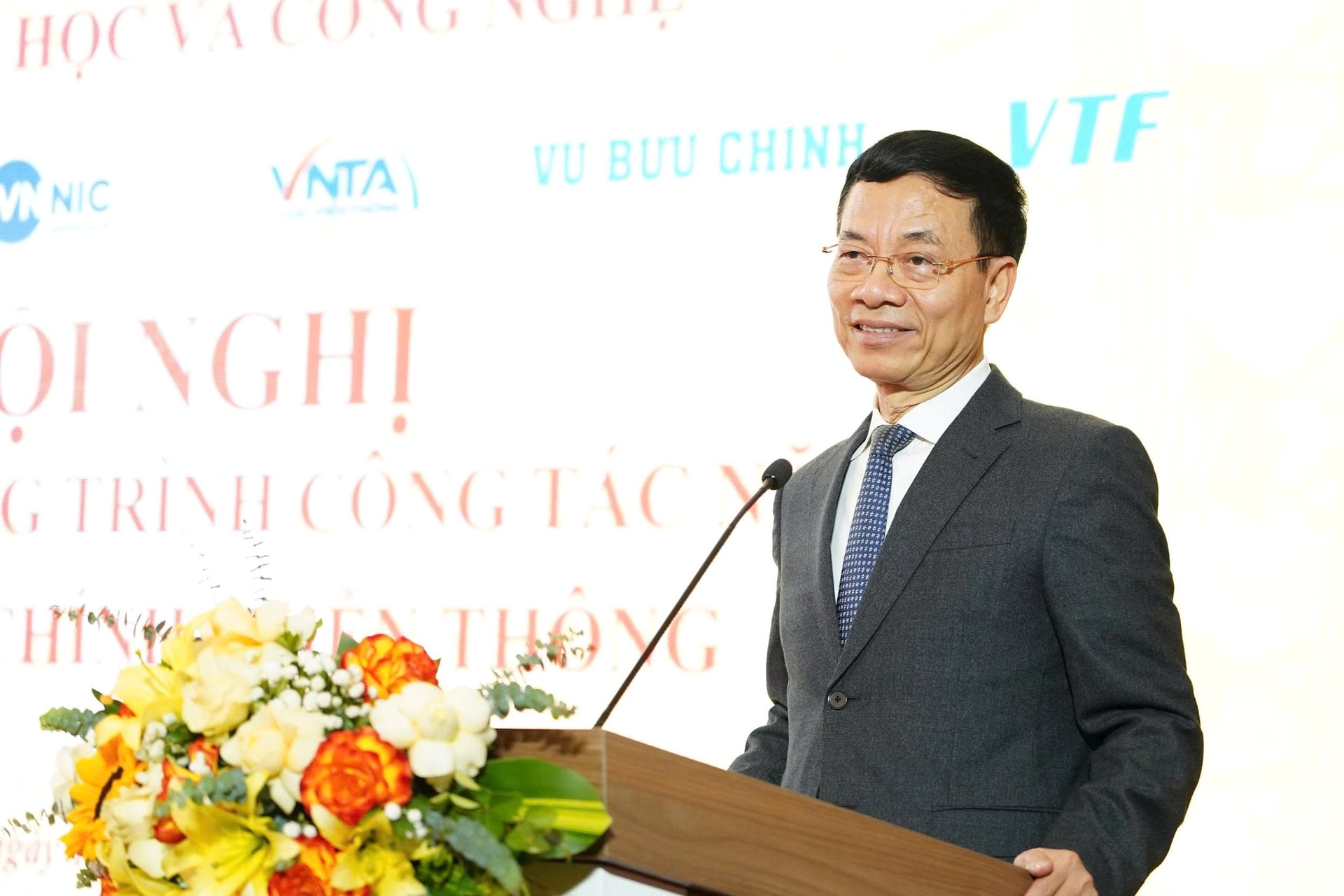
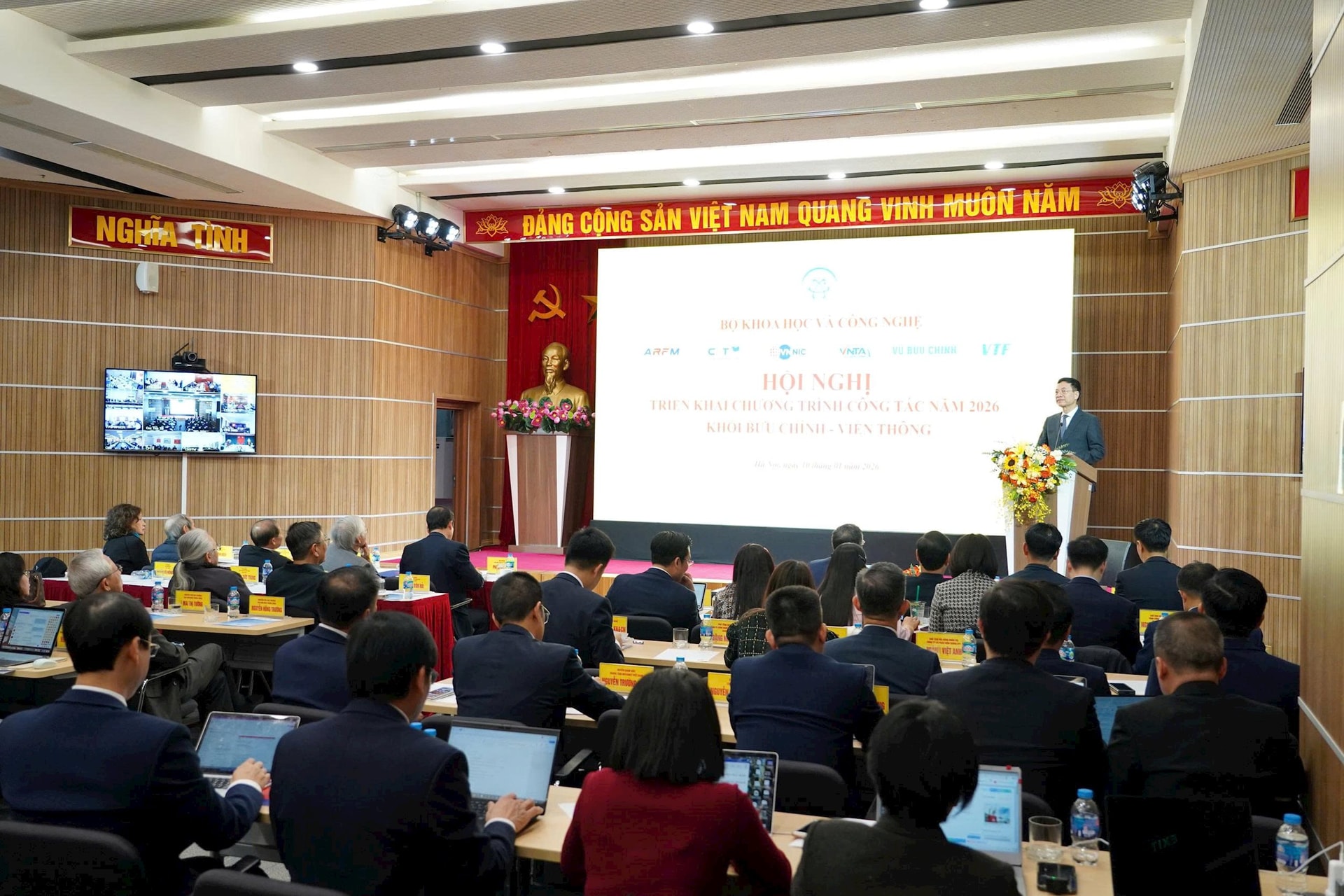
On 10 January, 2026, at the Conference to deploy the 2026 tasks for the Postal and Telecommunications Block consisting of six units under the Ministry of Science and Technology, Minister Nguyen Manh Hung stated that 2025 was a special year for the new Ministry.
The Minister noted that this was the first year that the Ministry of Information and Communications and the Ministry of Science and Technology were merged into a single entity named the Ministry of Science and Technology. He emphasized that the new mission, scale, and requirements are very high. The new Ministry is not merely a sum of two organizations but creates synergy and resonance where science, technology, innovation, and digital transformation become the main drivers for national development.
A new turning point for the telecommunications industry
Being a leader who has followed the development of the telecommunications industry for many years, Minister Nguyen Manh Hung shared that the industry is no longer as "youthful" as before and is aging. The telecommunications industry has completed its historical mission and is standing at a new turning point.
The achievements of the telecommunications industry include the universalization of connectivity, both fixed and mobile, especially mobile, bringing the Internet to every citizen and creating the foundation for digital transformation.
The growth model of telecommunications based on subscribers, traffic, and ARPU (average revenue per user) has "hit the ceiling". The 3G, 4G, and now 5G networks are just higher "G", but the new values created are still very few.
Telecommunications is identified as the infrastructure of the digital economy. While data, AI, and the digital economy are booming, telecommunications revenue is growing slowly - five to six times slower than the development of the digital economy.
According to the Minister, this issue is not due to technology but rather the business and development models.
The telecommunications industry is still thinking like a connectivity provider, while the world has shifted to providing digital capabilities. If telecommunications only sells voice minutes or Gigabytes of data, service prices will continue to decrease, competition will become increasingly fierce, and value will become increasingly thin.
The Minister warned that the industry will not have the funds to continue investing heavily in infrastructure and cannot live forever by selling "pipelines."
According to the Minister, Vietnam's network is among the best in the region, and telecommunications enterprises currently possess a strong team of engineers. Compared to other enterprises, the teams at network operators and telecommunications companies are much stronger, even stronger than research groups.
The head of the S&T sector argued that it is time for telecommunications companies (telco) to transition into digital infrastructure companies.
This means that telecommunications enterprises must not only sell bandwidth but also provide cloud services, AI, data, security, the Internet of Things (IoT), and digital platforms, serving as a type of "new electricity" for businesses and society.
Telecommunications enterprises must become full-package digital capability providers rather than just network operators. Only telecommunications enterprises have the role of "integrating" and "packaging" those services. They have a historical role to play in this regard.
Furthermore, according to the Minister, the 5G network is not just for being faster, but for doing things that have never been done before.
Minister Nguyen Manh Hung emphasized that if 5G is only for watching clearer videos or faster data, it will be an economic failure. 5G only makes sense when it enters factories, seaports, logistics, healthcare, energy, and urban areas to become the infrastructure for production and high-value services.
This requires telecommunications enterprises to collaborate deeply with vertical industries, understanding production problems, operations, and costs to find ways to reduce expenses for them and co-create solutions rather than just selling SIM cards.
The Minister highlighted a vital shift: telecommunications is not just connectivity infrastructure but must become the digital capability infrastructure of the economy. This represents a shift from "voice" infrastructure to the infrastructure of the entire economy, referred to as the Industry's second innovation.
Exploiting invaluable advantages
According to the Minister, to seize new opportunities, the telecommunications industry cannot innovate alone but must be the pathfinder for innovation in many fields.
Telecommunications has advantages that few other industries possess, including data, widespread infrastructure, coverage, reliability, and an extensive apparatus. Vietnamese telecommunications enterprises have prestige with the people, so when they provide a new service or data, it will always receive trust. The Minister assessed this as invaluable.
Therefore, the Minister suggested that telecommunications enterprises should not replace startups or compete with technology firms. Instead, they must open their infrastructure, open APIs, and share controlled data to become the platform for the entire innovation ecosystem, supporting tens of thousands of creative digital technology enterprises to solve the problems of businesses and society.
The Minister stated that the state management agency for telecommunications will no longer keep the sector in a safe zone. The State has kept telecommunications in a safe zone for many decades. Now is the time to shift from managing telecommunications infrastructure to governing national strategic infrastructure.
Thus, telecommunications must be creative. The State will not do the work of enterprises but will clear the institutional path for testing new models, services, and controlled failures.
Minister Nguyen Manh Hung emphasized that this will be a new profession for telecommunications state management. Instead of licensing and checking SIM cards, managing voice and data prices, or managing promotions, the focus will now be on managing new models and sandboxing new services.
The Minister stated clearly that Vietnamese telecommunications can absolutely enter a new growth cycle. Stepping into the second innovation, 40 years after the first, telecommunications will not grow by having more subscribers but by providing more value to the economy and society.
He emphasized that telecommunications must move from communication infrastructure to economic infrastructure. In the next 10 years, telecommunications will not only connect people but must connect production, knowledge, and the future. It becomes production infrastructure and knowledge infrastructure. State management must change institutions and management to create this transformation.
Postal services must change while they are still performing well
Regarding the postal sector, which is also a long-standing traditional industry, Minister Nguyen Manh Hung observed that in the last 10 years, it has grown rapidly thanks to e-commerce. However, if the postal sector does not innovate right now, it will encounter the same story as telecommunications and take another 10 years to regain growth momentum.
Therefore, the Minister believes the postal sector needs to change while it is still doing well, which means starting immediately.
The postal sector needs to shift its focus from letters, press, and parcels to digital postal infrastructure, logistics, digital addresses, sharing postal data, and new delivery technologies compatible with e-commerce and the digital economy, creating a low-altitude postal operating space.
The Minister emphasized that state management of the postal sector must open up new spaces at least four times larger than at present, meaning opening up principles and playing fields. This is the goal of the 2026 Postal Law revision.
The most important shift for the postal sector is digital post and digital space, expanding new concepts such as virtual warehouses and a digital postal ecosystem including delivery, logistics, digital addresses, digital data, order fulfillment, and warehousing infrastructure. The postal network must become a complete last-mile network.
According to the Minister, postal infrastructure has a network nature similar to the national telecommunications network, with large warehouses like large exchanges in regional centers, small warehouses like small exchanges in provinces, and subscriber organization sets in communes, leading to the last mile.
Consequently, the postal sector must expand the concept of digital addresses from the district level down to households and individuals, linked with digital maps, population data, and digital space. It must also expand traditional delivery means to new technologies such as drones and robots, moving from delivery to order fulfillment and from 2kg to 500kg.
The Minister emphasized that basic postal services are shifting from parcels to e-commerce and home delivery in remote areas. The postal sector is also considering the establishment of a public utility postal fund. He noted that the public utility telecommunications fund has been successful, helping Vietnam's telecommunications service universalization and coverage reach the top 10 in the world, equivalent to developed countries.
New orientations for state management in the Postal and Telecommunications sector
Along with the general orientations for the development of the sector, the Minister also provided guidance for the management units.
For the Postal Department, the Minister noted the need to expand the development space for the sector by four times.
Next, the Telecommunications Authority must innovate from managing telecommunications networks to managing national digital infrastructure, including telecommunications, Internet, data centers (DC), data, cloud, AI, and digital platforms.
Management of the telecommunications sector needs to shift from administrative management to creating competition and a new-generation telecommunications market, moving from traditional network operators to new-generation operators. Management must innovate from independent telecommunications to telecommunications closely linked with socio-economic development.
Telecommunications is becoming the infrastructure of the economy. New-generation telecommunications operators are production tools and means for businesses and the economy. Enterprises will need the services of network operators to create their own services and products.
Meanwhile, the sector must set goals for minimum mobile speeds in remote areas at 100 Mbps and in urban areas at 200 Mbps.
The Minister stated that if mobile speeds double, the Vietnamese economy will grow by at least 1% to 2%. Another target is for the smartphone usage rate to reach 100%.
For the Authority of Radio Frequency Management, the Minister noted the need to shift from frequency licensing management to frequency resource governance. Management is characterized by compliance, control, and preservation, with an administrative and procedural approach. Governance is characterized by creating new value, efficiency, and impact on the economy.
There is a need to innovate from static frequency management to flexible management according to new technologies, giving rise to many new forms of licensing, such as testing-time licensing, dynamic licensing, and shared licensing.
Furthermore, there is a need to innovate from technical management to market creation and national frequency standards, establishing an efficient frequency market.
Meanwhile, for the Central Post Authority, the Minister noted that the unit needs to transition to digital infrastructure serving Party and Government agencies, with transmission down to the commune level. The Authority has the additional task of managing DCs, clouds, and AI for the Government.
For VNNIC, the Minister requested a shift from resource management to becoming the architect of national Internet infrastructure. VNNIC's task is to architect a sustainable and independent Vietnamese Internet.
VNNIC also has the task of keeping as much data, traffic, and Internet value in Vietnam as possible, transitioning from a technical unit to a strategic partner of the digital economy, deeply connected with digital enterprises. VNNIC must participate in shaping global Internet "rules of the game."
Regarding the Public Utility Telecommunications Fund, the Minister required the standardization of public utility tasks. This includes rapid deployment of infrastructure investment, covering 100% of the population, and universalizing basic digital services so that people in remote areas can access distance learning and remote medical examinations and treatment.
The Minister reminded all units to undergo comprehensive digital transformation, moving all unit activities to a digital environment, building shared platforms for management and connection with managed entities, and performing mass communication so that all citizens understand and feel as close to the postal and telecommunications sector as their daily breath.
The Minister concluded by stating that if Vietnam's postal and telecommunications management has done well domestically, it must now reach out internationally and establish standards to lead the "game" globally. He officially declared that from now on, the postal and telecommunications sector begins to participate in global leadership./.
Copyright belongs to the Vietnam Journal of Science and Technology (VJST-MOST).