
Law on Digital Transformation: Foundation for building a digital nation
The promulgation of the Law on Digital Transformation is considered a major turning point, creating a unified legal framework for Vietnam to seize opportunities from the digital space, enhance competitiveness, build a digital government to serve the people and businesses, develop the digital economy, and form a safe and sustainable digital society.

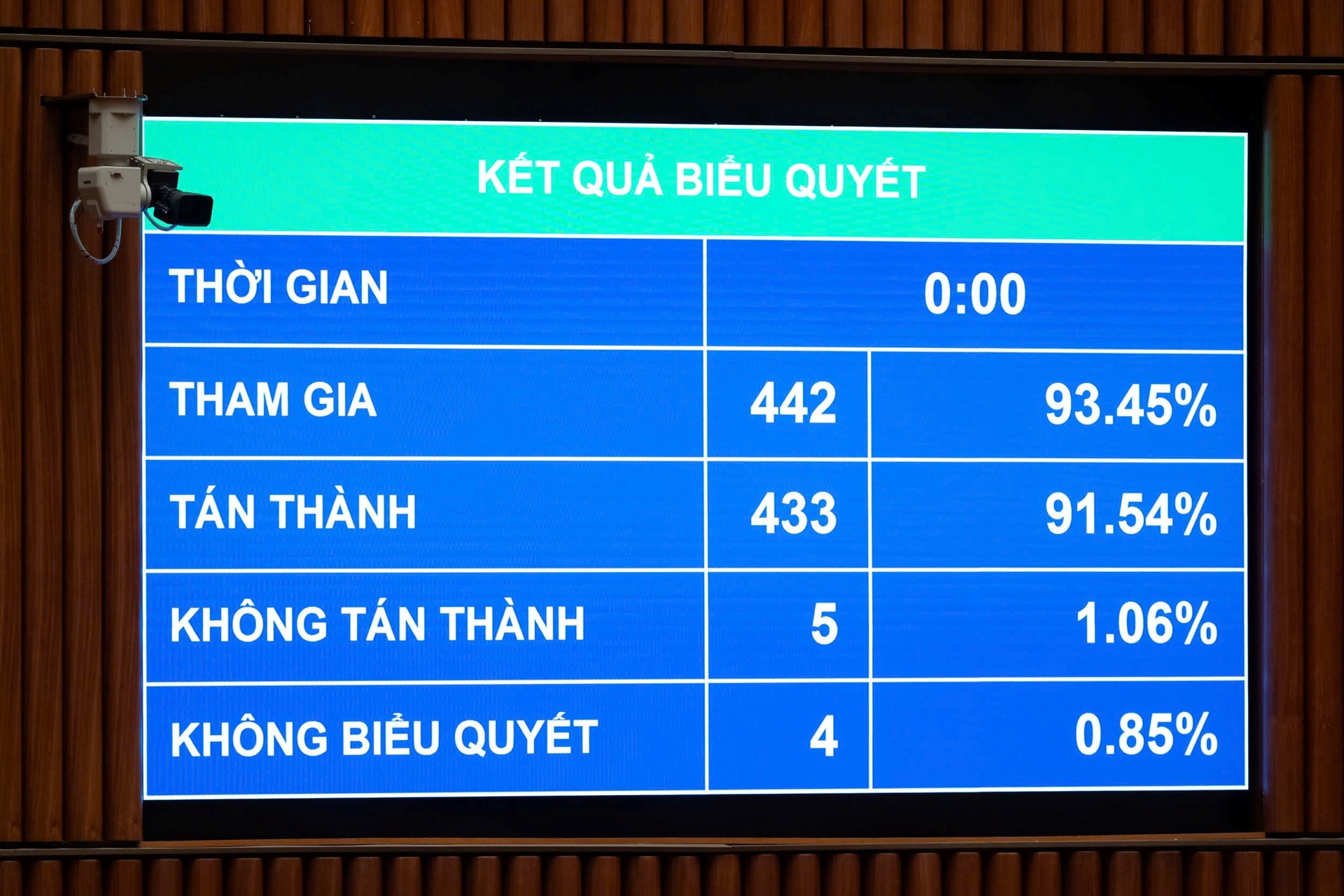
On the morning of 11 December, 2025, the National Assembly voted to pass the draft Law on Digital Transformation with 433 out of 442 attending National Assembly delegates voting in favor, achieving 91.54% of the total number of delegates. Accordingly, the draft law was finalized by the Government based on maximum assimilation of the opinions of the National Assembly Standing Committee, verification agencies, and National Assembly delegates, ensuring it is both strategically sound and feasible in implementation.
Resolving legal "bottlenecks" in digital transformation
The Law on Digital Transformation comprises 8 chapters and 48 articles, built on a "framework law" model—stipulating major principles, requirements, and orientations, without delving into regulations within the scope of specialized laws but maintaining the role of creating consistency in the organization and coordination of the digital transformation process nationwide.
The Law on Digital Transformation serves as the "institutional infrastructure pillar" for the entire national digital transformation process. The promulgation of the Law creates a unified legal framework, overcoming the situation of "doing while searching," and at the same time giving ministries, sectors, and localities a basis to deploy new models such as open data, shared data, automation of public services, mobile digital signatures, or the application of artificial intelligence in management.
The Law on Digital Transformation for the first time establishes legal standards regarding open data, digital identity, digital transactions, full-process online public services, and information system security in the digital environment.
Regarding data, the Law clearly defines the concept and scope of open data, the responsibility of state agencies in data sharing to promote transparency, social supervision, and the formation of a healthy data market.
Regarding digital identity, the Law aims to build a unified, reliable identity platform, serving authentication in all electronic transactions, from administrative procedures, finance - banking to e-commerce and other digital services.
The Law on Digital Transformation also clarifies the requirement for full-process online public services, meaning that citizens and businesses can complete the entire procedure process in the digital environment without having to resubmit multiple times information and documents already available in the state database.
Accompanying this is a system of regulations on safety, cybersecurity, personal data protection, and prevention of acts of exploiting digital platforms to violate the law, disrupt the market, or infringe upon the legitimate rights and interests of organizations and individuals.
Completing institutions, building the foundation for a digital nation
Before the Law on Digital Transformation was passed by the National Assembly, in his explanation report, Minister of Science and Technology Nguyen Manh Hung stated that the Law on Digital Transformation was designed to address new challenges in the digital data and digital economy phase, where the requirements for connection, sharing, integration, and operation of digital platforms are decisive for national competitiveness.
One of the most important contents of the Law on Digital Transformation is that it is the first time the fundamental concepts have been legalized: digital transformation, digital system, digital data, digital infrastructure, digital platform, digital government, digital economy, digital society. The Government stated that these definitions have been thoroughly assimilated and revised to ensure scientific rigor and standardize understanding for the entire political system and entities participating in digital transformation.
According to Minister of Science and Technology Nguyen Manh Hung, the highlight of the Law on Digital Transformation is to clarify the difference between digital transformation and information technology application: If information technology application merely moves old activities to the digital environment, digital transformation is about changing the mode of operation, governance model, and method of service provision. This is considered the core philosophy of the law, embodying the spirit of "transform first - digitize later."
In addition to completing the system of concepts, the Law on Digital Transformation also clearly regulates macro-governance tools such as the National Digital Transformation Program, the National Digital Architecture Framework, the Data Governance Framework, the Digital Capability Framework, and the National Digital Transformation Measurement Index Set. These tools are likened to a "central coordination set," helping the State evaluate progress, promote implementation, and ensure consistency between digital transformation at the national, ministerial/sectoral, and local levels.
Regarding digital transformation projects without precedent, Minister Nguyen Manh Hung stated that the Law on Digital Transformation has supplemented a trial development mechanism with an independent funding source and a partner selection mechanism to test solutions before deploying official investment projects. This is considered an important step to reduce risks, avoid budget waste, and at the same time encourage innovation in new fields such as big data and artificial intelligence./.
Copyright belongs to the Vietnam Journal of Science and Technology (VJST-MOST).