Elevating strategic technology cooperation to a new pillar of the Vietnam-Russia comprehensive strategic partnership
Speaking at the Vietnam-Russia Science and Technology Forum, General Secretary of the Central Committee of the Communist Party of Vietnam (CPV) and President To Lam emphasized that the two nations are focusing on key strategic directions, notably the goal of establishing cooperation in strategic technologies as a new pillar of the Vietnam-Russia comprehensive strategic partnership.
On the morning of September 9 (local time), during his state visit to the Russian Federation, General Secretary and President To Lam and the high-level Vietnamese delegation attended the Vietnam-Russia Science and Technology Forum in Moscow, held under the theme "Connecting Strategic Technologies".
The forum was organized through the close collaboration of the Russian Government, the Russian Ministry of Science and Higher Education, and relevant agencies from both countries.
Attendees included Russian Deputy Prime Minister Dmitry Chernyshenko, Russian Minister of Science and Higher Education Valery Falkov, and Vietnamese Minister of Science and Technology Vu Hai Quan.
The forum also brought together 500 delegates representing policymakers, research institutes, technology business associations, experts, scientists, and investors from both Vietnam and Russia.
Significant potential remains for high-tech cooperation between the two nations
In his opening remarks at the forum, Russian Deputy Prime Minister Chernyshenko emphasized that Vietnam has long been a trusted partner of Russia. Bilateral relations are rooted in a tradition of friendship and mutual support, spanning various sectors - most notably science and education.
In accordance with a joint statement issued by the two nations, 2026 has been designated as the Year of Educational, Scientific, and Technological Exchange between Vietnam and the Russian Federation.
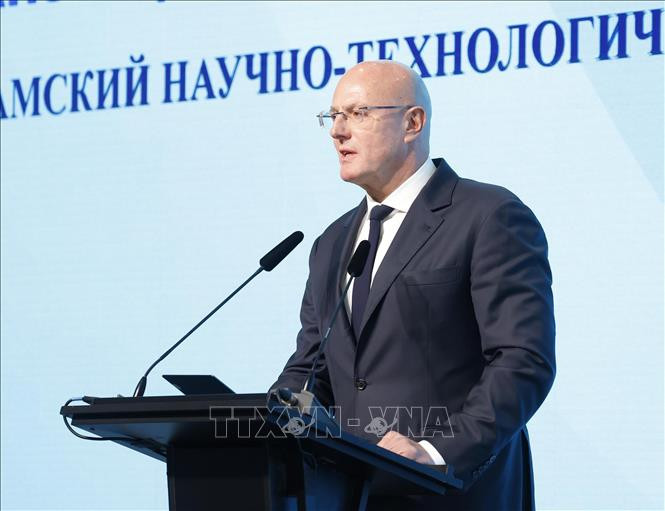
Deputy Prime Minister Chernyshenko noted the substantial potential for cooperation in the high-tech sector. He added that at the forum, the two sides would launch a selection process for new joint research projects - co-organized by the Russian Science Foundation and the National Foundation for Science and Technology Development (NAFOSTED) of Vietnam - alongside several other collaborative initiatives.
Highlighting fields such as artificial intelligence (AI), advanced materials, new energy, and space technology as key drivers of the future technological landscape, Deputy Prime Minister Chernyshenko stressed that it is crucial for both nations not only to share achievements but also to pool their capabilities to jointly foster cutting-edge developments.
He expressed confidence that this cooperation would provide fresh momentum for the continued growth of the comprehensive strategic partnership between Russia and Vietnam.
Science, technology, innovation, and digital transformation are key drivers for transforming the growth model
Speaking at the forum, General Secretary and President To Lam noted that the event takes place as Vietnam enters a new phase of development, driven by the aspiration to build a nation that is peaceful, independent, democratic, wealthy, prosperous, civilized, and happy. The country aims to become a developing nation with modern industry and upper-middle income by 2030, and a developed, high-income nation by 2045.
.jpg)
General Secretary and President To Lam emphasized that to achieve these goals, Vietnam identifies science, technology, innovation, and digital transformation as key drivers for transforming its growth model and enhancing the economy's productivity, competitiveness, and autonomy, in accordance with the spirit of Resolution No. 57-NQ/TW.
Throughout this process, Vietnam attaches great importance to international cooperation - particularly with partners possessing strong scientific and technological foundations, a history of traditional friendship, and the capacity to complement Vietnam's development needs.
General Secretary and President To Lam remarked that the relationship between Vietnam and the Russian Federation has stood the test of time over several decades, with science, technology, and education serving as the special foundation of this bond.
Tens of thousands of Vietnamese officials and experts have been trained in the former Soviet Union and the modern-day Russian Federation; many have gone on to become scientists, specialists, and leaders, making significant contributions to Vietnam's nation-building and development.
The two countries will focus on major strategic directions, specifically establishing cooperation in strategic technologies as a new pillar of the Vietnam-Russia Federation comprehensive strategic partnership.
Both nations will select sectors of true strategic importance - such as nuclear energy, new energy, space and satellite technology, semiconductors and microelectronics, quantum technology, and AI - by combining Russia's scientific and technological strengths with Vietnam's development needs, human resources, and market potential. Priority will be given to fields capable of generating new technological capabilities, directly contributing to socio-economic development and security, and enhancing the technological autonomy of both countries.
General Secretary and President To Lam expressed the hope that Russian technology and energy corporations would increase investment and technology transfer to Vietnam, while also encouraging Vietnamese technology enterprises to proactively seek investment and cooperation opportunities in the Russian Federation.
He proposed creating favorable conditions for scientists and businesses from both countries to meet, exchange ideas, and collaborate, while also making significant investments in the next generation of scientists and experts from both Vietnam and Russia.
Both sides need to expand training programs in strategic technology fields, increase the exchange of young scientists, researchers, and engineers, and facilitate joint scientific and technological projects undertaken by young research teams from both countries.
The governments and relevant agencies of both countries will continue to leverage the role of the Vietnam-Russia Committee on Cooperation in Education, Science, and Technology, and explore the establishment of a mechanism to regularly review key science and technology cooperation projects.
Specifically, each program must clearly define its objectives, implementing partners, resources, deliverables, and timelines. Signed agreements must be translated into programs, and programs into projects. These projects must generate technologies and products, and market access must be facilitated for products with potential.
General Secretary and President To Lam expressed confidence that, given the foundation of traditional friendship and high-level political trust, along with the Russian Federation's scientific and technological potential, and Vietnam's determination to innovate and achieve robust growth, cooperation in science, technology, and innovation would truly become a new driving force, a new pillar, and a new symbol of the relationship between Vietnam and the Russian Federation in the 21st century.
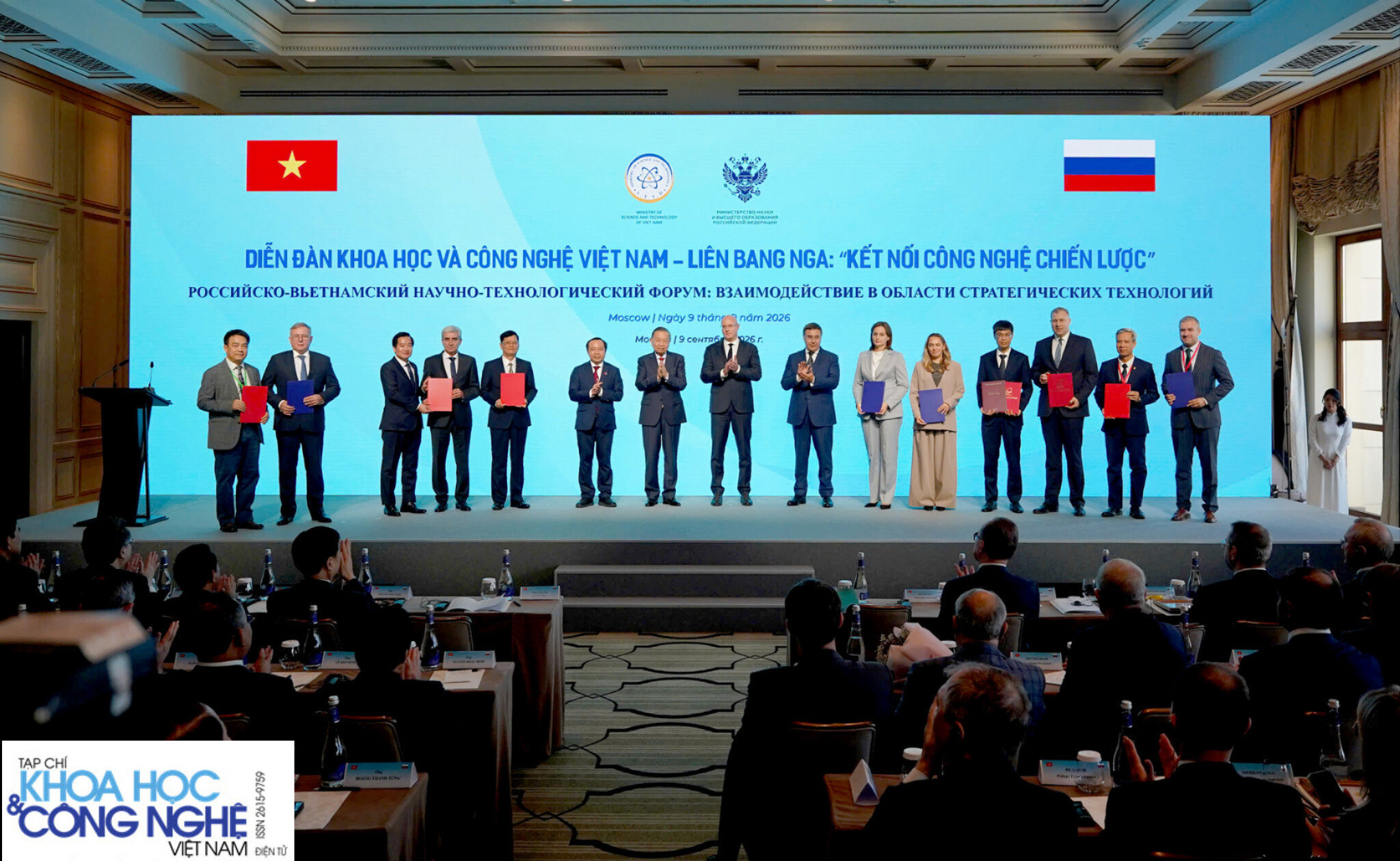
General Secretary and President To Lam and Russian Deputy Prime Minister Dmitry Chernyshenko witness the exchange of cooperation agreements between the two countries. (Photo: Reporter)
At the forum, the two sides launched the Vietnam-Russia Knowledge Network and exchanged cooperation documents regarding science, technology, and education.
Elevating science and technology cooperation between the two countries to a new level
In his opening remarks at the forum, Minister of Science and Technology Vu Hai Quan emphasized that within the history of the excellent traditional friendship and comprehensive strategic partnership between Vietnam and the Russian Federation, science, technology, and education have always been among the most important pillars.
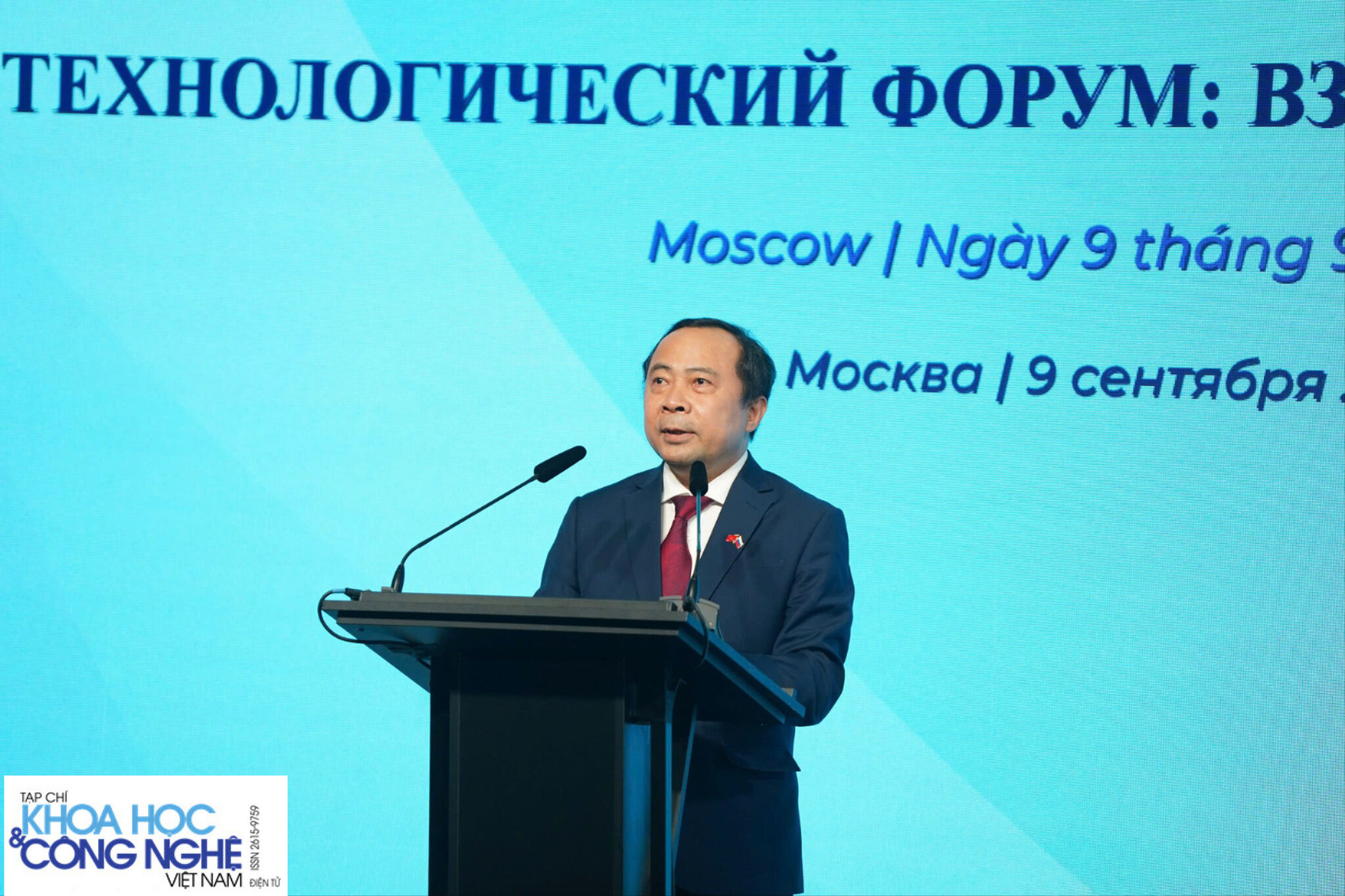
Tens of thousands of Vietnam's leading officials, scientists and experts have been trained in Russia, becoming a valuable human resource that contributes greatly to the protection, construction and development of Vietnam.
Entering a new era, Minister Vu Hai Quan said that science and technology cooperation between the two countries requires a new dimension. The topic of strategic technology connection of today's forum is an affirmation of that common commitment and aspiration.
According to the Minister, Vietnam has a great need to acquire, master and develop core and strategic technologies. Meanwhile, the Russian Federation always maintains its position as the world's leading power in basic science, nuclear technology, quantum technology, new materials and information security.
"The combination of Russia's excellent research potential and the dynamism and aspiration of Vietnamese scientists will create breakthrough values”, Minister Vu Hai Quan emphasized.
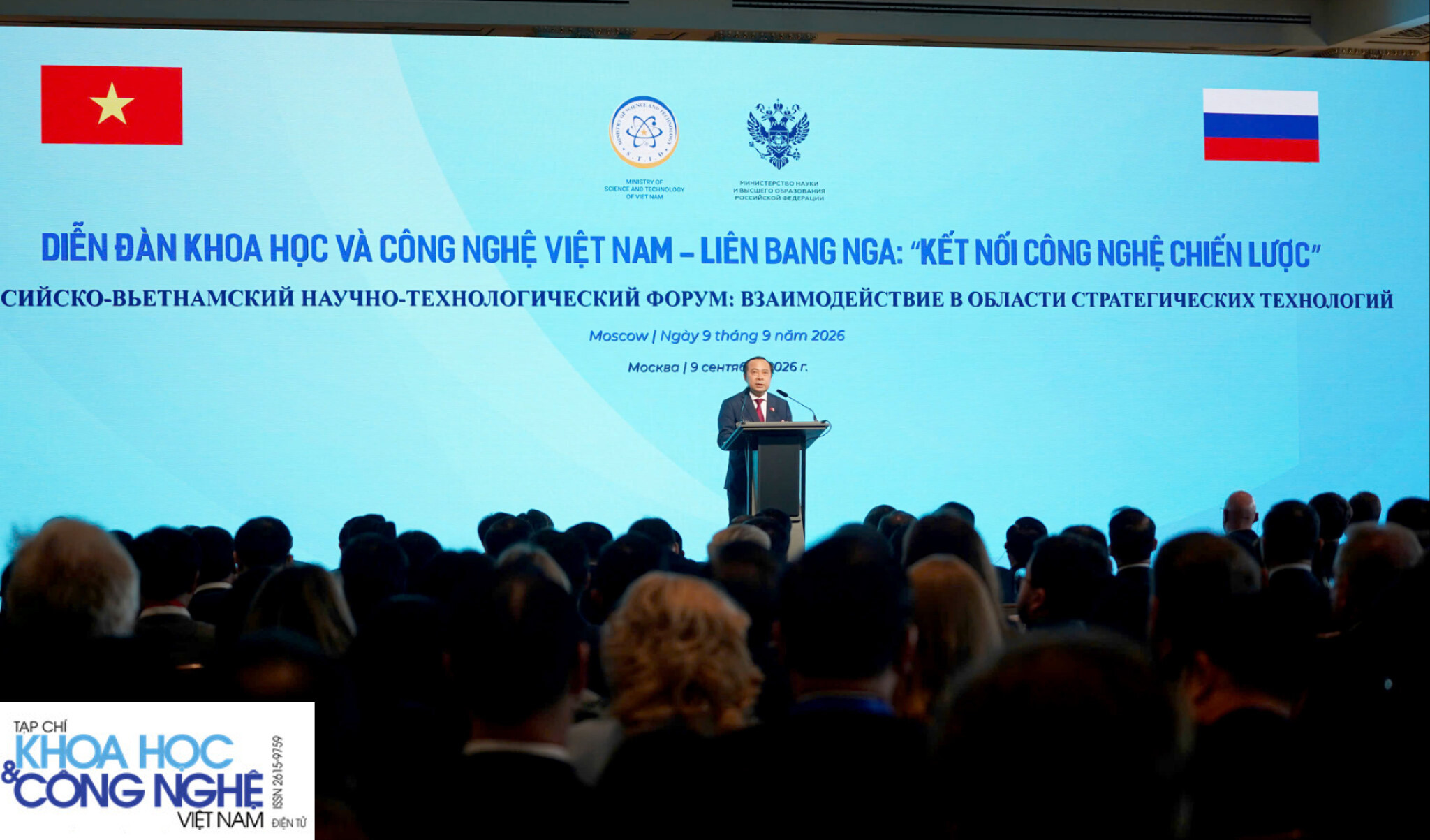
Minister Vu Hai Quan stated that he and the Minister of Science and Higher Education of the Russian Federation had held discussions - both in-person and online - regarding future cooperation directions, including:
First, continuing to expand the joint research funding program to encompass strategic technology sectors; for 2026, four projects were selected for funding out of 34 proposals - a threefold increase compared to 2005.
Second, organizing a meeting of the Joint Committee on Science and Technology in late November to discuss strategic technologies, quantum technologies, and the establishment of a strategic technology research center.
Third, agreeing to facilitate the participation of at least 30-50 young Vietnamese scientists as special guests at a conference for young scientists in early December 2026.
Fourth, increasing scholarship support for doctoral training in strategic technology fields.
Minister Vu Hai Quan also expressed his hope that delegates would engage in open and in-depth discussions on three core issues:
First, focusing on specific strategic technologies where the two sides possess complementary strengths.
Second, establishing models for in-depth research and development cooperation.
Third, linking science and technology cooperation with human resource training, as well as with businesses and the market.
Minister Vu Hai Quan expressed confidence that the discussions held during today's thematic sessions and technology partnership sessions would open a new chapter, realize commitments, and elevate Vietnam-Russia science and technology cooperation to a new level - one commensurate with the potential and the comprehensive strategic partnership between the two nations./.
Copyright belongs to the Vietnam Journal of Science and Technology (VJST-MOST).