Digital sovereignty and the silicon alliance: South Korea’s blueprint for AI leadership and strategic partnership with Vietnam
In the rapidly evolving landscape of the 21st century, artificial intelligence (AI) has transcended its status as a mere technological tool to become a cornerstone of national power. This sentiment was at the heart of an exclusive interview with Mr. Park Yunkyu, President of South Korea’s National IT Industry Promotion Agency (NIPA).
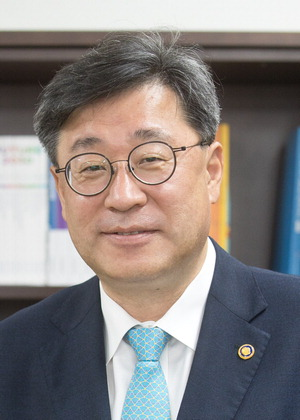
Speaking with the Vietnam Journal of Science and Technology, President Park outlined a visionary "AI sovereignty" strategy aimed at propelling South Korea into the global top three AI powers, while simultaneously carving out a profound collaborative roadmap with Vietnam in the realms of semiconductors and talent development.
This is a special interview by Vietnam Journal of Science and Technology
The concept of AI sovereignty: beyond technology
President Park began by clarifying a term that has become central to South Korea’s national policy: AI sovereignty. For Seoul, AI is not just an industry; it is a transformative force capable of reshaping the very fabric of politics, society, culture, and security.
"AI sovereignty reflects the strategic direction our government is pursuing", President Park stated. "We do not see AI simply as a tool, but as a strategic asset for national security. Possessing world-class AI capabilities is, in this sense, a matter of national survival".
To realize this vision, South Korea has set an ambitious goal: to join the United States and China as one of the world’s three leading AI ecosystems. This objective rests on three pillars: the development of independent AI infrastructure, the creation of proprietary foundation models, and the aggressive advancement of AI-specific semiconductors.
The silicon bond: semiconductors as a strategic link
A significant portion of the dialogue focused on the synergy between AI and semiconductors - a field where South Korea holds a dominant global position, particularly in memory chips. President Park emphasized that as AI infrastructure becomes more critical, the role of specialized AI semiconductors will grow exponentially.
This presents a unique opening for Vietnam. As the Southeast Asian nation aggressively pursues its own high-tech goals, including the establishment of AI data centers, the partnership with South Korean firms becomes a "mutually beneficial" necessity. Park highlighted that Vietnam’s high-quality human resources, specifically its burgeoning pool of software engineers, are the "crucial role" players in this international supply chain.
Bridging the talent gap: The "Korea IT school" and beyond
Perhaps the most pressing challenge discussed was the global war for talent. President Park noted that even a tech giant like South Korea faces the risk of "brain drain" to hubs like the U.S. and China. A collaborative ecosystem where knowledge and resources flow freely between Seoul and Hanoi.
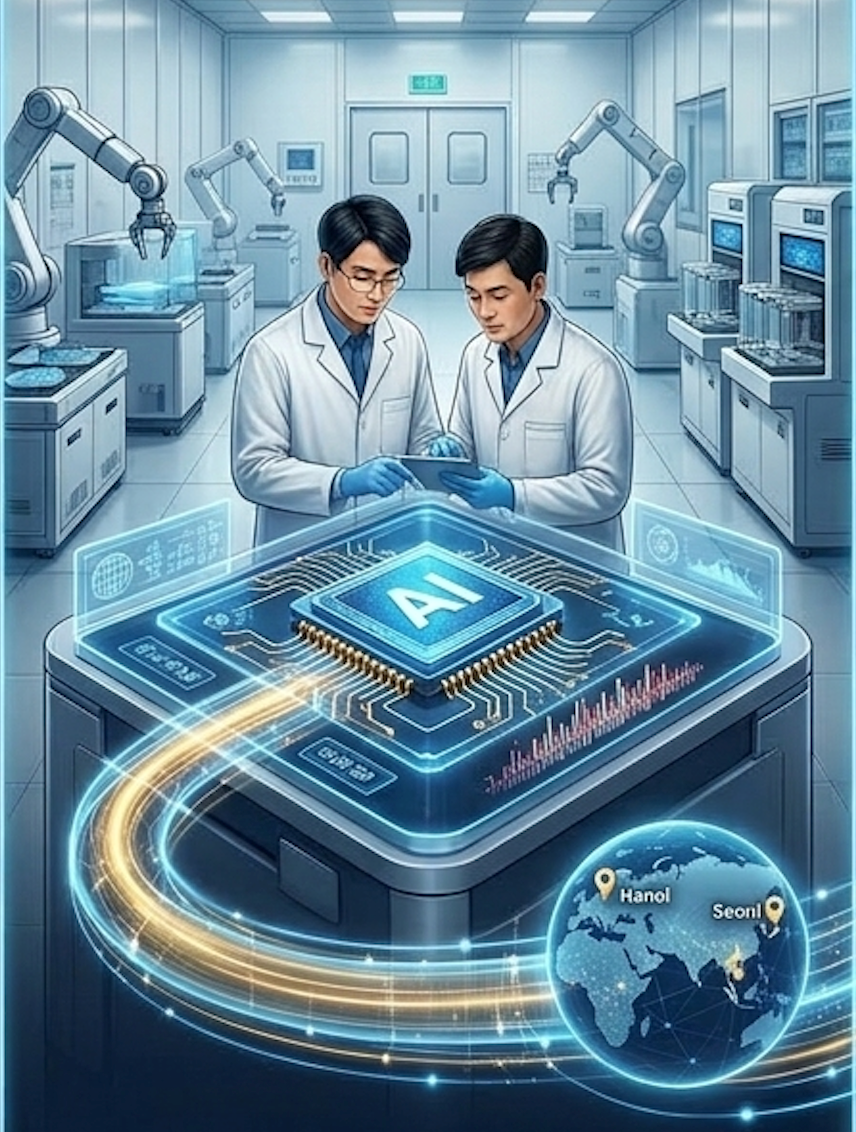
He proposed several concrete mechanisms:
- The Korea IT School Program: An initiative designed to train and integrate Vietnamese tech talent into the global digital economy.
- Academic Partnerships: Research collaborations with top-tier Vietnamese universities.
- Shared Resources: Providing Vietnamese researchers access to South Korea’s advanced training facilities and computing power.
"There is a saying that only one outstanding individual can inspire and influence many others", Park remarked. "Investing in human resources is the most important investment we can make for our shared future".
Empowering the underdogs: AI vouchers for startups
Recognizing that innovation often bubbles up from the bottom, President Park detailed NIPA’s strategy for supporting small and medium enterprises (SMEs) and startups. He acknowledged that while smaller firms are agile and creative, they often lack the "computing power and data resources" required to compete with tech titans.
To level the playing field, South Korea has introduced a flexible voucher system. Instead of rigid, one-size-fits-all support packages, the government provides AI and data vouchers. These allow startups to purchase exactly what they need to bring their creative ideas to market. Furthermore, South Korea plans to open its independent foundation models as open-source resources, ensuring that the digital divide does not leave innovative Vietnamese and Korean startups behind.
Walking the talk: AI in the public sector
In a candid moment, President Park addressed the challenges of implementing AI within government agencies like NIPA. Due to strict security regulations, public bodies often cannot use commercial AI services like ChatGPT.
To overcome this, NIPA is currently building its own internal AI-based platform, slated for completion in 2027. This system will allow staff to process support requests from enterprises more efficiently and securely. "By integrating AI tools into our own operations, we set a standard for how public institutions can evolve in the digital age", he explained.
A vision of inclusive growth
As the interview drew to a close, the message was clear: the future of AI in Asia depends on more than just code - nations must build trust, share infrastructure, and cultivate the next generation of thinkers together. For Vietnam and South Korea, the path forward is paved with silicon and shared ambition.
Through the lens of AI sovereignty, South Korea is not just looking to lead; it is looking to build a resilient, inclusive ecosystem where partners like Vietnam are not just observers, but essential architects of the new digital order./.
Copyright belongs to the Vietnam Journal of Science and Technology (VJST-MOST)