
Science and technology driving net zero agriculture through green rice farming
A green rice farming model being implemented in Ninh Binh province is harnessing science and technology to reduce methane emissions, promote a circular economy and support Vietnam’s commitment to achieving net zero emissions.
The “Green and sustainable rice production value chain and circular agriculture from rice straw” initiative, jointly implemented by the International Rice Research Institute (IRRI), Vietnam Green Agriculture Investment and Development Group Joint Stock Company (VAG Group) and the Ninh Binh Provincial Department of Agriculture and Environment, has already demonstrated tangible results.
The model has reduced production costs by more than 25%, increased yields by around 20% and significantly cut greenhouse gas emissions.
It is regarded as a flagship initiative for transitioning Vietnam’s rice production towards low-emission agriculture, contributing to the country’s pledge to achieve net zero emissions by 2050.
Turning the Net Zero commitment into action in rice fields
Vietnam is entering an accelerated phase of implementing its commitment to achieving net zero greenhouse gas emissions by 2050. Within the agricultural sector, rice cultivation has been identified as one of the country’s largest sources of methane emissions.
As a result, transforming farming practices through the application of science and technology and the development of a circular agricultural economy is considered essential to reducing emissions while safeguarding the livelihoods of millions of farming households.
On 8 July 2026, at the Green Agricultural Innovation Centre (GAIC) in Nghia Son commune, Ninh Binh province, IRRI, VAG Group and the Ninh Binh Provincial Department of Agriculture and Environment officially launched the “Green and sustainable rice production value chain and circular agriculture from rice straw” programme.
The launch ceremony brought together more than 130 participants, including representatives from the Ministry of Agriculture and Environment, the Ministry of Science and Technology, the provincial departments and agencies from across the Red river delta, international organisations, businesses, cooperatives and farmers.
The event marked the rollout of the green rice production value chain for the 2026 Summer-Autumn crop, building on the encouraging results achieved by pilot projects during the 2026 Spring crop. The initiative aims to expand an efficient, low-emission rice production model across the entire Red river delta region.
Rice production faces an urgent need for transformation
According to experts, rice production in the Red river delta is facing mounting challenges. Rapid urbanisation has led to an increasingly acute shortage of agricultural labour, while the costs of labour, seeds, fertilisers and crop protection products continue to rise.
Traditional rice transplanting remains labour-intensive and costly, requiring farmers to prepare seedlings, transport them to the fields and manually transplant them. Transplanting costs can reach VND 180,000 per one sào (360 m²).
Furthermore, conventional broadcast seeding requires large quantities of seed, often results in lower germination rates, increases the risk of pests and diseases, and leads to greater use of fertilisers and crop protection products. Meanwhile, the widespread practice of burning rice straw after harvest continues to contribute to environmental pollution and higher greenhouse gas emissions.
Against this backdrop, transitioning to low-emission rice production has become not only a prerequisite for fulfilling Vietnam’s Net Zero commitment but also a strategic measure to enhance the competitiveness of the country’s rice industry.
The “4 Đúng 4 Tăng” approach: The foundation of low-emission rice cultivation
At the heart of the model is the “4 Đúng 4 Tăng” (4 Rights 4 Gains - 4R4G) approach, which advocates applying fertiliser using the right type, the right rate, at the right time, and in the right place and manner. This is designed to achieve four gains: higher yields, better quality, higher incomes, and healthier soils.
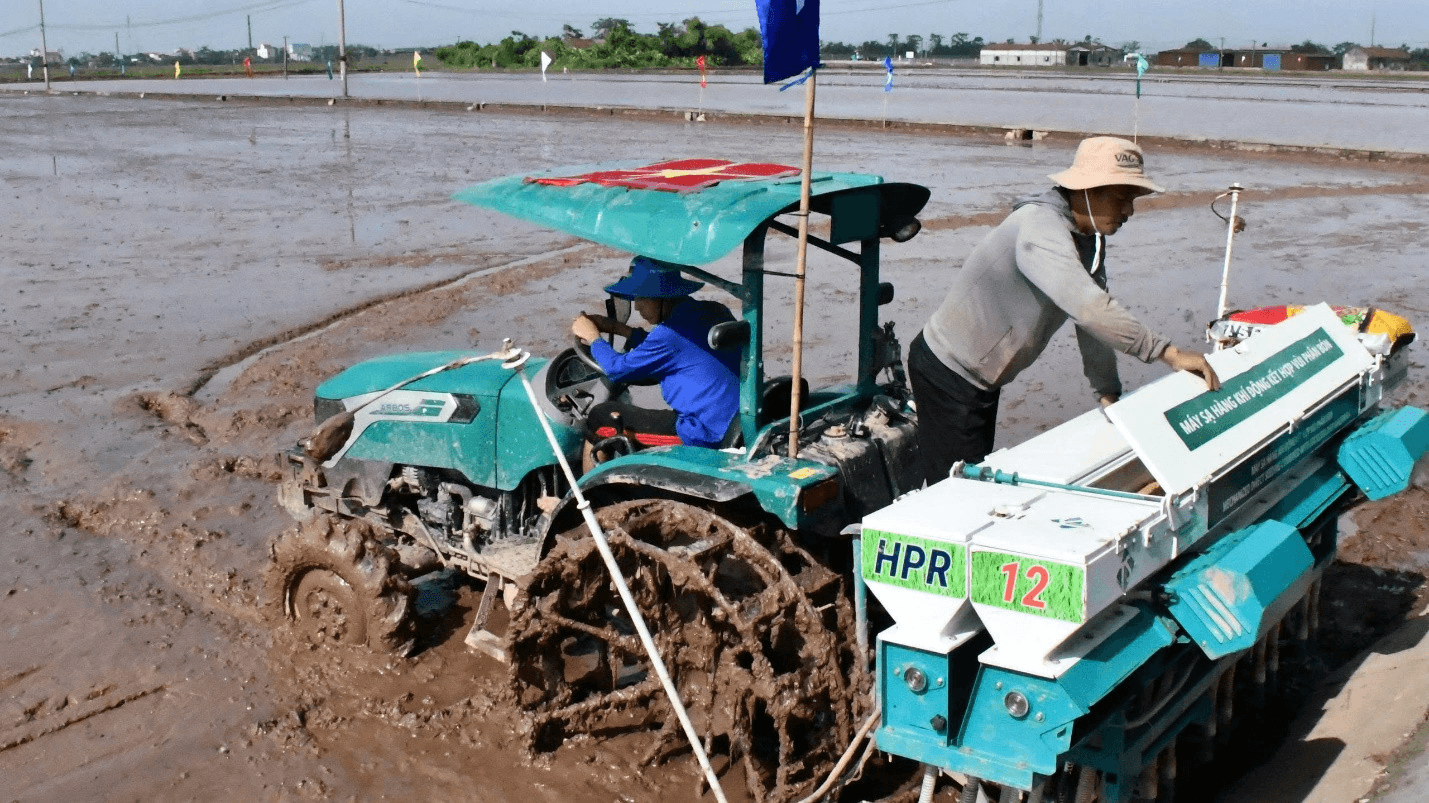
The approach integrates mechanised dry direct seeding combined with fertiliser deep placement (mDSR-FDP) technology, proper water management, and low-emission rice straw management.
According to IRRI, the mDSR-FDP technology employs a pneumatic direct-seeding system that places seeds approximately 1-2 mm beneath the soil surface while simultaneously placing fertiliser at a depth of 4-5 cm. The alternating wide and narrow row configuration creates a border-row effect that enhances photosynthesis, promotes stronger root development, improves lodging resistance and reduces pest and disease pressure.
More importantly, placing fertiliser precisely where it is needed significantly improves nutrient use efficiency, reduces nitrogen fertiliser application by more than 30%, and helps lower greenhouse gas emissions from rice production.
Impressive results backed by field evidence
Unlike many demonstration projects, the production value chain established in Ninh Binh province has already produced measurable results after two cropping seasons.
According to Dr. Nguyen Van Hung, senior scientist at IRRI, the model reduced fertiliser use by around 30% in its very first season, cut production costs by at least VND 7 million per hectare, and increased farmers' profits by approximately VND 21 million per hectare.
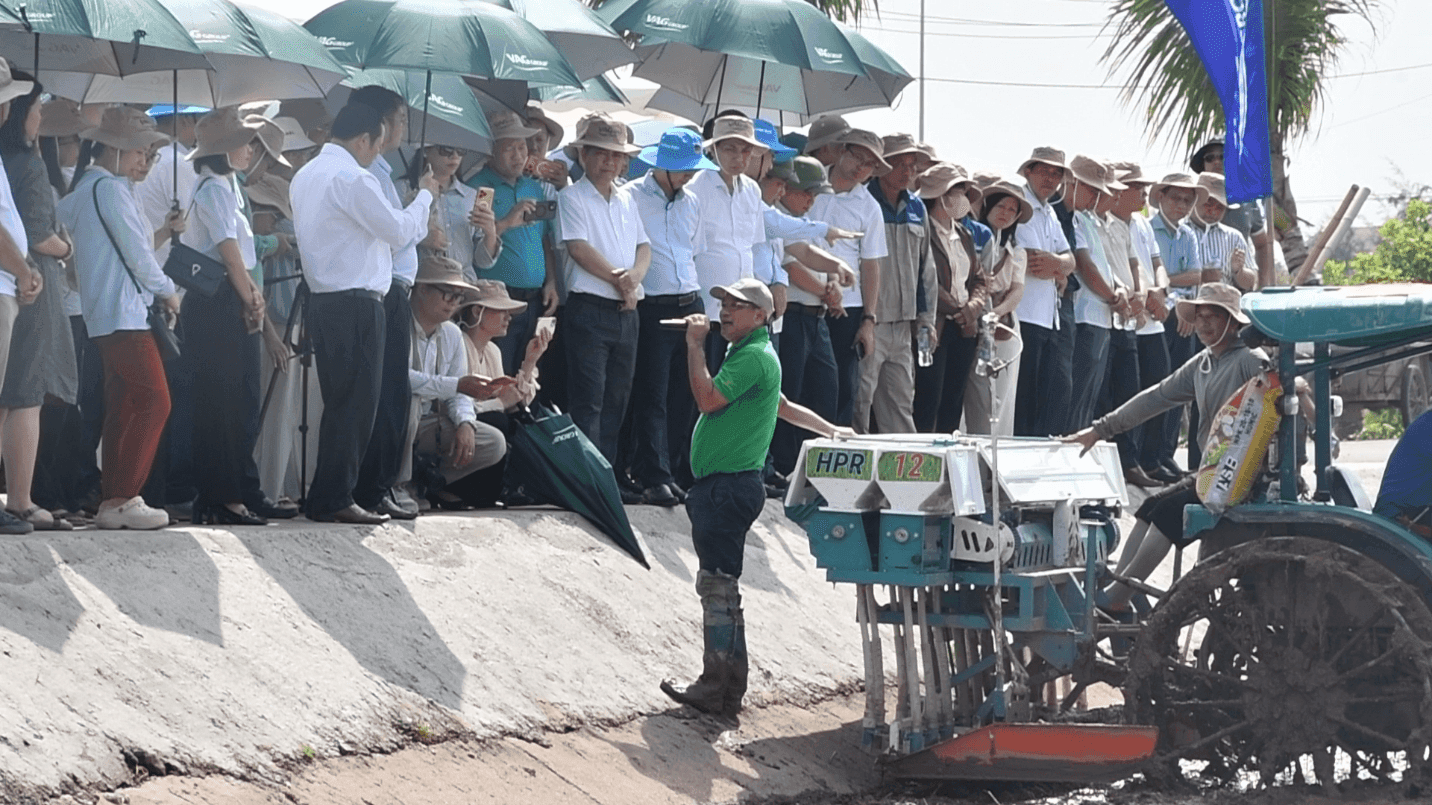
Data compiled from demonstration sites in Hung Yen, Hai Phong and Ninh Binh Provinces show that applying the mDSR-FDP technology costs around VND 60,000 per 360 m², roughly one-sixth of the cost of conventional rice transplanting.
The technology also reduces seed use by more than 30%, lowers overall production costs by over 25%, increases yields by around 20%, and generates an average profit of approximately VND 21 million per hectare, equivalent to about VND 750,000 per 360 m², substantially higher than that achieved through conventional transplanting or broadcast seeding.
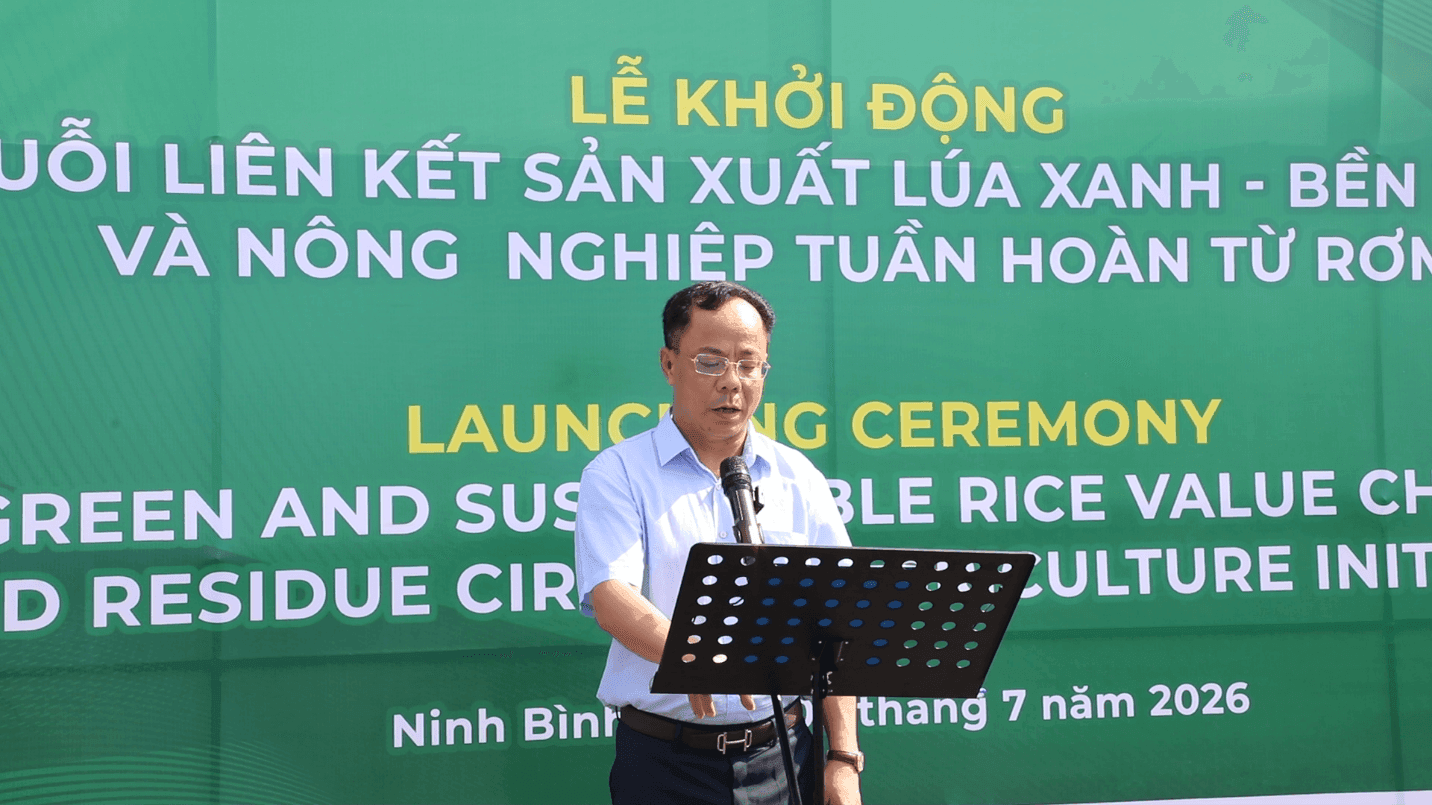
Mr. Nguyen Sinh Tien, Deputy Director of the Ninh Binh Provincial Department of Agriculture and Environment, said the model had consistently demonstrated its effectiveness over two cropping seasons by reducing fertiliser use and labour requirements while improving yields. The provincial government has adopted a resolution supporting the use of organic fertilisers on rice-growing land and will continue working with IRRI to refine the technical package before scaling up the model in the coming years.
A circular economy for rice straw: Cutting emissions while creating value
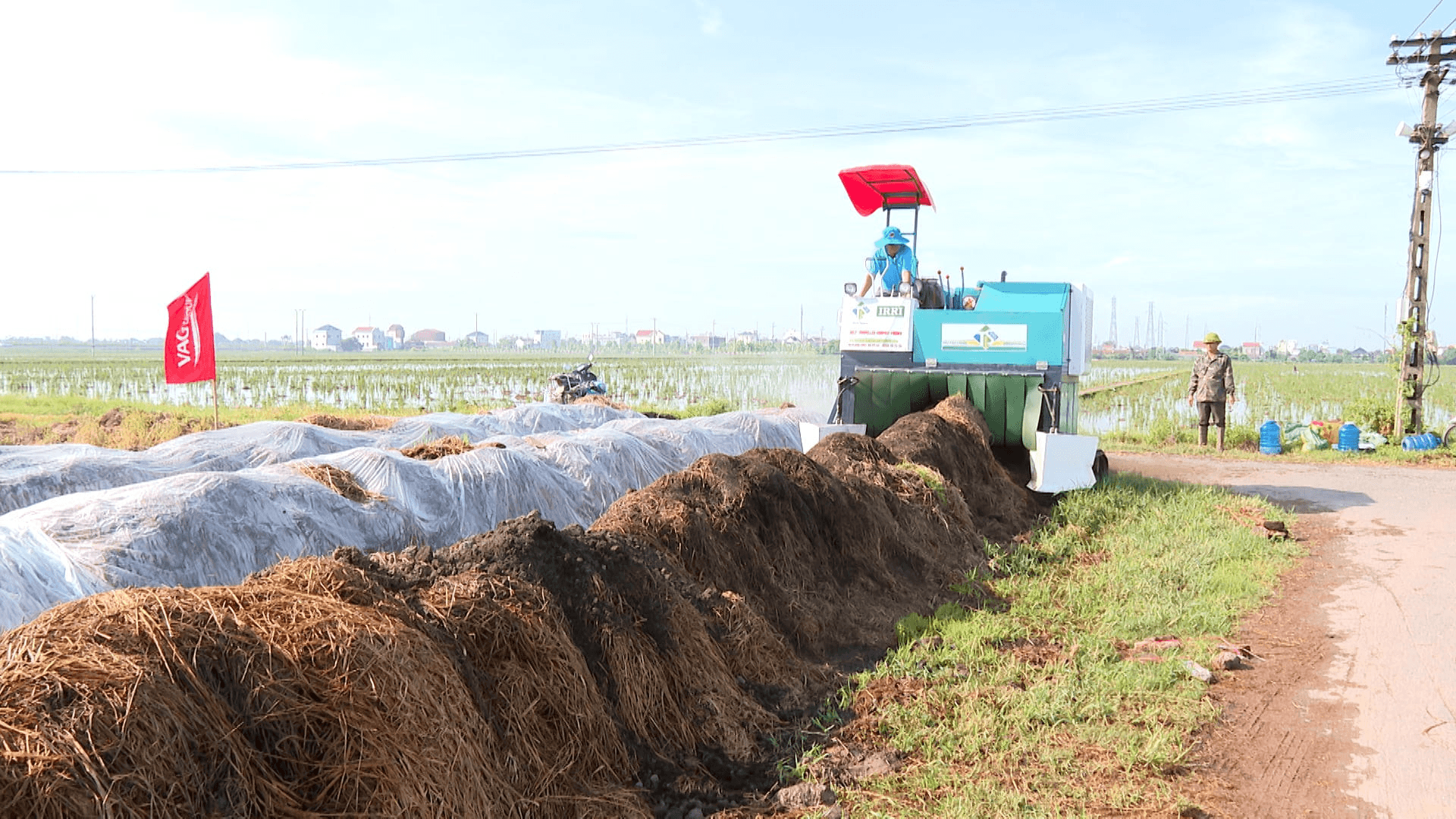
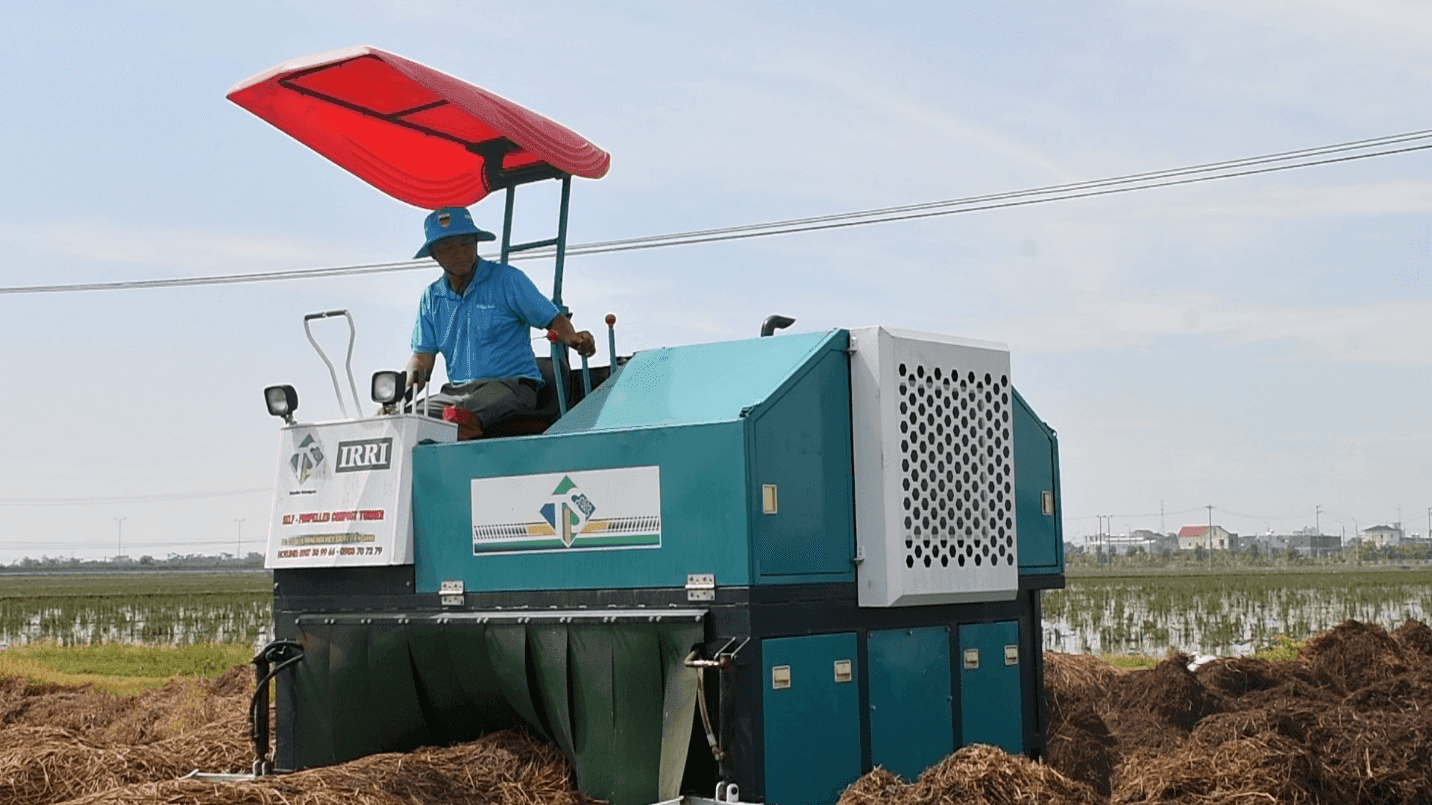
A defining feature of the model is the development of a circular value chain for rice straw. Instead of being burned after harvest, all collected straw is mixed with livestock manure and BOF Organic Gem microbial bio-products to produce organic fertiliser.
According to IRRI, this approach significantly reduces greenhouse gas emissions associated with open-field straw burning while improving soil fertility, enhancing the soil’s capacity to retain water and nutrients, and gradually restoring the health of paddy field ecosystems.
More importantly, rice straw, which previously generated little or no economic value, has become a valuable raw material for organic fertiliser production. This creates an additional source of income for farmers, cooperatives and local businesses, while helping establish a low-emission circular agricultural value chain.
Mr. Tran Quoc Toan, a farmer from Nghia Son commune, said that since joining the programme, his fertiliser costs had fallen by around VND 100,000 per 360 m². He also observed that the soil had become more friable, rice plants were healthier and pest pressure had declined. With adequate access to machinery, he said, farmers would be fully prepared to expand the model.
A public-private partnership bringing science into the field
According to IRRI, the success of the initiative lies in its public-private partnership (PPP) model, which brings together government agencies, research institutions and businesses.
In addition to VAG Group, the programme involves companies specialising in agricultural mechanisation, fertilisers and biological products, with the aim of translating research outcomes into large-scale agricultural production.
Alongside the production model, the GAIC is conducting field trials on the LP5 rice variety, testing different nutrient management regimes to identify the most suitable technical solutions for varying farming conditions.
Dr. Nguyen Van Hung said that IRRI prioritises the development of integrated solutions tailored to specific agroecological zones and local farming conditions. The trials in Ninh Binh province are designed not only to optimise rice production practices but also to achieve broader long-term goals: increasing farmers’ incomes, safeguarding food security and advancing low-emission agriculture.
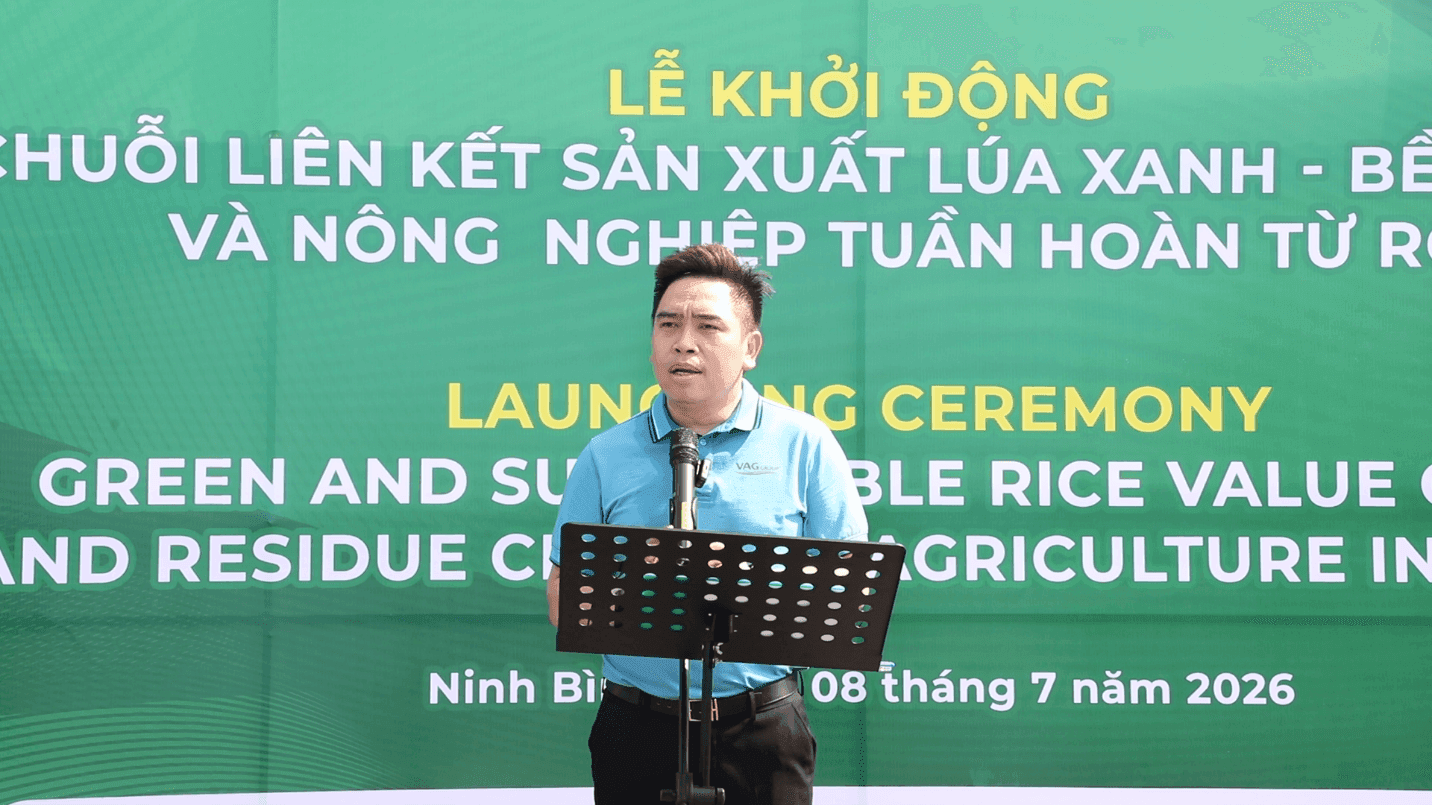
Representing the private sector, Mr. Nguyen Quang Truong, Chief Executive Officer of VAG Group, said the company’s ambition extends well beyond supplying agricultural inputs. Instead, it aims to provide an integrated solution covering cultivation practices, mechanisation, by-product management and market linkages. The ultimate goal, he said, is to establish low-emission green rice production areas while building a premium green rice brand with higher added value.
From a demonstration model to a national Net Zero strategy
Following the 2026 Summer-Autumn crop, IRRI and its partners will continue monitoring and conducting a comprehensive evaluation of the programme to support its expansion to more cooperatives and localities across the Red river delta.
The initial results suggest that reducing emissions from rice production is not simply a matter of adopting new technologies. Rather, it requires restructuring the entire value chain, from seed selection, mechanisation and nutrient management to by-product utilisation, branding and market development.
As Vietnam moves forward with programmes promoting ecological agriculture, modern rural development and its commitment to achieving Net Zero by 2050, the partnership between IRRI, VAG Group and Ninh Binh province demonstrates how science and technology are becoming a powerful driver of the transition towards greener, more productive and more sustainable rice farming.
When farmers can reduce production costs and increase their incomes, businesses can build stronger value chains, and the environment benefits from lower emissions, the country’s Net Zero ambition is no longer merely a policy commitment. It is being translated into tangible action across Vietnam’s rice fields./.
Copyright belongs to the Vietnam Journal of Science and Technology (VJST-MOST)