

Completing the amended Law on Metrology towards digital transformation and decentralized management
Aiming to complete a legal framework consistent with the context of digital transformation and international integration, the Draft Amended Law on Metrology has been developed with three major policy pillars, emphasizing the central role of enterprises and the innovation of management methods on digital platforms.
On April 10, in Ho Chi Minh City, the National Commission for Standards, Metrology and Quality (Ministry of Science and Technology) organized a consultative workshop to gather feedback on the Draft Law amending and supplementing several articles of the Law on Metrology. Deputy Minister of Science and Technology Le Xuan Dinh attended and chaired the workshop.
Speaking at the event, Deputy Minister Le Xuan Dinh noted that after more than 14 years of implementing the 2011 Law on Metrology, the nation's developmental landscape has undergone profound changes. Digital transformation is occurring vigorously, and science, technology, and innovation have increasingly become drivers of growth, leading to a requirement for institutional refinement to meet the demands of the 4th Industrial Revolution.
In this context, the field of metrology has encountered new requirements regarding management methods, technical infrastructure, data interoperability, and international integration.
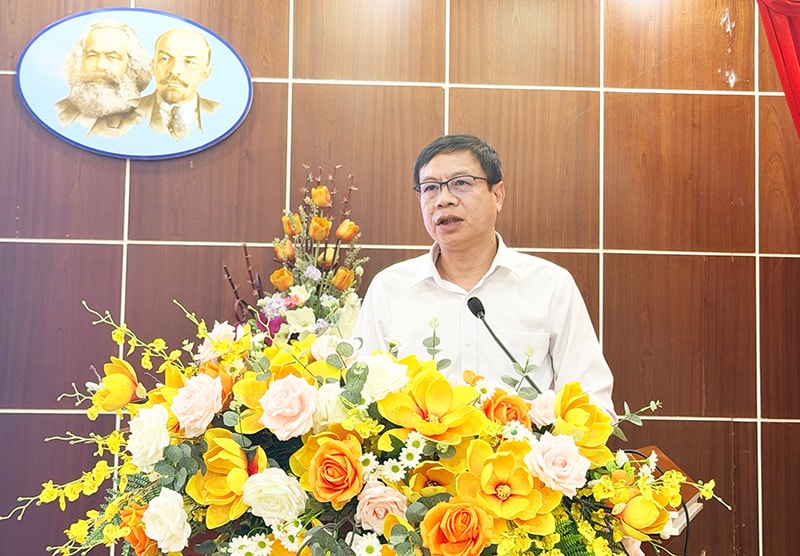
“The amendment and supplementation of the Law on Metrology are necessary to promptly institutionalize the directives of the Party and State, particularly Resolution No. 57-NQ/TW on the development of science, technology, and innovation, alongside Directive No. 38-CT/TW on strengthening national standards, metrology, and quality. Simultaneously, it addresses inadequacies in practical implementation, ensuring synchronicity and consistency with related laws while meeting the requirements for state management innovation”, the Deputy Minister emphasized.
Based on a review of the implementation of the 2011 Law on Metrology, research into international experience, and feedback from ministries, sectors, localities, and enterprises, the drafting committee developed the Draft Law around three major policy groups:
First, promoting digital transformation in metrological activities. This involves creating a legal basis for operations in electronic and digital environments. It aims to accelerate the digitization of records, data, and professional processes, gradually transitioning from traditional management methods to digital platform-based management.
Second, enhancing the capacity of the national metrology system while promoting the central role of enterprises. Accordingly, businesses are not merely subjects of legal compliance but also participants in creating, operating, applying, and developing metrological infrastructure, contributing to the productivity and competitiveness of the economy.
Third, continuing to perfect regulations on state management toward increased decentralization and delegation of power associated with accountability. This includes clarifying the authority of regulatory agencies while ensuring uniformity and suitability for the specificities of each field.

The Deputy Minister further stated that, according to the plan, the Draft Law dossier will be submitted to the Government in May 2026, to the National Assembly Standing Committee in July 2026, and is expected to be passed at the second session of the 16th National Assembly in October 2026. Therefore, the workshop serves as a critical activity for broad consultation, ensuring transparency and democracy in the process of drafting and finalizing the Law.
“The Ministry of Science and Technology expects to receive profound and frank contributions from regulatory agencies, localities, enterprises, and experts, thereby continuing to refine the Draft Law to be practical, facilitating production, business, and international integration”, the Deputy Minister said.
At the workshop, delegates focused their discussions and contributions on several issues within the Draft Law, such as perfecting the legal corridor for metrology in the digital environment, the inspection of water devices, simplifying procedures in verification and calibration, clarifying the boundary between voluntary services and mandatory activities, and mechanisms to promote socialization and attract corporate investment in metrological infrastructure.
Additionally, many opinions suggested strengthening decentralization coupled with accountability and building a unified data-sharing mechanism to enhance the effectiveness of inspections, examinations, and post-market surveillance./.
Copyright belongs to the Vietnam Journal of Science and Technology (VJST-MOST)