

Minister Nguyen Manh Hung: Science and technology must stem from practical problems and developmental needs, not technology itself
According to Minister Nguyen Manh Hung, science, technology, innovation, and digital transformation (STI & DT) must originate from practical problems to create specific products and results. "Products should be from problems, and technology should be from products".
On 20 March, 2026, in Hanoi, the Ministry of Science and Technology (MST) organized the QI/2026 State Management Briefing with Departments of Science and Technology (DOSTs) from across the nation.
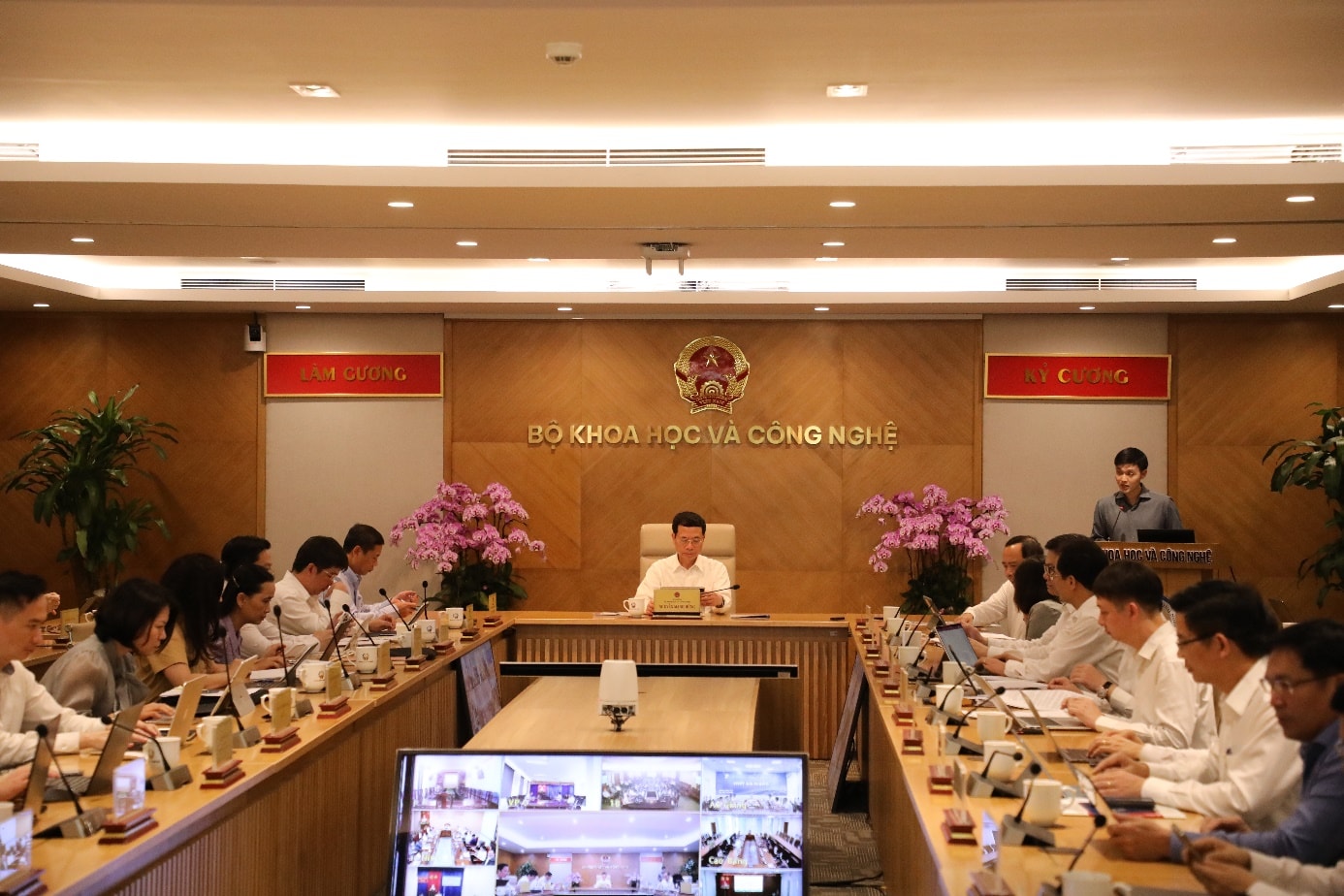
Leveraging STI & DT to contribute to double-digit growth targets
The conference focused on five key issues: i) Science and Technology: The organizational and operational model of local Funds for STI Development; ii) Innovation: The organizational and operational model of Provincial Innovation Centers and local Venture Capital Funds; iii) Digital Transformation: Perfecting and providing digital platforms and national-scale shared databases for local exploitation to avoid redundant investment; iv) Telecommunications: Accelerating the public utility telecommunications program to eliminate signal "blind spots" in remote and isolated areas; v) General Issues: Guiding localities on methodologies to ensure STI & DT contribute to double-digit growth targets.
A major point of interest for many localities was the establishment of local Funds for STI Development. According to Minister Nguyen Manh Hung, the current legal framework essentially provides sufficient grounds for ministries, sectors, and localities to establish these funds. MST expects to issue a model charter for the Fund within March to facilitate smoother local implementation.
Under the Ministry's orientation, these local funds will serve as recipients of budget allocations while financing research tasks, technological applications, and innovation aimed at socio-economic development.
Another issue frequently raised by localities concerned the organizational and operational models for Provincial Innovation Centers.
The Ministry of Science and Technology reported that the legal corridor is fundamentally complete. However, the Ministry is finalizing a decision regarding infrastructure standards for these centers, expected to be issued in March.
Minister Nguyen Manh Hung noted that provincial innovation centers should not merely support startups but must become hubs for solving major local developmental challenges. MST has established a task force to assist localities in building these centers.
“A provincial innovation center must help solve growth problems, contributing to the locality achieving double-digit growth targets”, the Minister emphasized.
Currently, localities such as Hanoi, Ho Chi Minh City, and Dien Bien have begun implementing this model.
Proposals regarding provincial-level venture capital funds are still under further study, as venture capital mechanisms involve high-risk factors and require a more stringent legal framework.
Minister Nguyen Manh Hung identified three directions considered highly feasible that could yield tangible results in driving double-digit growth: a 30% reduction in public service processing time; the promotion of e-commerce; and doubling mobile internet speeds.
According to the Minister, enhancing connection speeds will stimulate consumption, education, and social innovation, thereby creating new growth momentum.
The Minister also advised ministerial units to focus on tasks that directly impact local economic growth rather than spreading resources. In the current phase, localities should prioritize tools ready for immediate application, such as local STI development funds, innovation centers, and digital transformation platforms.
Local DOSTs should shift from project management to economic growth leading through STI & DT
In his concluding remarks, Minister Nguyen Manh Hung reiterated that science and technology must begin with practical problems and development needs rather than starting from technology itself. From a problem arises a product; from a product arises technology.
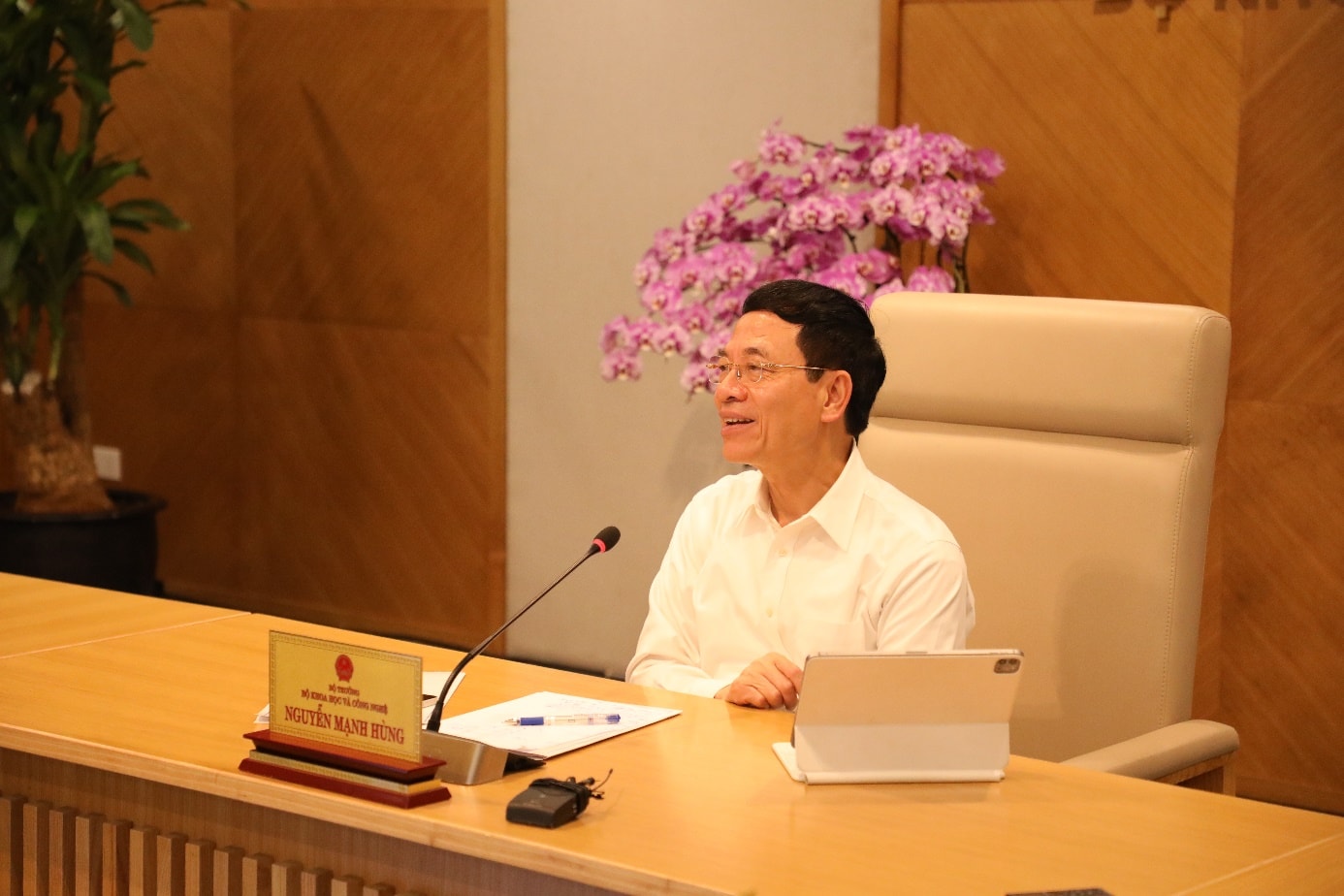
Local Departments of Science and Technology should transition from managing research projects to leading local economic growth through the integration of science, technology, innovation, and digital transformation.
MST will develop a new set of key performance indicators (KPIs) for local DOSTs, focusing on specific criteria: the rate of enterprises increasing labor productivity, revenue from technological products, the reduction in public service processing time, and improvements in mobile internet speeds.
Additionally, the Minister suggested several specific programs for local implementation:
Enterprise productivity enhancement: Each province can select 50-100 key enterprises, identify problems related to increasing productivity or reducing costs, and publicly invite tech firms to solve them. The State will provide funding based on achieved results.
Development of key local products: Each locality can select high-potential products for concentrated development, thereby creating new markets and revenue streams.
Technology Voucher Application: Providing vouchers (e.g., 100 million VND) to support enterprises in testing new technologies, hiring experts, or applying artificial intelligence in production and governance. This program assists enterprises in technological renewal while creating a market for tech firms.
Sector-specific technological Innovation: Instead of supporting individual businesses, localities can choose a vital economic sector such as timber, fisheries, or agriculture to implement technological innovation across the entire value chain.
Finally, the Minister expressed his wish for DOST Directors to become strategic advisors for their localities in achieving double-digit economic growth through STI & DT, moving beyond the traditional role of project selection and management./.
Copyright belongs to the Vietnam Journal of Science and Technology (VJST-MOST)