

Ministry of Science and Technology works with Siemens Energy to promote energy sector cooperation
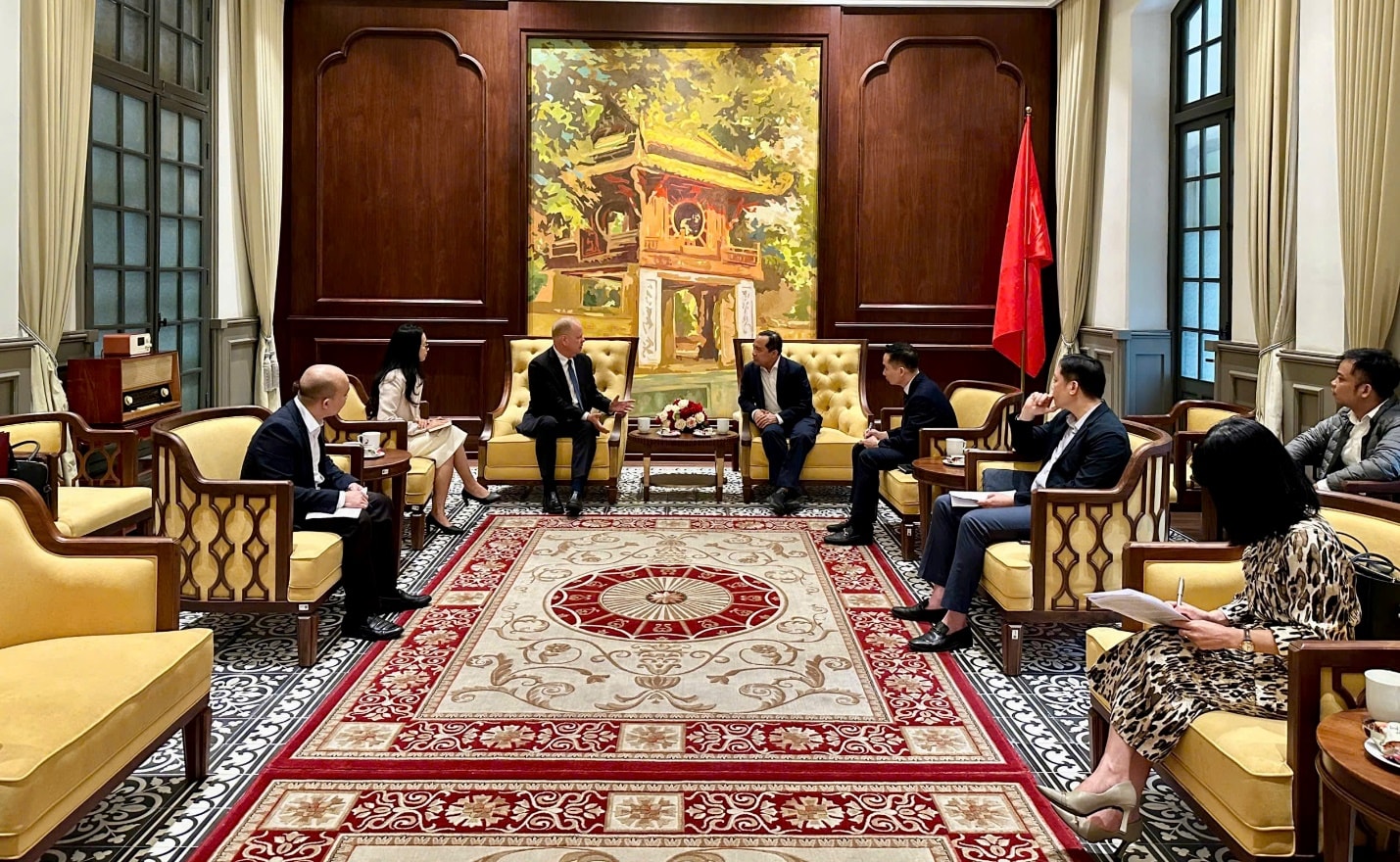
On 19 March, 2026, in Hanoi, Permanent Deputy Minister of Science and Technology Vu Hai Quan held a working session with Mr. Thorbjörn Fors, representative of Siemens Energy. The meeting focused on potential cooperation in the energy sector, with an emphasis on wind power, technology transfer, and industrial capacity development in Vietnam.
Opportunities for offshore wind power development
Speaking at the session, Mr. Thorbjörn Fors stated that Siemens Energy operates a comprehensive energy technology ecosystem ranging from power generation to transmission and energy optimization.
Key solutions include gas turbines, wind turbines, steam turbines, high-voltage direct current (HVDC) transmission technology, and digitalized grid systems.
Furthermore, the enterprise is investing heavily in energy transition technologies such as hydrogen production via electrolysis, gas compression, and energy storage solutions.
With approximately 110,000 employees globally and an annual research and development (R&D) budget of around 1 billion euros, Siemens Energy focuses on technological innovation to maintain long-term competitiveness.
Regarding the Vietnamese market, Siemens Energy noted a long-standing presence and a significant market position in several sectors.
Specifically, the company’s technology accounts for approximately one-third of the wind power market share and an estimated 50% of the gas turbine segment.
Most of these projects are owned and operated by domestic partners, while Siemens Energy serves as the provider of technology and equipment.
Additionally, the enterprise has engaged in preliminary discussions regarding the development of a hydrogen economy in Vietnam. However, this field remains in its infancy and requires more time to materialize.
In Vietnam, the demand for offshore wind power is forecasted to reach a scale of tens of gigawatts in the future. Numerous projects are currently under tender or preparation, opening vast opportunities for investors and technology providers.
Against this backdrop, Siemens Energy is considering technology licensing possibilities to enable certain Vietnamese partners to manufacture wind turbines domestically. If implemented, this would represent a significant stride in localizing the energy industry value chain and reducing dependence on imported equipment.
However, the representative noted that technology transfer is a major decision, as these solutions have been developed over many years and require high technical standards. Therefore, selecting the right partner is a pivotal factor in ensuring sustainable cooperation.
Ministry of Science and Technology stands ready to support market development for enterprises
During the session, Permanent Deputy Minister of Science and Technology Vu Hai Quan emphasized that the Ministry of Science and Technology (MST) is actively implementing Resolution No. 57-NQ/TW.
Additionally, the Government has issued a List of 11 strategic technology groups, identifying new energy as a priority technological field.
Within Southeast Asia, Vietnam possesses certain advantages over other nations, particularly in solar and wind energy. Vietnam aims not only to deploy projects but also to master technology through research, transfer, and localization.
In collaborating with partners in Vietnam, MST is ready to provide support by creating and developing the market, as well as opening new market opportunities for enterprises.
“We are ready to assist international partners in market development, the establishment of technical standards, and research funding from the early stages”, stated Permanent Deputy Minister Vu Hai Quan.
A critical issue highlighted by both parties is the capacity of domestic enterprises. Advanced technologies such as offshore wind power typically involve high costs and complex technical requirements; thus, a suitable roadmap is needed for Vietnamese firms to gradually access and master them.
European experience indicates that offshore wind is becoming a mainstream trend due to more stable wind conditions and less impact on residential areas compared to onshore projects. This is particularly suitable for coastal nations like Vietnam.
Furthermore, Siemens Energy mentioned the potential for regional grid connectivity via HVDC technology. Several projects to export electricity from Southern Vietnam to markets such as Singapore have been discussed, involving enterprises like Sembcorp Industries.
While further time is required for completion, these projects are expected to open new pathways for Vietnam’s energy sector, not only meeting domestic demand but also enabling deeper participation in the regional market.
In the long term, attracting major technology corporations and promoting technology transfer are viewed as essential steps for Vietnam to build a sustainable energy ecosystem and gradually become a regional hub for renewable energy./.
Copyright belongs to the Vietnam Journal of Science and Technology (VJST-MOST)