

Science, technology, innovation, and digital transformation – The core drivers of the new growth model
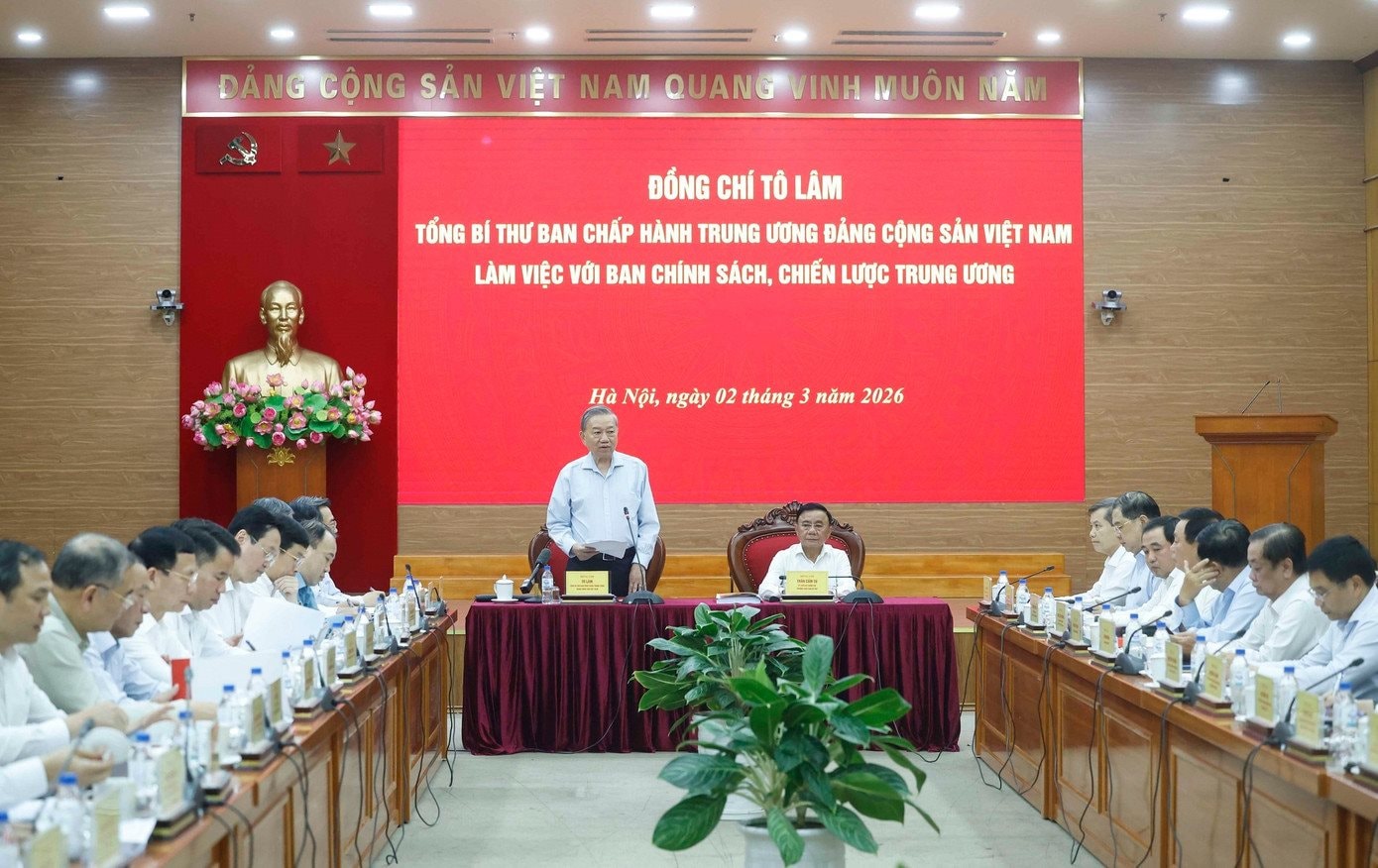
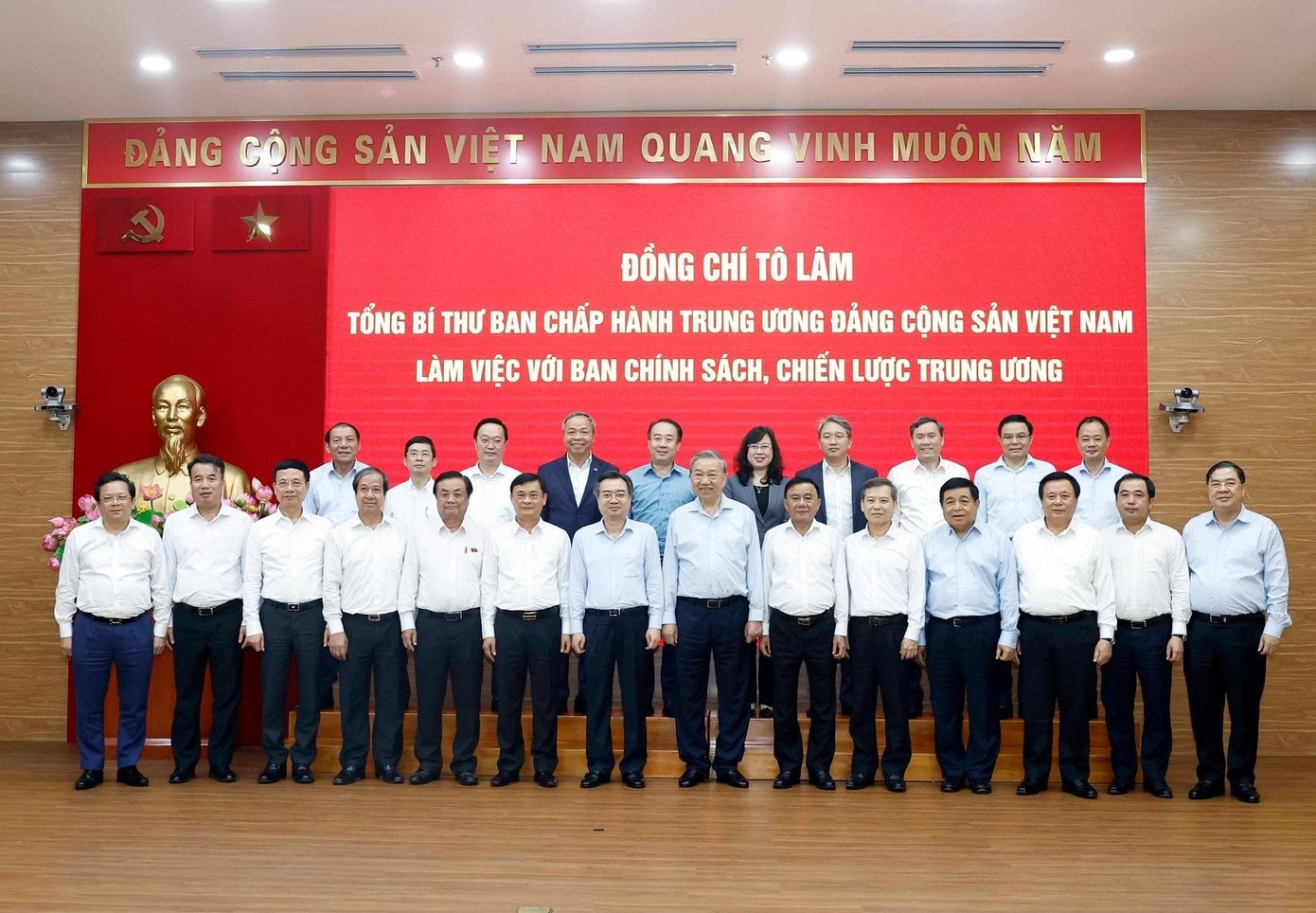
On the afternoon of 2 March 2026, at a working session with the Central Policy and Strategy Board regarding the formulation of a Resolution to promote economic growth of 10% or higher coupled with the establishment of a new growth model, General Secretary To Lam set forth numerous important, strategic, and long-term orientations for the nation's development through 2045.
Urgently perfecting the foundation for a strategic Resolution
Reporting at the meeting, the Central Policy and Strategy Board stated that it has coordinated closely with ministries, sectors, and localities to consolidate the Steering Committee and the Editorial Team. It has also issued guidelines for Provincial and City Party Committees to develop growth scenarios, propose action programs, and list key projects to realize the target of 10% growth or higher in the 2026–2030 period, aiming to maintain rapid and sustainable growth until 2045.
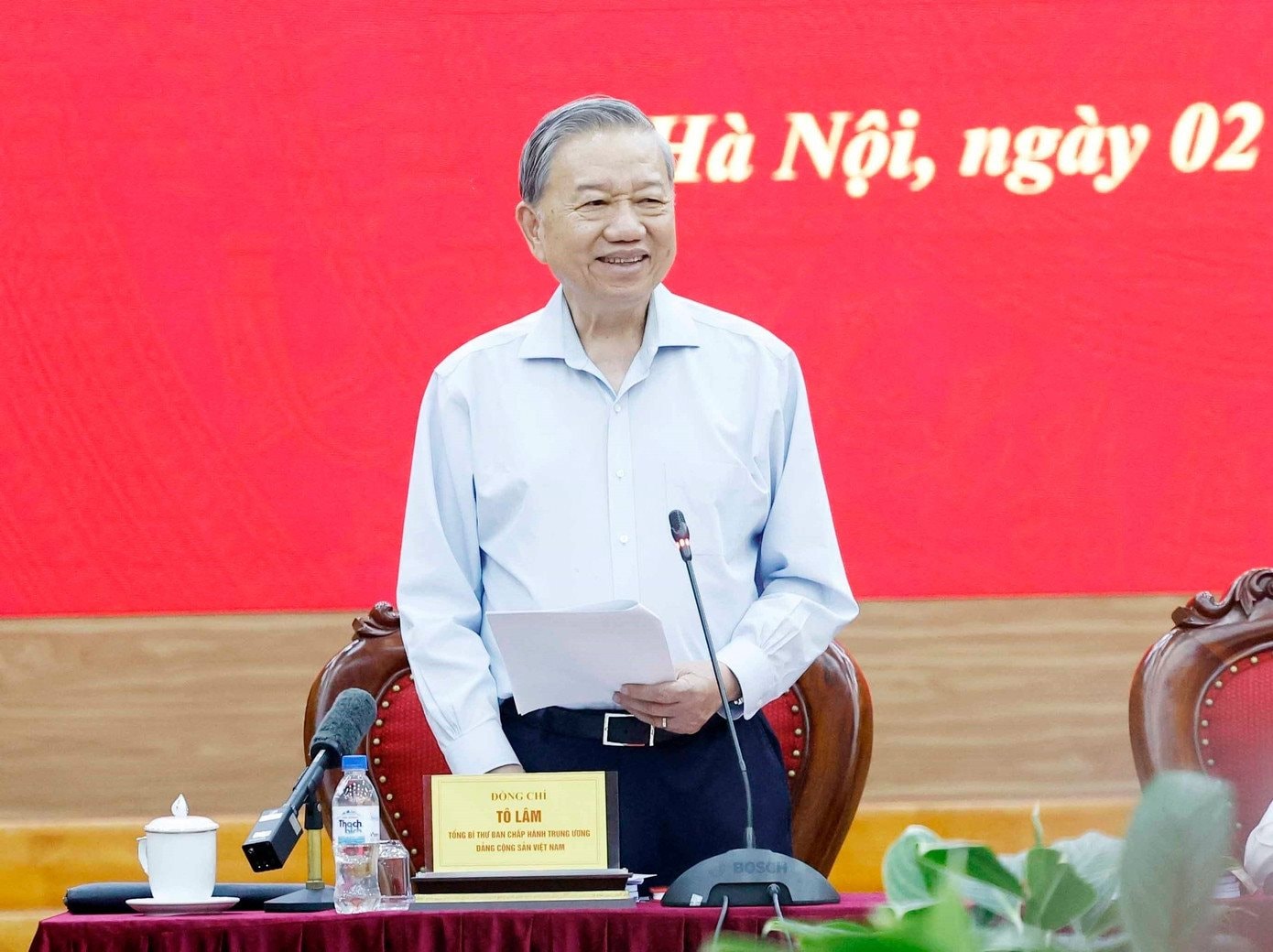
Simultaneously, numerous specialized forums and workshops have been organized to gather opinions from domestic and international experts and scientists, referring to international experience and local realities to refine the draft Resolution.
The draft initially establishes a new growth model with science and technology, innovation, and digital transformation as the primary drivers. The focus is on improving productivity, quality, efficiency, added value, and the competitiveness of the economy; developing data economy, digital economy, green economy, and circular economy - the pillars of modern production methods.
In the new structure, the state economy plays the leading and pioneering role; the private economy is the most important engine; and the domestic market and exports form a “dual driver”. The entire operation is based on the foundation of a development-enabling State with modern institutions and a culture of innovation.
A "master plan" for long-term growth
Providing guidance, General Secretary To Lam emphasized that the Resolution is not merely aimed at achieving a growth target but must become a “master plan” for Vietnam's development model toward 2045. This is a historic choice, reflecting the nation's powerful aspiration to rise.
However, high growth does not mean development at all costs. The requirement is for growth to be stable, qualitative, inclusive, green, and autonomous. Macro-stability, the environment, and social progress must not be traded off for short-term growth figures.
According to the General Secretary, the Resolution must clearly demonstrate three layers of meaning.
First, affirming high political determination and remaining steadfast in goals despite all difficulties.
Second, ensuring the quality of growth without chasing superficial achievements.
Third, having a long-term vision to ensure that growth today does not weaken the developmental foundations of tomorrow.
The implementation process requires a roadmap consistent with objective economic laws, in which the initial phase focuses on creating the institutional, infrastructural, and human resource foundations to prepare for sustainable double-digit growth in the long run.
The Resolution must become a compass to unify the perception and action of the entire political system, ensuring synchronized, effective, and consistent implementation from the Central to local levels.
A key orientation emphasized is that establishing a new growth model does not stop at policy adjustment but must fundamentally change the motivational structure - the "engine" of the economy. This is a systemic shift, requiring a synchronized change from a management mindset to an enabling mindset; from a model based on capital, cheap labor, and resource extraction to one based on knowledge, technology, and innovation.
This transformation must occur throughout from the Central to local levels, from the public to the private sector, forming a modern, high-productivity economy with global competitiveness.
Simultaneously, growth cannot be separated from sustainable development goals. Growth must go hand in hand with increasing income, job creation, reducing the wealth gap, environmental protection, and socio-cultural development. Economic development must be closely linked to improving the people's quality of life.
Growth of 10% or more is a challenging goal; therefore, it requires specific calculation bases and feasible scenarios. The General Secretary requested clarification of mobilized resources, including domestic savings, FDI, and capital markets, while clearly defining macro-safety thresholds.
The principles of economic accounting and resource allocation based on efficiency must be strictly thoroughly understood. All resources - from the budget, land, natural resources, and credit to public assets - must be calculated correctly and fully, allocated by efficiency, and subject to accountability.
Besides, it is necessary to proactively manage risks, ensuring the economy's resilience against global fluctuations. Every development decision must be weighed in the correlation between opportunity and risk.
Execution discipline is the key factor. Double-digit growth can only be achieved with firm leadership, effective governance, clear decentralization, and a transparent, upright environment. There must be a shift from being “correct in policy” to being “correct and effective in action,” upholding the responsibility of heads of agencies and managing output results.
Science, technology, and digital transformation – The central driving force
The General Secretary emphasized that to realize strategic goals, science and technology, innovation, and digital transformation must become the central pillar of the new growth model. This requires: Perfecting institutions to encourage research and development; building an innovation ecosystem; developing digital infrastructure, big data, and artificial intelligence; and strengthening linkages between the State, enterprises, research institutes, and universities to commercialize research results.
Institutional reform must be substantive and radical, turning institutions into a national competitive advantage. The legal system needs to be clear, stable, and ensure a high degree of the rule of law. The cadre of officials, especially heads of agencies, must possess vision, capacity, and integrity.
Macroeconomic stability is a prerequisite. It is necessary to control inflation, ensure major balances, and develop strategic infrastructure and high-quality human resources.
The industrialization process must be reshaped toward high technology, smart manufacturing, and the digital economy. The economic structure must be upgraded in depth, mastering technology and participating more deeply in global value chains.
The domestic market of over 100 million people must become a sustainable pillar of growth. Synchronously developing all types of markets, increasing income, promoting modern consumption, encouraging private investment, and promoting the leading role of public investment.
The economic structure between the state, private, and FDI sectors must be based on fair competition and value chain linkages, creating synergy and enhancing autonomy.
National development space needs to be reorganized toward substantive regional linkage, focusing resources on growth poles, economic corridors, financial centers, and innovation hubs; effectively exploiting maritime space, urban areas, and the digital economy.
The General Secretary also emphasized that all development goals must be placed within the overall framework of ensuring national defense, security, social welfare, and environmental protection. Do not trade stability, justice, and sovereignty for mere growth. Only when development is based on a sustainable foundation can the country accumulate long-term potential, creating a solid foundation for the new development phase.
The growth target of 10% or more is not just an economic problem, but a political and social aspiration. To achieve it, a fundamental shift in developmental thinking across the entire system is required. It is necessary to eliminate the "safety-first" mentality, term-based thinking, and localism; instead, foster a spirit of daring to think, daring to do, daring to take responsibility, and acting drastically and synchronously.
When science and technology, innovation, and digital transformation truly become the central engine; when institutions become an advantage; when resources are allocated by efficiency and execution discipline is ensured; when social trust is consolidated—the double-digit growth target will no longer be a distant aspiration but the inevitable result of a correct development strategy.
That is the path for Vietnam to make a breakthrough, realizing the goal of becoming a developed, high-income, autonomous, and prosperous nation by 2045./.
Copyright belongs to the Vietnam Journal of Science and Technology (VJST-MOST)