

Promoting cooperation in national digital transformation between Vietnam and United Nations
On 18 December, a consultation workshop on digital transformation between the Ministry of Science and Technology (MST) and the United Nations (UN) took place at the MST headquarters. The workshop centered on exchanging major policy orientations, identifying priorities and challenges in the national digital transformation process, and clarifying cooperation directions within the UN Sustainable Development Cooperation Framework for the 2027-2031 period.
Digital transformation - reshaping the development model, placing people at the center
Opening the workshop, Deputy Minister of Science and Technology Bui The Duy emphasized that digital transformation today is no longer merely the application of technology but a process of reshaping the development model, modernizing national governance, and transforming the way citizens interact with the state.
Deputy Minister Bui The Duy affirmed: “From the Ministry's perspective, digital transformation is no longer just about applying technology. More importantly, it is a process of reshaping the development model, modernizing national governance, and transforming the interaction between the people and the state, in which people are placed at the center of this process”.
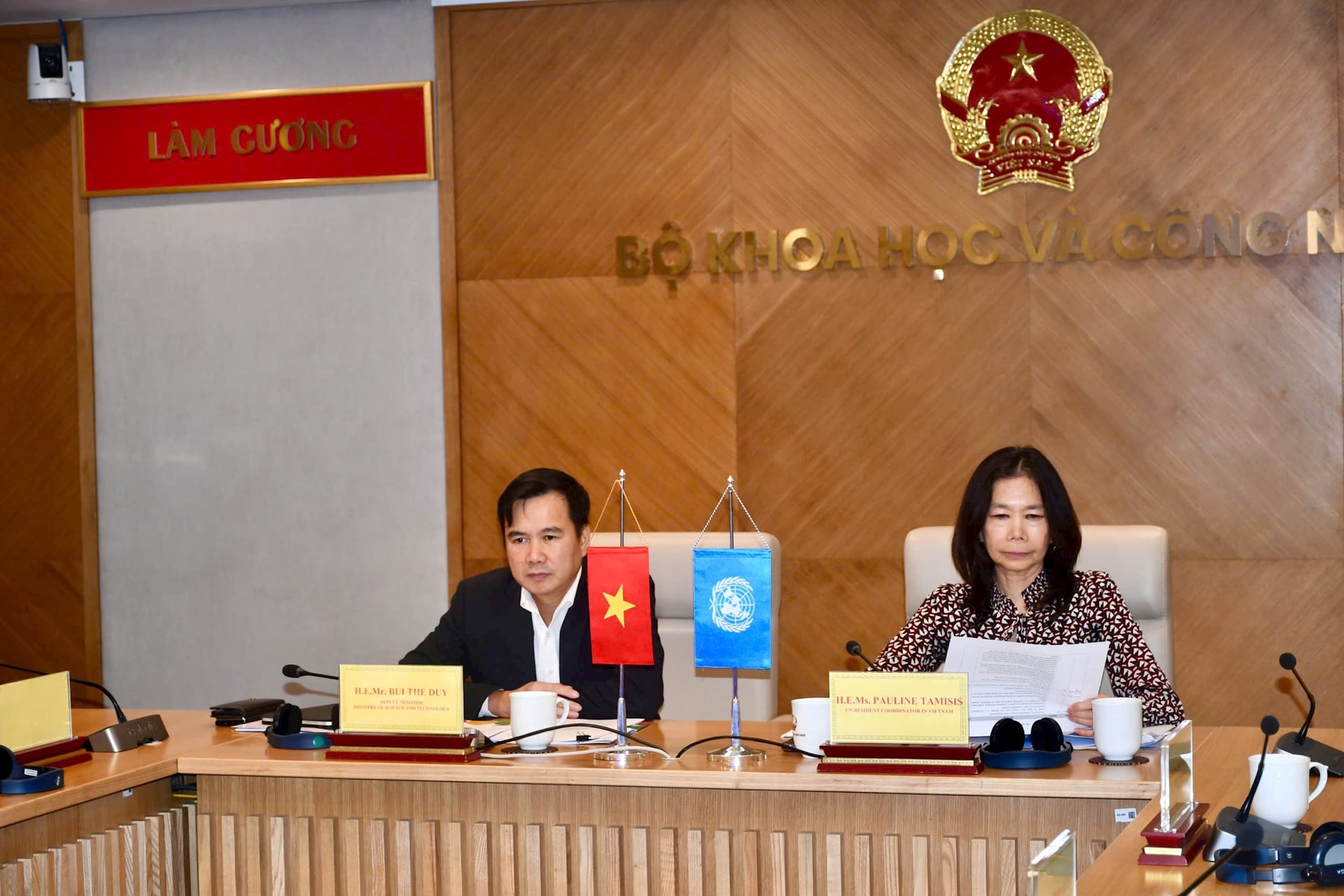
According to Deputy Minister Bui The Duy, the restructuring and consolidation of ministries in recent times have contributed to strengthening institutional capacity, allowing for a more synchronized and effective deployment of resources for science, technology, innovation, and digital transformation. In the context of rapidly developing emerging technologies, especially artificial intelligence, it is required that policies and legal frameworks must be proactive, flexible, and keep pace with technological changes.
Deputy Minister Bui The Duy emphasized: “Our key challenge in the coming period does not lie in building more strategies or policies, but in the stage of effective implementation. This requires practical solutions, capable institutions, and strong support from international partners”.
From the United Nations' side, UN Resident Coordinator in Vietnam Pauline Tamesis stated that Vietnam has set a vision to become a high-income country by 2045, in which digital transformation plays a pivotal role. By 2030, the Government of Vietnam aims for the digital economy to account for at least 30% of GDP, over 80% of citizens and businesses to use online public services, and at least 80% of transactions to be cashless.
Ms. Pauline Tamesis emphasized: “These are ambitious goals that require not just isolated initiatives, but systemic change”. According to Ms. Pauline Tamesis, digital transformation can only succeed when implemented through a human-centered approach, ensuring safety, trust, and leaving no one behind.
Data, artificial intelligence, and requirement for a systemic approach to digital transformation
In the thematic presentations at the workshop, Deputy Director General of the National Digital Transformation Agency Hoang Huu Hanh stated that Vietnam is entering a pivotal stage of digital transformation, where data and artificial intelligence are no longer just support tools but have become core development resources for the economy and the national governance system.
According to Mr. Deputy Director General Hoang Huu Hanh, in recent years, Vietnam has participated in and implemented many important international cooperation projects related to energy transition, data, and artificial intelligence, thereby forming the initial foundation for large-scale digital transformation.
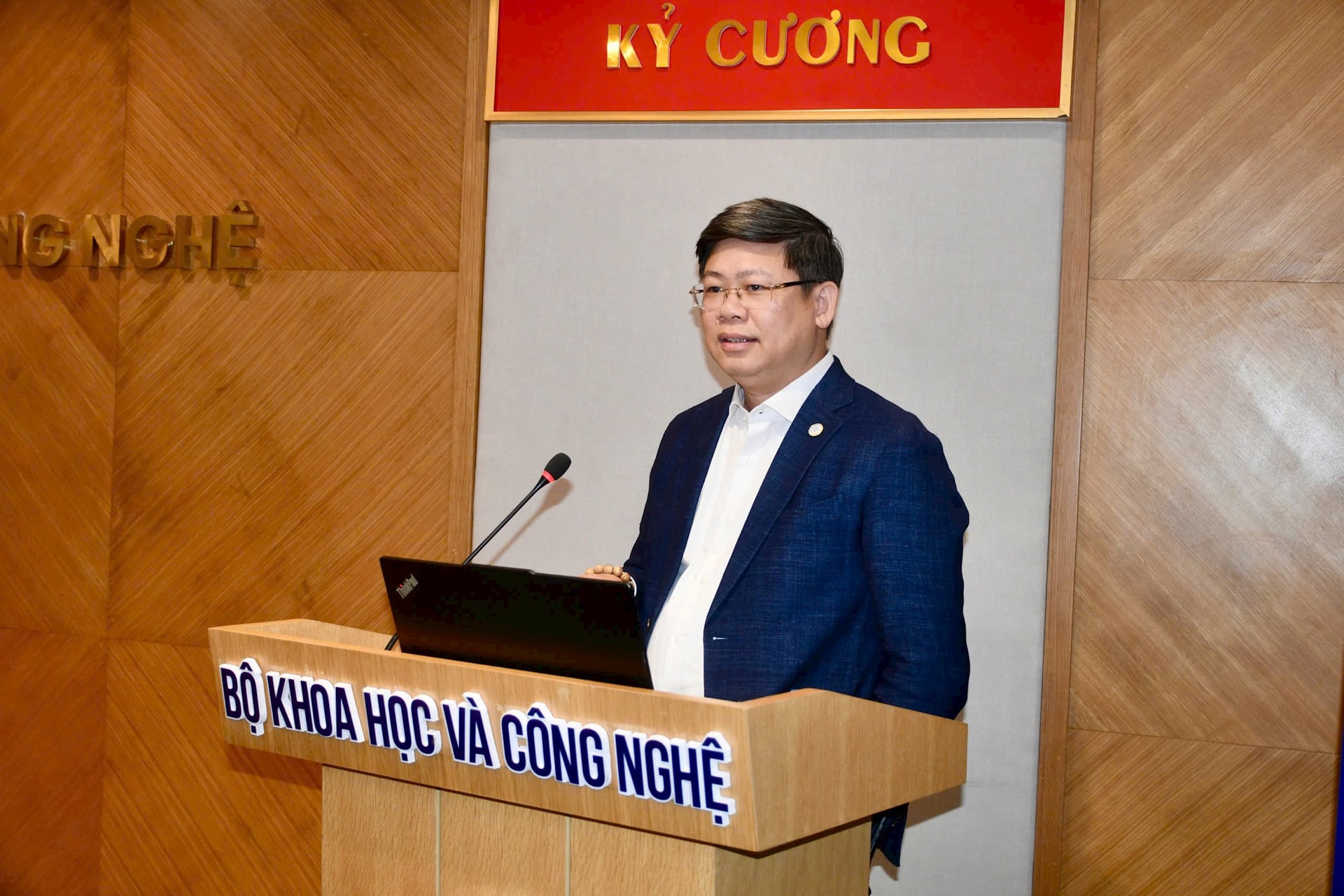
However, Deputy Director General Hoang Huu Hanh emphasized that the current challenge lies not in the lack of technology but in the approach and implementation. Digital transformation, if only implemented in fragmented sectors, will find it difficult to create a systemic impact. Therefore, it is necessary to approach digital transformation as a unified whole, in which the digital government, digital economy, and digital society are organically linked; data and artificial intelligence must be developed alongside principles of safety, ethics, transparency, and the protection of human rights.
From the UN perspective, Head of the UNESCO Office in Vietnam Jonathan Baker believed that Vietnam's strategic orientations on digital transformation are highly compatible with global frameworks, especially the Global Digital Compact.
The Head of the UNESCO Office in Vietnam highly appreciated Vietnam's proactive role in international dialogues on data governance and artificial intelligence, considering this an important basis for Vietnam to not only be a recipient but also step-by-step participate in shaping global standards in this field.
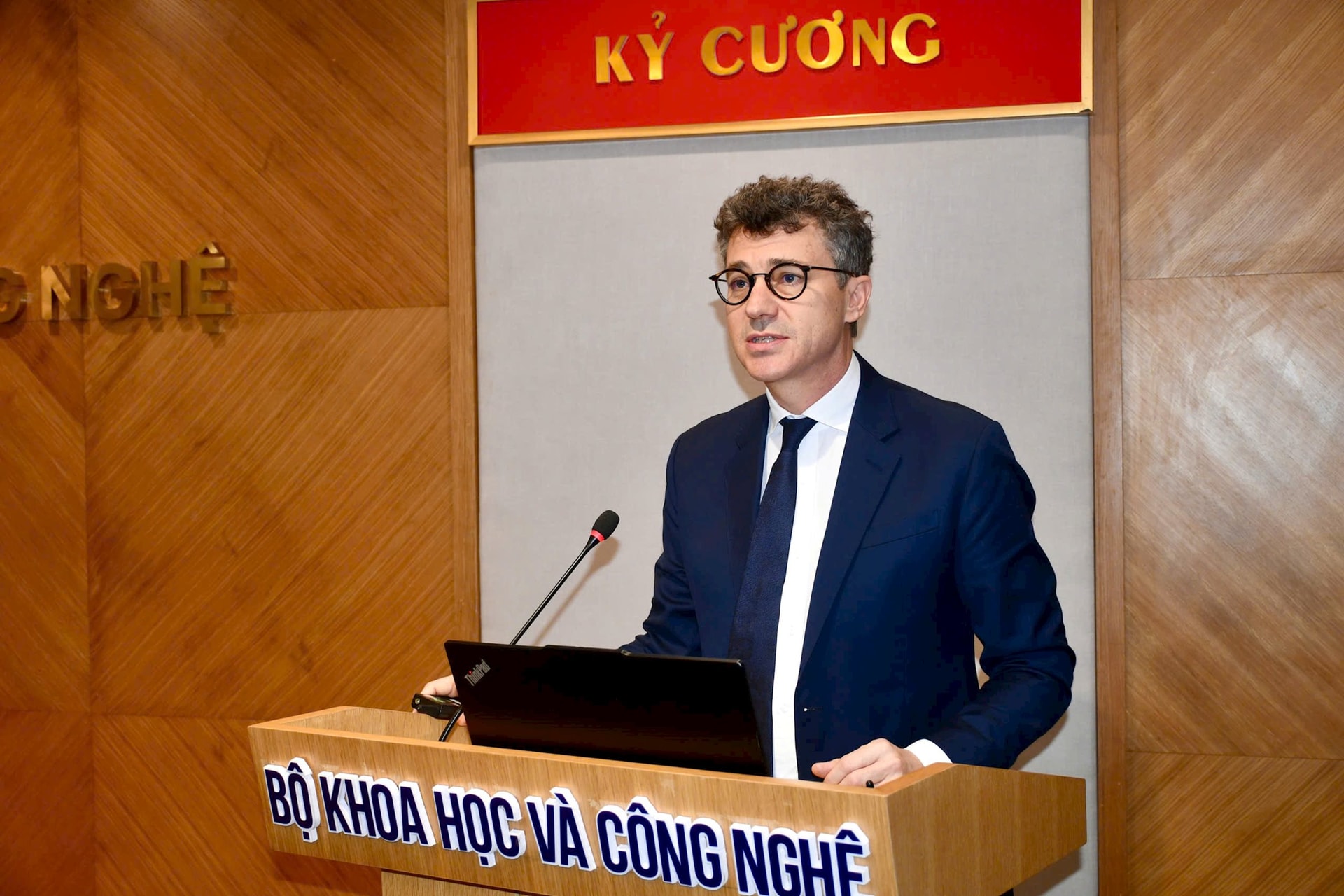
According to Head of the UNESCO Office in Vietnam Jonathan Baker, international experience shows that digital transformation is only truly sustainable when accompanied by investment in people, including developing digital skills, preparing for the future of work in a digital and AI-based economy, and enhancing institutional capacity to keep pace with technological development. These are also the contents that the United Nations is ready to accompany and support Vietnam in the coming period.
Multi-dimensional policy exchange, clarifying cooperation priorities in the new phase
In the discussion session, delegates from ministries, sectors, research agencies, international organizations, and UN agencies focused on in-depth exchanges regarding the opportunities and challenges posed in the national digital transformation process. Many opinions suggested that Vietnam has a great advantage in terms of political determination, an increasingly perfected policy framework, and a fast pace of digital technology popularization, but at the same time faces new structural challenges.
Delegates particularly emphasized the issue of people's trust in the digital environment, data safety, privacy protection, and the digital skills gap between social groups.
Accordingly, digital transformation cannot focus only on infrastructure or technology platforms, but needs to be designed around the actual needs of people and businesses, ensuring inclusive, fair, and sustainable access.
Additionally, the requirement to strengthen inter-sectoral coordination and a whole-of-society approach was also mentioned by many participants. Delegates argued that digital transformation policies, programs, and initiatives need to be deployed synchronously from the central to local levels, closely linking the State, private sector, research institutions, universities, and the business community.
Designing digital public infrastructure and digital public services with a citizen-centered focus, while integrating human rights protection mechanisms, is considered a key condition for building a trustworthy digital society.
Concluding the workshop, it is agreed that digital transformation needs to be approached as a systemic development process, in which people are the center, data and artificial intelligence are the drivers, and institutions and implementation capacity are the decisive factors.
The consultative opinions at the workshop will be synthesized as a basis for the Ministry of Science and Technology to coordinate with UN agencies to continue perfecting cooperation orientations, while integrating them into the process of building the UN Sustainable Development Cooperation Framework for the 2027-2031 period.
The main part of cooperation in the coming time is identified as supporting Vietnam in implementing digital transformation through a systemic, human-centered approach, ensuring safety, trust, and leaving no one behind./.
Copyright belongs to the Vietnam Journal of Science and Technology (VJST-MOST).