
Promoting breakthroughs in science and technology to enhance national competitiveness
For 2026, the Ministry of Science and Technology (MST) identifies the central orientation as continuing to review and remove institutional bottlenecks, while clearing and effectively mobilizing resources for science, technology, and innovation. The overarching spirit is a strong shift from a management mindset to a facilitating mindset, from "input management" to "output evaluation", and from fragmentation to a focus on strategic technologies.
On 20 December, the 28th National Conference on electronics, communications, and information technology (REV-ECIT 2025) took place at the Hanoi University of Science and Technology (HUST). The Conference was organized by the Radio and Electronics Association of Vietnam (REV) in collaboration with the School of Electrical and Electronic Engineering (HUST) under the patronage of the Ministry of Science and Technology.
Spreading and strongly promoting the "Make in Vietnam" spirit
Speaking at the Conference, Deputy Minister of Science and Technology Pham Duc Long emphasized that REV-ECIT 2025 occurs at a special time when the entire science and technology sector has just been unified to promote synergy; meanwhile, the sector is drastically implementing Resolution No. 57-NQ/TW of the Politburo on breakthroughs in science and technology development, innovation, and national digital transformation.
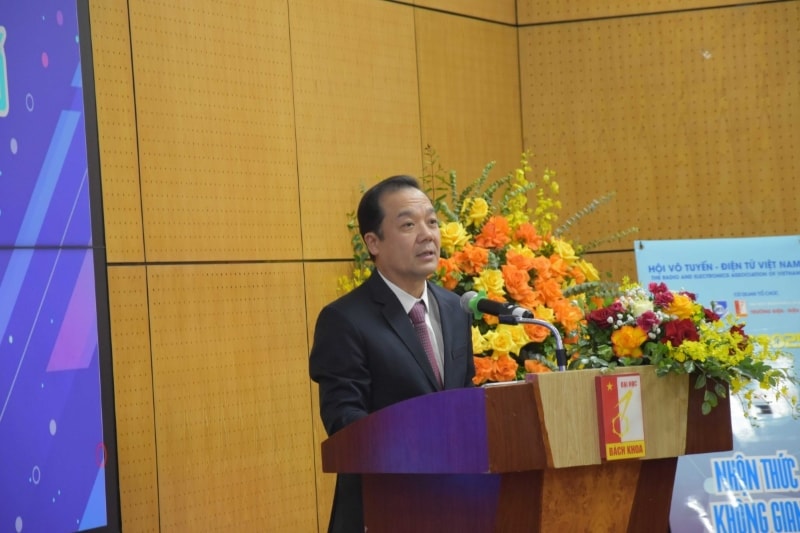
Deputy Minister Pham Duc Long affirmed that the fields of electronics, communications, and information technology play a particularly important role, serving both as the foundation of digital infrastructure and as a convergence space for key digital technologies, creating new growth models and enhancing national competitiveness.
For 2026, MST identifies its core orientation as continuing to review and remove institutional bottlenecks, clearing and effectively mobilizing resources for science and technology and innovation. The consistent spirit is a strong shift from a management mindset to a facilitating mindset, from "input management" to "output evaluation", and from fragmentation to a focus on strategic technologies.
According to Deputy Minister Pham Duc Long, in its role as a state management agency, MST is responsible for "clearing the path" through institutions, policies, and strategic orientations. However, enterprises, research institutes, universities, and scientists are the direct force creating knowledge, technology, products, and services.
Therefore, businesses need to participate more deeply from the start in the process of ordering and identifying research problems; institutes and universities must link research with the practical needs of the market and the country. The close link between the state, scientists, and businesses is the key condition for forming an effective innovation ecosystem.
Concurrently, MST is promoting the double transition (digital transformation and green transition) in a profound, comprehensive, and effective manner; building modern digital infrastructure and advanced science and technology infrastructure, and developing a widespread digital economy; focusing on foundational sectors such as the digital technology industry, semiconductor industry, biotechnology, and new energy.
The Ministry is also promoting the commercialization of 5G and preparing the necessary conditions to research and step-by-step master 6G and core technologies. Telecommunications infrastructure must truly become the digital infrastructure of the digital economy, moving one step ahead, being universal, green, safe, and smart.
Deputy Minister Pham Duc Long hopes that organizations, businesses, and scientists would accompany MST to continue spreading and strongly promoting the "Make in Viet Nam" spirit: Create in Vietnam, design in Vietnam, manufacture in Vietnam; shifting strongly from outsourcing and assembly to mastering design, technology, standards, platforms, and value chains.
Developing a synchronous, effective, and sustainable digital ecosystem
Speaking at the Conference, Dr. Tran Duc Lai, Chairman of the Radio and Electronics Association of Vietnam, said that the REV-ECIT 2025 Conference received 153 papers from authors belonging to more than 60 universities, research institutes, and scientific research organizations nationwide.
Through nearly 400 rounds of peer review, the organizing committee accepted 128 works for presentation and proceedings, with 64 direct reports in 6 sub-committees and 54 posters.
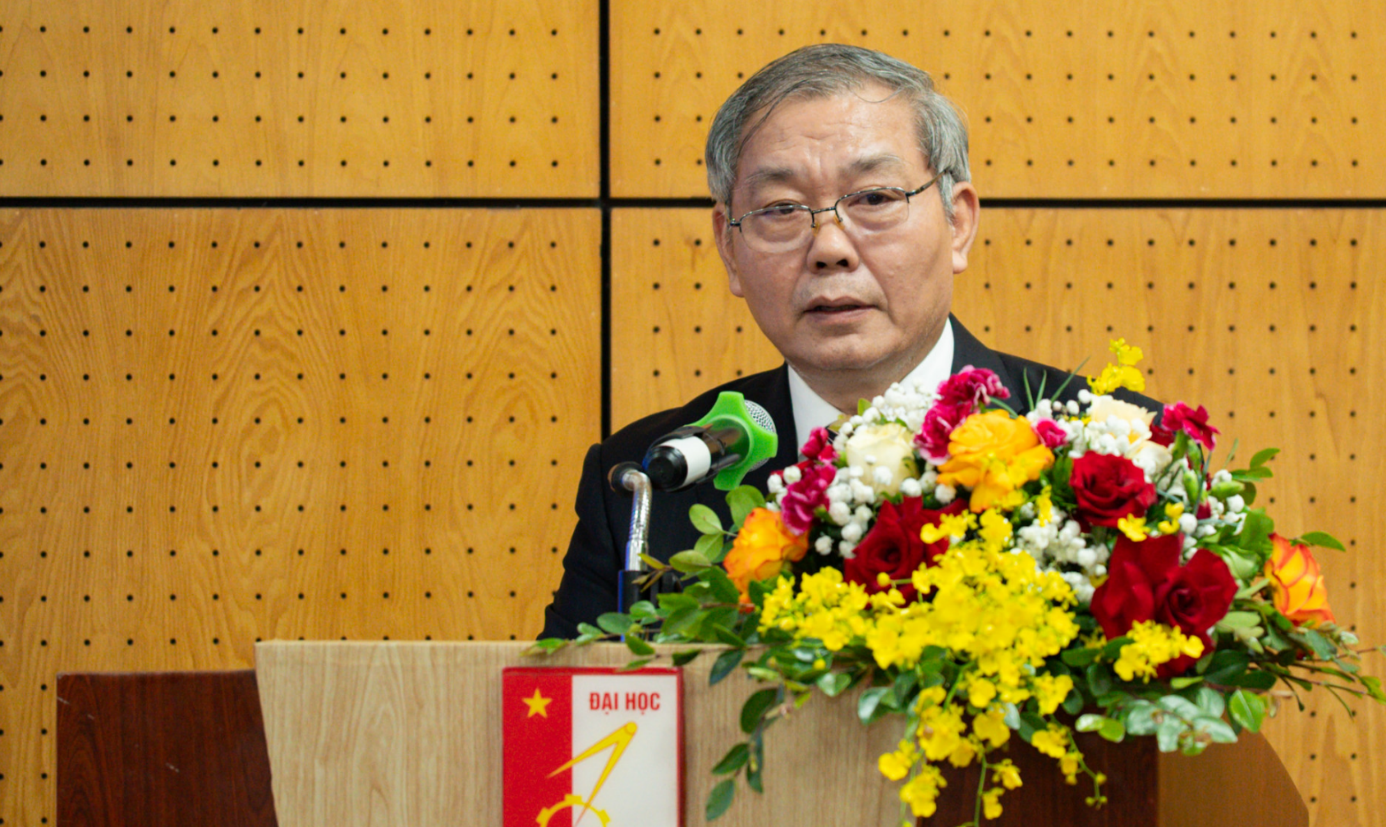
Among more than 200 scientists attending this year's Conference, the Hanoi University of Science and Technology contributed 35 works, leading in number. The Military Technical Academy had 25 works, and the University of Engineering and Technology (Vietnam National University, Hanoi) contributed 13 works. The Academy of Cryptography Techniques contributed 9 works, the Posts and Telecommunications Institute of Technology had 8 works, and Phenikaa University contributed 5 works.
The REV-ECIT 2025 Conference featured 6 professional sub-committees, focusing on fields identified as breakthrough priorities in Resolution No. 57-NQ/TW. The sub-committees covered the entire technology value chain from hardware and communication infrastructure to artificial intelligence (AI) and cybersecurity.
The Communications and Radio Sub-committee received the most research papers, followed by the Artificial Intelligence and Interdisciplinary Applications Sub-committee, indicating a trend of Vietnamese scientists moving toward practical AI applications. The Communications and Radio Sub-committee focused on next-generation mobile networks 5G/6G, which is a strategic priority for Vietnam.
The Electronics-Semiconductors and Antenna Sub-committee attracted special attention as Vietnam implements projects to attract investment in chip manufacturing and semiconductor design with the goal of becoming a regional chip manufacturing hub by 2030.
Assoc. Prof. Dr. Huynh Quyet Thang, President of the Hanoi University of Science and Technology, emphasized that HUST has established two development philosophies: "Talent Training" including scientific, technological, and innovation and entrepreneurship talents; while training high-quality human resources closely linked to major problems and urgent practical requirements.
The second philosophy is "Convergence excellence" based on 5 pillars: People, knowledge-science-technology, cooperation, value, and governance.
HUST committed to remaining a pioneering training and research center where academic knowledge is closely tied to major practical problems. The university is determined to affirm its key role in human resource training and technology development for the national digital infrastructure.
At the Conference, the Radio and Electronics Association of Vietnam honored 2 new professors and 13 new associate professors in the field of Electronics and Telecommunications, who were granted titles by the State Council for Professorship in 2025, and awarded prizes for outstanding research works.
Starting in 1970, the REV-ECIT Conference has become a bridge between scientific research and the country's industrial development; playing an important role in realizing Vietnam's science and technology development strategy, providing a foundation for the scientific community to grasp global trends, share research results, and build sustainable cooperation networks./.
Copyright belongs to the Vietnam Journal of Science and Technology (VJST-MOST).