
Innovation in learning instruction and teacher education in the AI era
On 13 December 2025, in Hanoi, the 4th International Scientific Conference on "Innovation in Learning Instruction and Teacher Education" officially opened, focusing on fundamental shifts in education 4.0 and artificial intelligence in teacher training.
An international academic forum on the future of education
The International Scientific Conference on "Innovation in Learning Instruction and Teacher Education" (ILITE) is an academic initiative launched by the Hanoi National University of Education in 2019, held biennially. Through three editions, ILITE has progressively asserted its role as a prestigious scientific forum, connecting researchers, educational managers, and lecturers from various countries to exchange core issues of educational innovation in the context of globalization and the 4th industrial revolution.
Continuing this series of activities, the 4th ILITE took place on 13 and 14 December, 2025, in Hanoi, organized by the Hanoi National University of Education in collaboration with the University of Bayreuth (Germany), Universiti Tunku Abdul Rahman (Malaysia), and De La Salle University-Dasmariñas (Philippines). The Conference received support from the National Foundation for Science and Technology Development (NAFOSTED) and numerous domestic educational institutions. The event attracted nearly 300 scientists and educational experts from 11 countries and territories, demonstrating the growing appeal of Education 4.0 and artificial intelligence in teacher training.
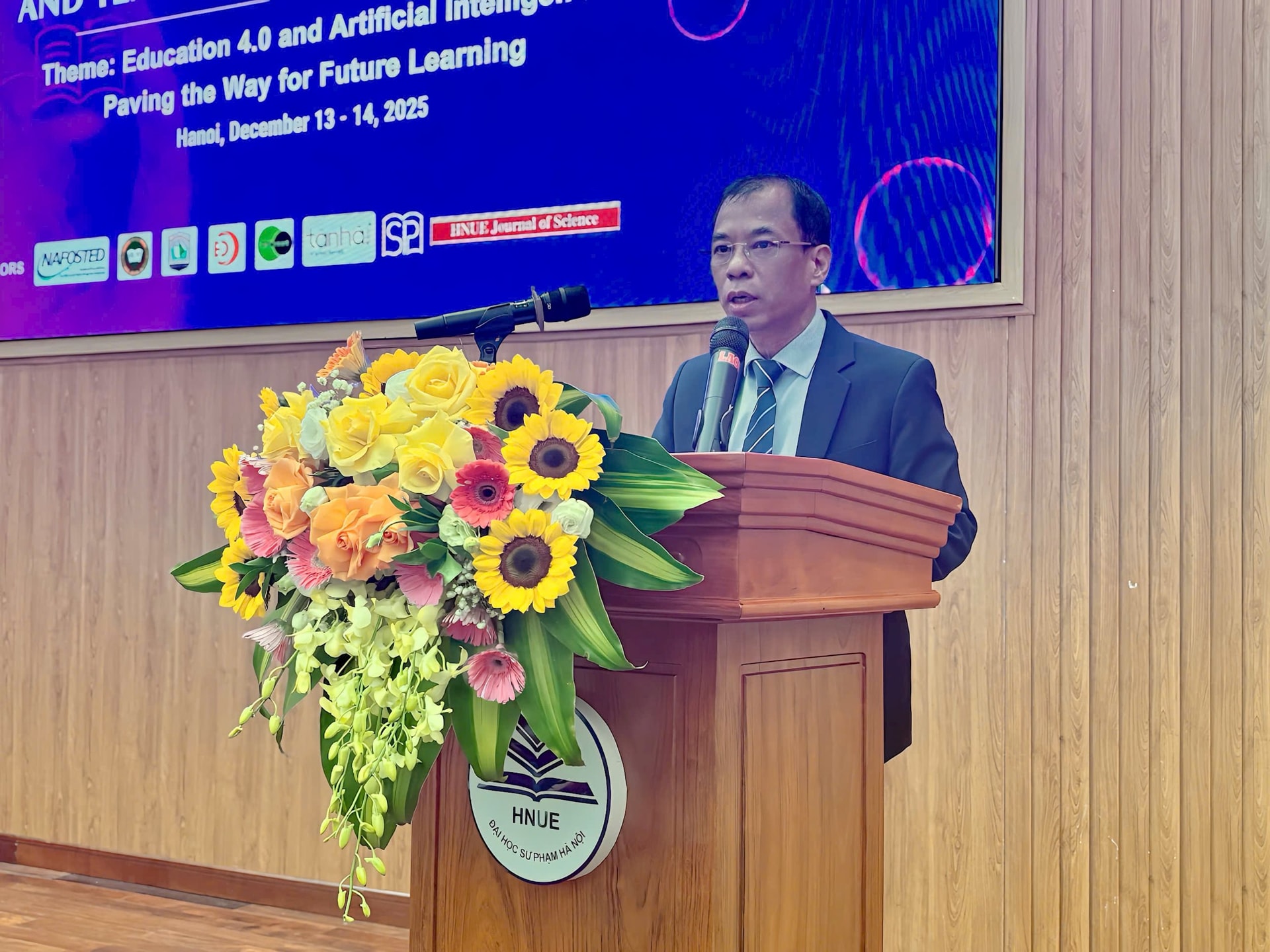
In his opening speech, Assoc. Prof. Dr. Nguyen Van Trao - Vice President of Hanoi National University of Education emphasized: The selection of the theme "Education 4.0 and Artificial Intelligence: Shaping the Future of Learning" reflects the urgent requirements of modern education amidst the strong development of digital transformation and AI. According to Assoc. Prof. Dr. Nguyen Van Trao, education faces not only great opportunities to enhance teaching and learning quality but also numerous challenges regarding pedagogy, digital competence, and professional ethics for teachers. The Conference is expected to be an academic space for knowledge sharing, promoting cooperation, and suggesting scientific solutions for the process of educational innovation in the 21st century.
Education 4.0, artificial intelligence, and requirements for teacher training transformation
One of the consistent themes throughout the Conference is the role of artificial intelligence in restructuring teaching activities and teacher training. Six reports at the plenary session from major universities such as the University of New South Wales (Australia), the Education University of Hong Kong (China), the University of Bayreuth (Germany), UTAR (Malaysia), De La Salle University-Dasmariñas (Philippines), and the Hanoi National University of Education approached AI in education from various perspectives, including educational psychology, educational science, management, and policy.
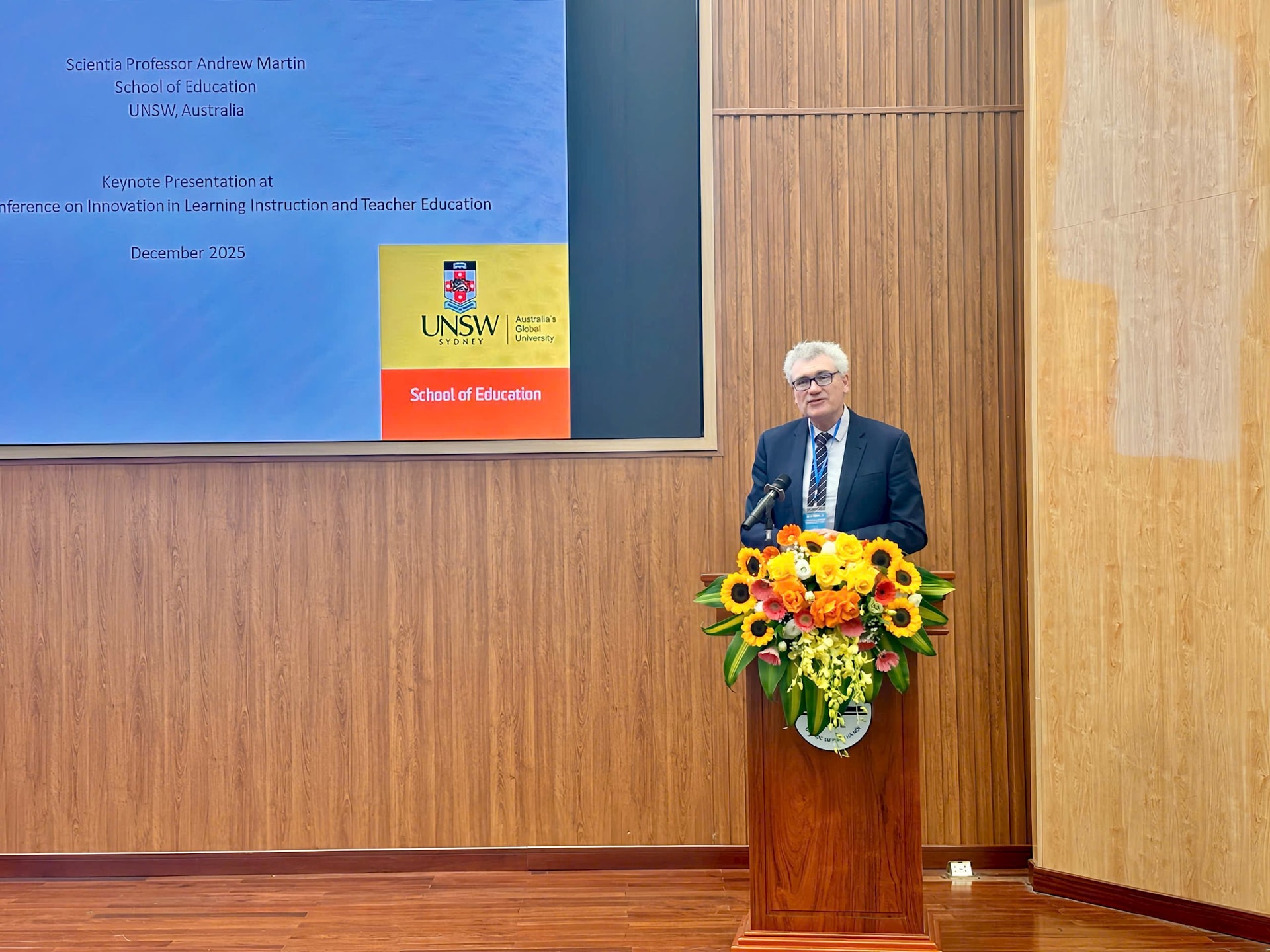
In his presentation, Prof. Dr. Andrew J. Martin from the University of New South Wales (Australia) analyzed the explosion of generative artificial intelligence in educational environments, while warning of the risk of creating a "cognitive load" for learners if AI is deployed spontaneously without pedagogical direction. Prof. Dr. Andrew J. Martin argued that applying a cognitive load reduction teaching approach is a crucial theoretical framework, helping teachers effectively harness AI to optimize the learning process for diverse learner groups. These analyses suggest a cautious but proactive approach to integrating AI into the classroom, rather than viewing technology as a replacement for the teacher's role.
From the perspective of teacher training, the presentation by Assoc. Prof. Dr. Nguyen Van Hien - Chairman of the University Council of Hanoi National University of Education focused on the shifting roles of pedagogical students in the AI era, from passive tool users to "AI-supported co-creators". The report pointed out that AI brings many benefits in personalizing learning and reducing teacher workload, but without control, it poses risks of academic fraud, personal data leaks, and the erosion of critical thinking.
According to Assoc. Prof. Dr. Nguyen Van Hien, teacher training programs need to focus on developing creative competence and critical thinking, in alignment with the UNESCO AI Competency Framework for Teachers, viewing AI as a support tool for pedagogical innovation rather than the starting point of the teaching process.
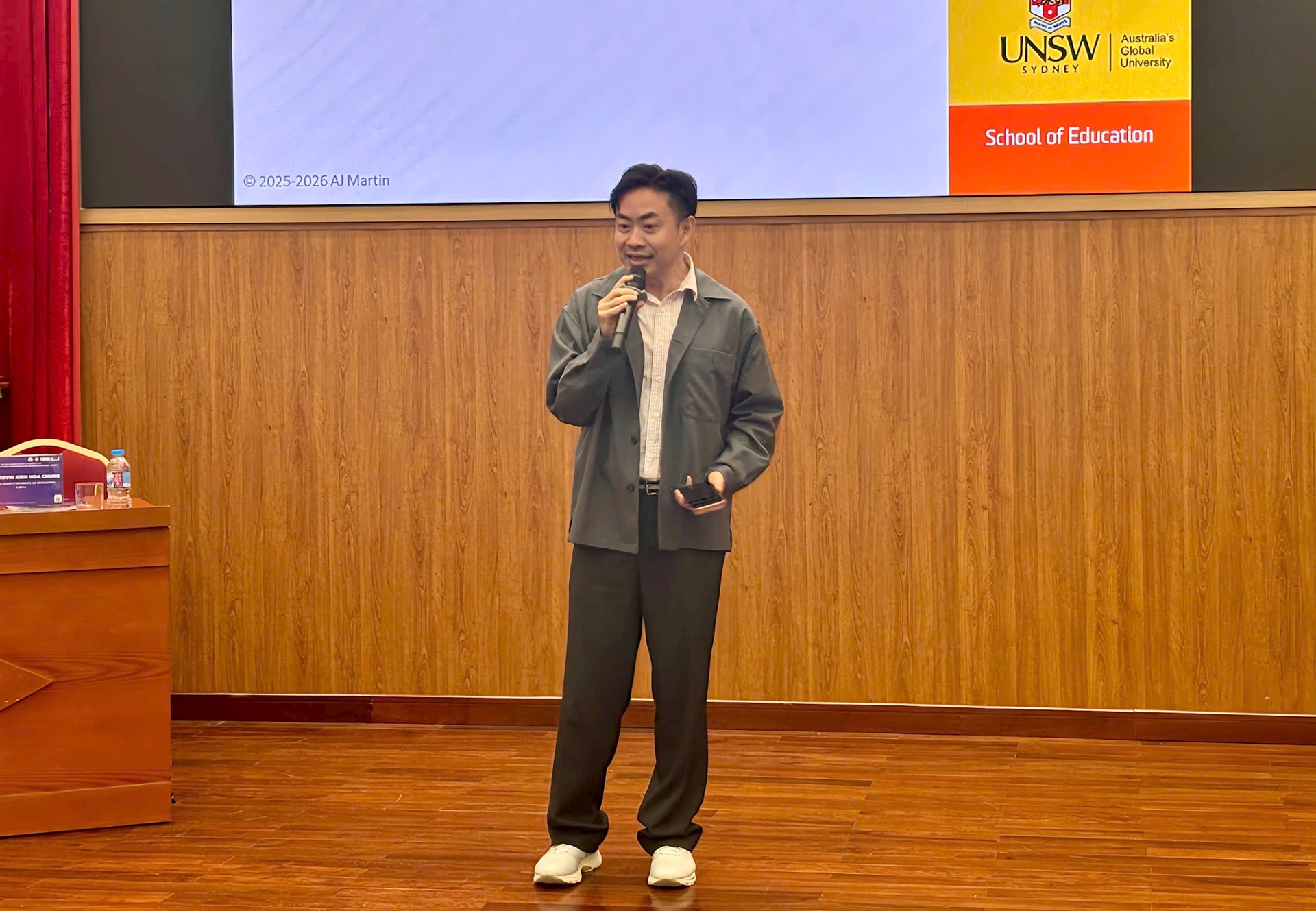
Additionally, Prof. Dr. Kevin Kien Hoa Chung from the Education University of Hong Kong (China) approached Education 4.0 from a comprehensive viewpoint, emphasizing the use of theory, data, and research to design pedagogical models that support learners with diverse needs. Prof. Dr. Kevin Kien Hoa Chung's analysis showed that education in the AI era requires close coordination between schools, teachers, and families to create systemic changes that help learners maximize their potential.
Alongside the plenary reports, more than 80 scientific papers presented in parallel sessions and posters enriched the conference's academic landscape. The research focused on digital transformation in education, the application of AI in STEAM education, training teachers to adapt to the AI era, inclusive education, and lifelong learning. Many opinions agreed that digital transformation is not just a technological issue but a comprehensive process of changing thinking, methods, and educational governance.
According to the Organizing Committee, the scientific arguments and practical experiences shared at the 4th ILITE will serve as an important basis for promoting innovation in teacher training programs while contributing to educational policy planning in the context where artificial intelligence is increasingly impacting social life. The Conference is expected to continue expanding international research cooperation networks, contributing to enhancing the position of Vietnamese educational science on the regional and global academic map./.
Copyright belongs to the Vietnam Journal of Science and Technology (VJST-MOST).