

Promoting traceability: the foundation for enhancing quality and increasing competitiveness for goods
In the context of deep integration and major markets continuously tightening technical barriers, traceability has become a mandatory requirement for Vietnamese enterprises. More than just a tool to transparently standardize the production process, traceability also contributes to building trust with consumers, protecting brands, and meeting the strict standards of the international market.
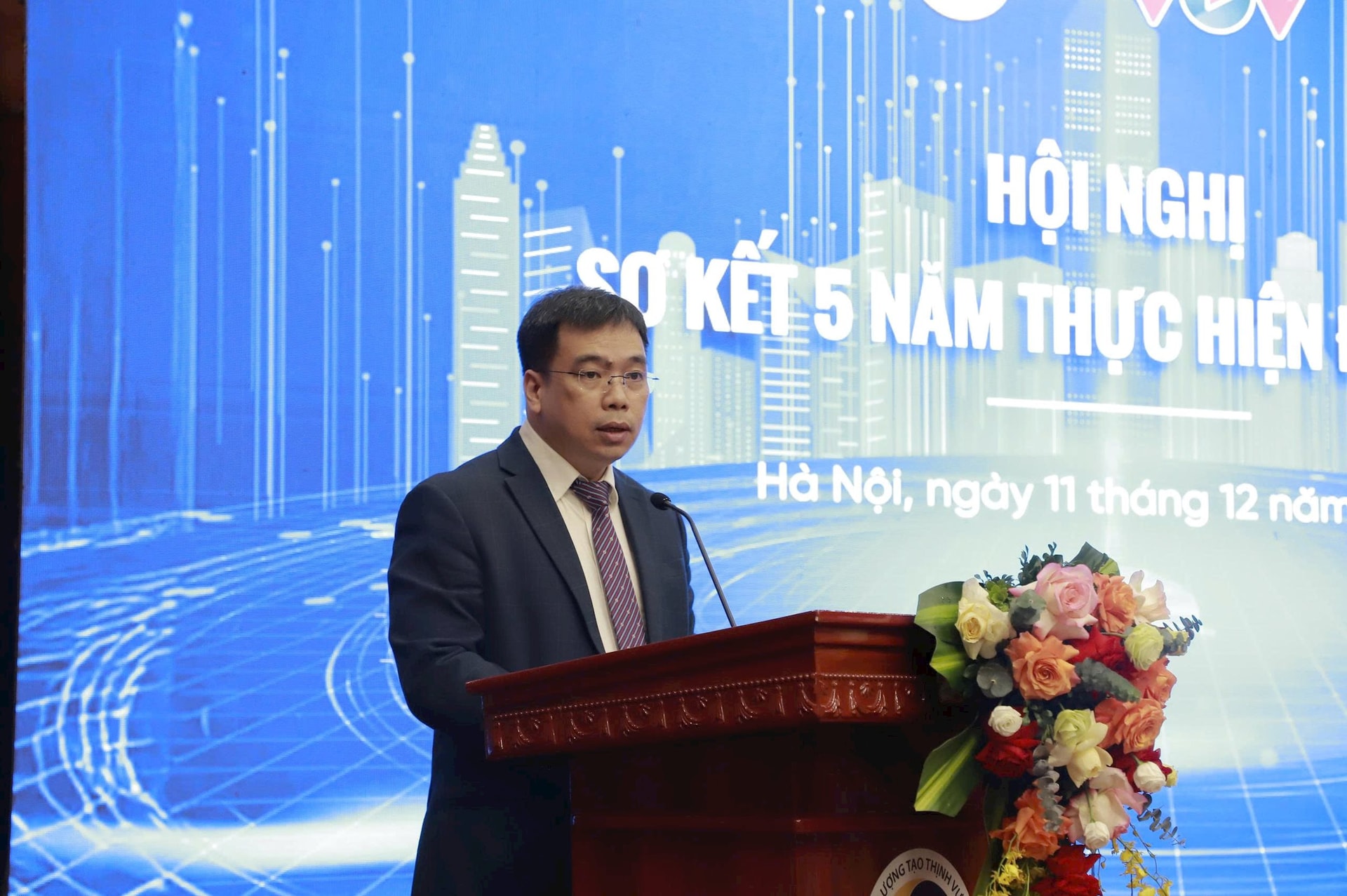
Speaking at the opening of the Conference "preliminary review of 5 years of implementing project 100" organized by the National Agency for Standardization, Metrology and Quality (National Quality Measurement Standards Committee) in coordination with the Voice of Vietnam Online Newspaper (Voice of Vietnam Radio) on 11 December, 2025, in Hanoi, Mr. Nguyen Nam Hai - Chairman of the National Quality Measurement Standards Committee (Ministry of Science and Technology) stated that, in the context of deepening globalization and international economic integration, transparency of product information and quality management of goods have become essential market requirements.
Traceability is not only a technical tool to enhance the capacity for food safety management and product quality, but also a prerequisite for Vietnamese goods to effectively participate in regional and global value chains, meeting the rigorous regulations of international partners.
Entering the phase of deep integration, especially when major markets such as Europe, the United States, Japan... are applying new regulations on eco-design, digital product passports, and mandatory traceability, Vietnam needs even more to affirm its position through advanced standards, reliable data systems, and the capacity for open, sustainable, and digitalized supply chain connectivity. This is both a challenge and an opportunity for Vietnamese goods to step faster and more firmly into the global supply chain.
Initial results
Reporting at the Conference, Mr. Bui Ba Chinh - Acting Director of the National Agency for Standardization, Metrology and Quality further noted that, on 19 January, 2019, the Prime Minister signed Decision No. 100/QD-TTg approving the scheme on deployment, application, and management of the traceability system (Project 100).
Regarding the implementation of Project 100, the Ministry of Science and Technology has proactively issued numerous documents to promote traceability. Typical examples include: Circular No. 02/2024/TT-BKHCN on managing the traceability of products and goods (implemented in 34 provinces/cities after consolidation); announcing 35 TCVN (National Standards) on traceability and tracing codes. Chairing the drafting of the Law amending the Law on Product and Goods Quality (passed by the National Assembly on June 18, 2025) which supplements traceability regulations...

The Ministry of Agriculture and Rural Environment also issued many circulars related to traceability in food, agriculture, forestry, and fishery products; the Ministry of Industry and Trade also issued Decision No. 1978/QD-BCT dated 28 July, 2020, on the plan for implementing the “scheme on deployment, application, and management of the traceability system for products and goods for the period up to 2025, with an orientation to 2030” ...
Mr. Chinh added that the National Agency for Standardization, Metrology and Quality has also built and operated a Traceability Information Management System to connect all participants in the supply chain, among ministries, sectors, localities, and enterprises. To date, 1.9 million products have been identified, 5,000 products have been declared with the full chain, 25,000 enterprises, cooperatives, and business households have deployed and applied the traceability system, and over 20 million traceability stamps and codes have been used.
In particular, the application of technologies such as blockchain, artificial intelligence (AI), internet of things (IoT), or electronic identification codes is a necessary step in the national digital transformation trend, contributing to enhancing transparency in both production and distribution.
If the legal framework creates the foundation, propaganda and training are the factors that help traceability spread widely and become practical. In recent years, many communication programs, workshops, and training courses have been implemented nationwide with the participation of industry associations, enterprises, cooperatives, and farmers. These activities help producers understand that traceability is not a cost burden, but a solution that brings long-term benefits.
Parallel to mass media communication, specialized training courses on the traceability system have also been enhanced. Many localities have coordinated with research institutes, universities, and international organizations to organize courses on national and international standards, data recording technology, supply chain management, and software application skills. Capacity building for technical staff and enterprises is considered an important stepping stone to forming a team mastering technology, limiting dependence on external providers.
The development of traceability in Vietnam cannot be separated from the general trend of the world. In recent years, management agencies have strengthened cooperation with many international partners on standardization, technology transfer, and mutual recognition in goods quality control. This is a necessary direction for Vietnamese goods to penetrate deeply into international markets.
In particular, promoting negotiations for mutual recognition in quality management and traceability helps reduce the cost of redundant inspection, shorten customs clearance time, and speed up the process of bringing products to market. This is an important advantage for Vietnamese enterprises to expand their international market share.
Some difficulties and development solutions
Although relatively good results have been achieved, they are not yet uniform, with some localities having only just issued plans or implemented limited measures. The large discrepancy in human resources, finance, information technology infrastructure... also leads to asynchronous implementation in different localities, regions, and areas.
Some sectors such as agriculture, fisheries, and processed food have achieved positive results, but there is still a significant gap in industries such as small-scale production, craft villages, and traditional distribution. Besides, the lack of synchronized digital infrastructure, high initial investment costs, traditional production habits, or the situation of non-interoperable systems cause difficulties in data management.
Speaking to direct the Conference, Deputy Minister of Science and Technology Le Xuan Dinh stated that Project 100 has proven the correctness of a major policy. The past 5 years have been a journey of unremitting effort by management agencies, ministries, sectors, localities, the business community, and the team of experts and scientists.
From a point where traceability was a relatively new concept, we have now built a relatively synchronous policy foundation, implementation model, and connection system, contributing significantly to product information transparency, consumer protection, and enhancing the competitiveness of Vietnamese goods.

In the coming period, Project 100 must shift from "deployment" to "breakthrough." It must shift from "piloting" to "standardization." It must shift from "technical connection" to "national data interoperability." To successfully achieve the goal by 2030, Deputy Minister Le Xuan Dinh requested the National Quality Measurement Standards Committee (the standing body assisting the Ministry of Science and Technology in state management of this sector) to coordinate with relevant units to implement the following key tasks:
One, completing the institution, creating a strong and synchronous legal framework. Effectively deploying circulars and decrees guiding the Law amending and supplementing a number of articles of the Law on Product and Goods Quality 2025 and the Law amending and supplementing a number of articles of the Law on Standards and Technical Regulations. In addition, completing the system of national standards and technical regulations towards transparency and international harmonization.
Two, developing a modern, secure, and internationally interoperable national digital platform for traceability. The national digital platform for traceability must be upgraded to ensure that data is collected, stored, and shared through a combination of centralized and decentralized approaches to effectively serve state management, support enterprises, and make information transparent for consumers. At the same time, it must be able to connect and interoperate specialized data with international traceability systems.
Three, encouraging enterprises, especially small and medium-sized enterprises, to digitally transform production and business processes associated with traceability. The Ministry of Science and Technology will continue to accompany and coordinate with localities to implement technical support programs, consult appropriate digital solutions, and simultaneously form pilot models by industry and by region. In addition, localities need to accelerate their support for enterprises even more. Departments and sectors must play a leading role in organizing, guiding, inspecting, and promoting implementation. There is no longer room for delay or formalistic implementation.
Four, building an innovation ecosystem for traceability. Creating conditions for technology enterprises to develop open, reasonably priced solutions; encouraging the application of AI, sensors, and blockchain to ensure data accuracy and transparency.
Five, raising social awareness to create consensus and widespread adoption. Traceability is not only for management but, more importantly, to protect consumers, affirm Vietnamese brands, and enhance the value of Vietnamese goods in the international arena./.
Copyright belongs to the Vietnam Journal of Science and Technology (VJST-MOST).