

The National Assembly passes the Law amending and supplementing a number of articles of the Law on Technology Transfer
The Law amending and supplementing a number of articles of the Law on Technology Transfer aims to build a modern, transparent, and efficient technology market; promote enterprise innovation, enhance technological capacity, and increase competitiveness in the context of globalization and digital transformation.
Promoting innovation
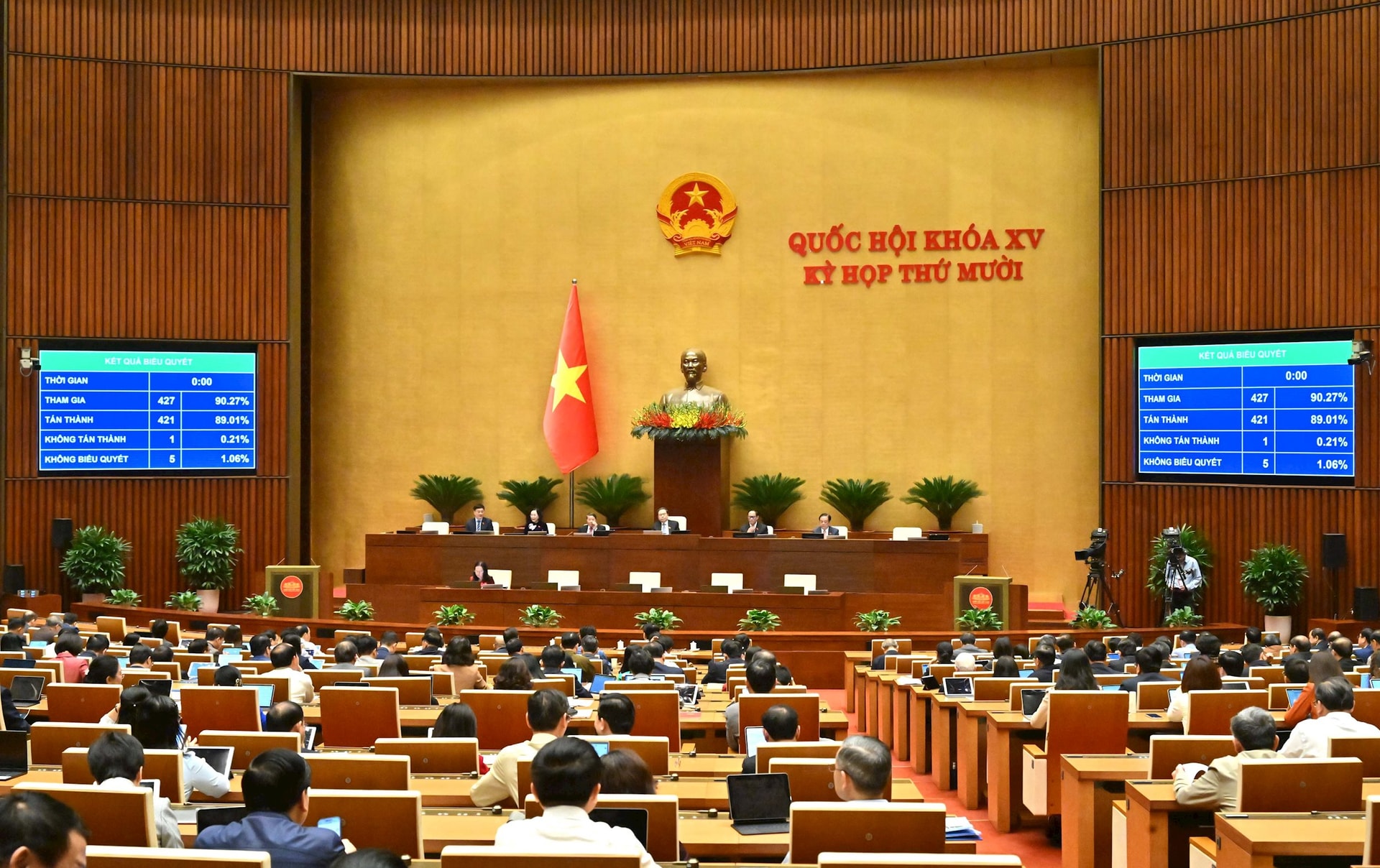
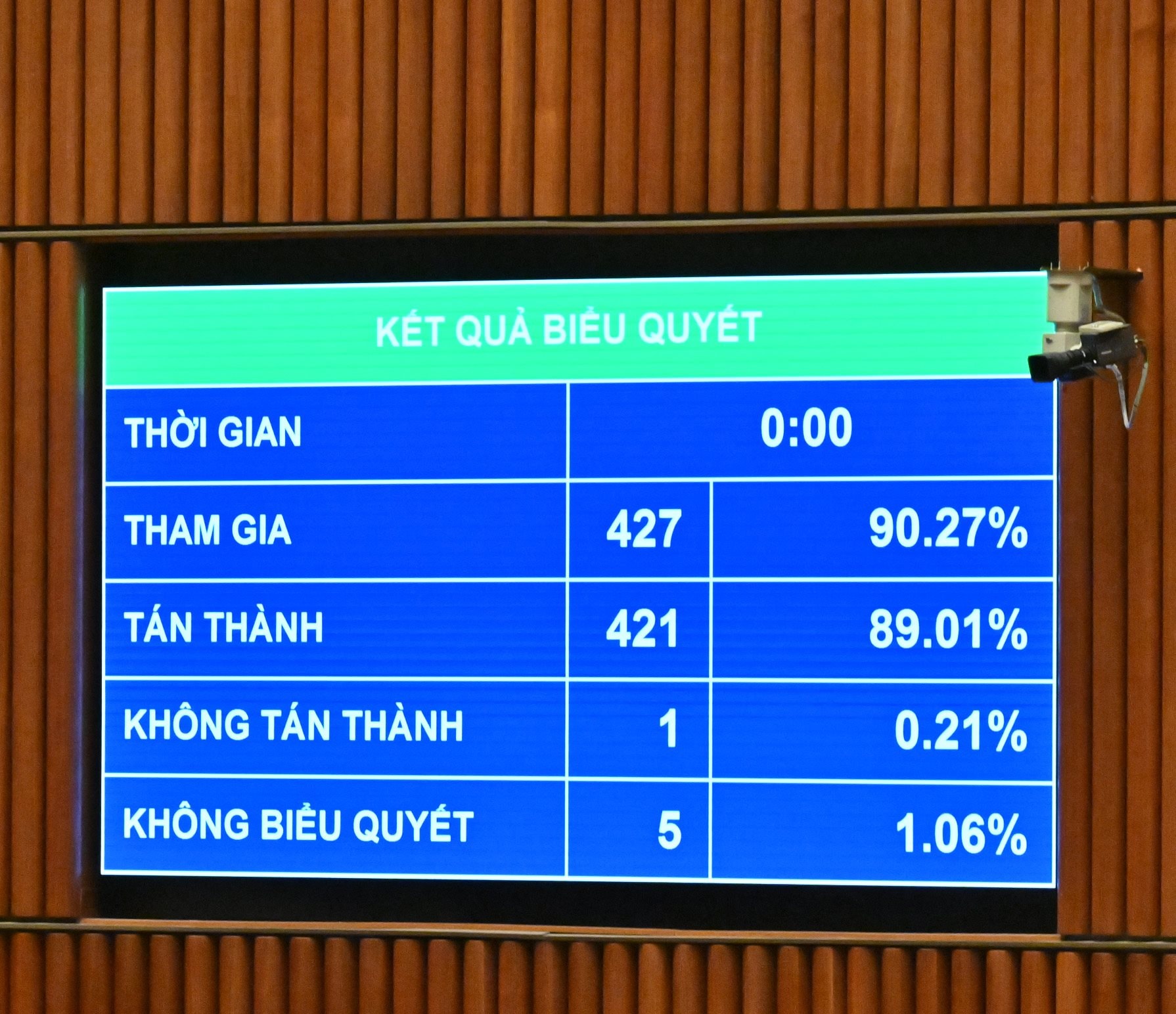
On the morning of 10 December, 2025, continuing the 10th Session of the 15th National Assembly, under the direction of National Assembly Vice Chairman Le Minh Hoan, the National Assembly passed the Law amending and supplementing a number of articles of the Law on Technology Transfer with 89.01% of the attending delegates voting in favor.
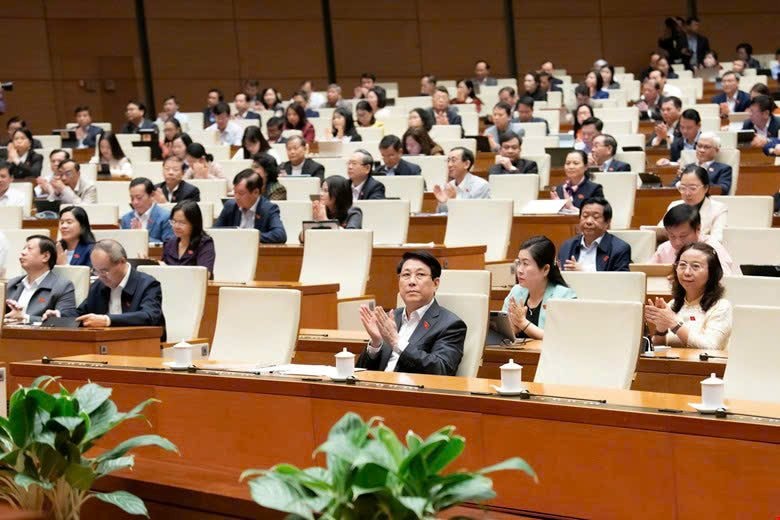
Before the vote, the National Assembly listened to the Minister of Science and Technology (S&T) Nguyen Manh Hung, authorized by the Prime Minister, presented a summary report on the assimilation, revision, and explanation of the draft Law amending and supplementing a number of articles of the Law on Technology Transfer.
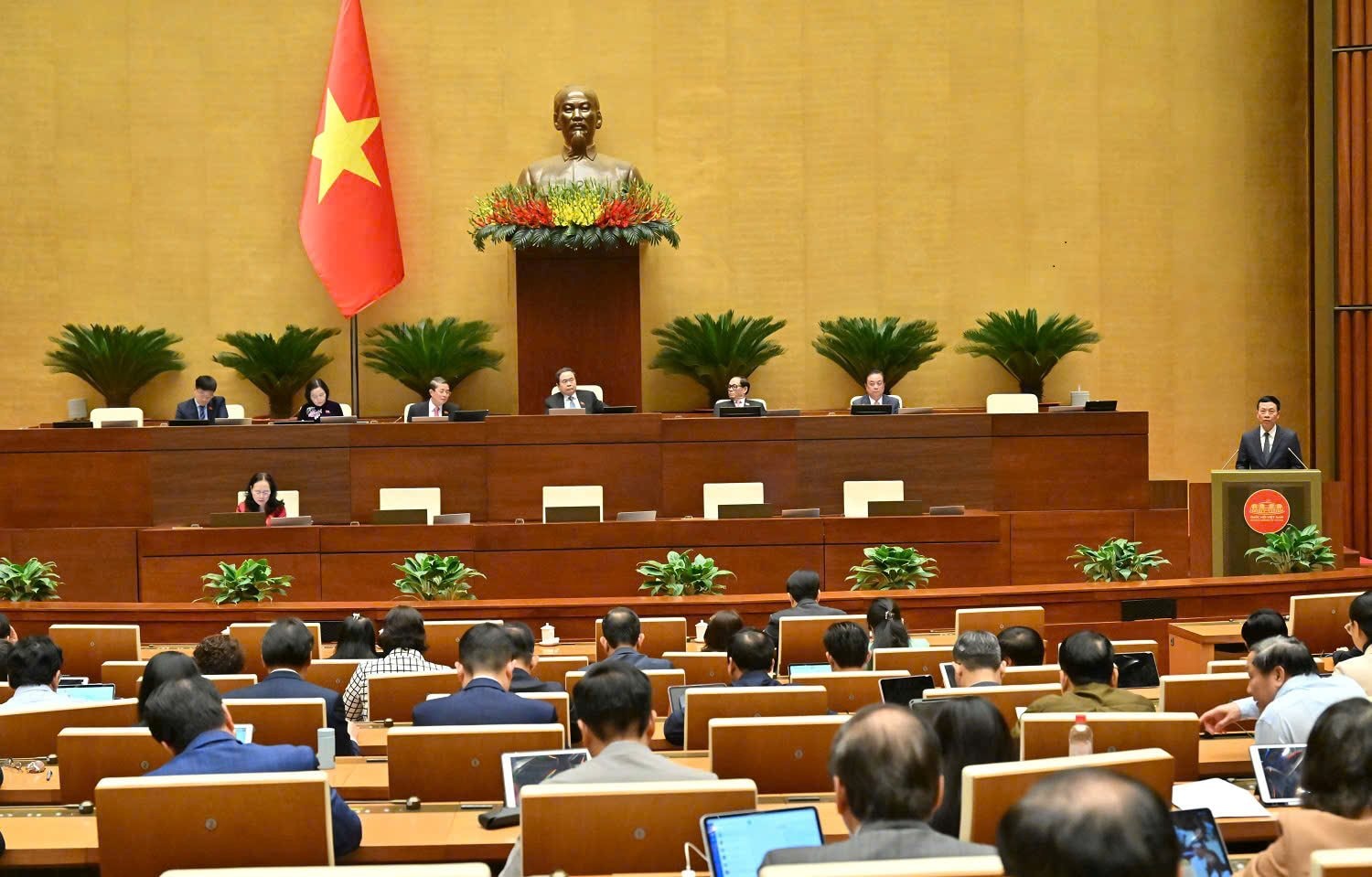
The Government reported on the assimilation and explanation of the opinions of National Assembly delegates, discussions in teams and in the hall, and the conclusions of the National Assembly Standing Committee on the Draft Law amending and supplementing a number of articles of the Law on Technology Transfer.
The draft Law submitted to the National Assembly for approval at the session fully assimilated the opinions of National Assembly delegates, relevant agencies, the conclusions of the National Assembly Standing Committee, and the opinions of Government members.
After assimilation, explanation, and revision, the Draft Law modified 21 articles, added 1 new article, and abolished 9 articles. The content of the articles and clauses of the draft Law has relatively fully institutionalized the new policies and guidelines of the Party; meeting the requirements and goals for amending and supplementing the Law.

This Draft Law on Technology Transfer aims to build a modern, transparent, and efficient technology market, while promoting enterprise innovation, enhancing technological capacity, and increasing competitiveness in the context of globalization and digital transformation.
Regarding the subject of technology, the draft broadens the concept, not only limiting it to machinery and equipment but also including knowledge, data, designs, models, algorithms, software, and artificial intelligence, treating them all as technological subjects in the full sense.
The draft also clearly stipulates forms of transferring technology documents, quality management processes, standards, and technical parameters, reflecting the current technology trend where added value is concentrated in intangible assets, flexible innovation models, and digital solutions.
Regarding the ownership and use rights of technology, the draft completes the regulations on establishing and protecting rights in accordance with the laws on intellectual property, science, technology and innovation, management of public assets, civil law, relevant laws, and international treaties. Organizations and individuals with legal ownership or use rights of technology are entitled to commercialize the technology or contribute the technology as capital to investment projects or enterprises.
Developing intermediary organizations - a key factor in the technology market
The Law amending and supplementing a number of articles of the Law on Technology Transfer has been finalized to be comprehensive, modern, and suitable for the development requirements of the digital economy. The Law focuses on clarifying concepts, expanding the scope of regulation, and increasing transparency in technology transactions.
This amendment aims to resolve long-standing difficulties in commercializing research results, connecting technology supply and demand, and expanding opportunities for cooperation between domestic and foreign entities. One of the important changes is the shift in approach from "control" to "promoting innovation," creating a more open and flexible legal environment for technology transfer activities.
Under the new orientation, technology is not only a means of production but is considered a valuable asset that can be valued, contributed as capital, commercialized, and profits can be transparently shared. Regulations related to technology valuation, contribution of technology as capital, and risk-sharing mechanisms in research and development (R&D) cooperation are clarified, creating a foundation for the healthy and substantive development of the technology market.
Risk management and technology appraisal are contents of interest to many delegates. The policy of the Party and State is to control obsolete technology and technology that poses a risk of harm to health and the environment. The Law stipulates that technology appraisal is only applied to projects using technology restricted from transfer or those with potential negative environmental impact, aimed at preventing risks from the outset. This aligns with the principle of protecting the environment and public health, as the consequences, if they occur, will be difficult to overcome and much more costly than early control.
Another important content is the decentralization of technology appraisal to localities. Decentralization is only effective when accompanied by clear national criteria, public disclosure of appraisal results, and the right to supervision and post-inspection by state management agencies. Post-inspection is enhanced to prevent risks such as inflated technology prices, acceptance of obsolete technology, or technology that causes environmental pollution, but without creating barriers to the innovation activities of enterprises.
The Law also focuses on developing intermediary organizations, a key factor in the technology market. Organizations for brokerage, consulting, technology assessment, valuation, and connecting supply and demand are supported to develop more professionally and transparently. The establishment of technology trading floors and support mechanisms for innovation will overcome long-standing weaknesses in the intermediary ecosystem, creating a foundation for the smooth operation of the market.
To enhance the capacity for state management in the context of rapidly changing technology, the Law focuses on comprehensive digital transformation in monitoring, statistics, and public disclosure of technology transfer and high-tech activities. Detailed, quantitative regulations will be guided by the Government to ensure flexibility and timeliness with practical realities. The State continues to apply a post-inspection mechanism with strong sanctions, while paying attention to the entire technology lifecycle from research, development, testing to application, and especially the commercialization phase.

The Law amending and supplementing a number of articles of the Law on Technology Transfer both ensures risk control and facilitates investment activities, while promoting innovation, enhancing technological capacity, and national competitiveness.
The amendment of the Law on Technology Transfer is considered an important step in perfecting the institutions, unblocking the flow of technology, and promoting a knowledge-based economy.
The Law amending and supplementing a number of articles of the Law on Technology Transfer, once passed and implemented synchronously with related laws such as the Law on Science, Technology and Innovation, the Law on Intellectual Property, the Law on Investment, and the Law on Enterprises, will form a modern, transparent, and effective legal framework for the entire process of technology commercialization./.
Copyright belongs to the Vietnam Journal of Science and Technology (VJST-MOST).