
General Secretary and President To Lam: Vietnam and Australia to develop and implement a long-term strategy for connecting science, technology, and innovation
General Secretary and President To Lam proposed that Vietnam and Australia develop and implement a strategy to connect their science, technology, and innovation sectors with a long-term vision, regarding this as a new pillar of the Vietnam-Australia Comprehensive Strategic Partnership.
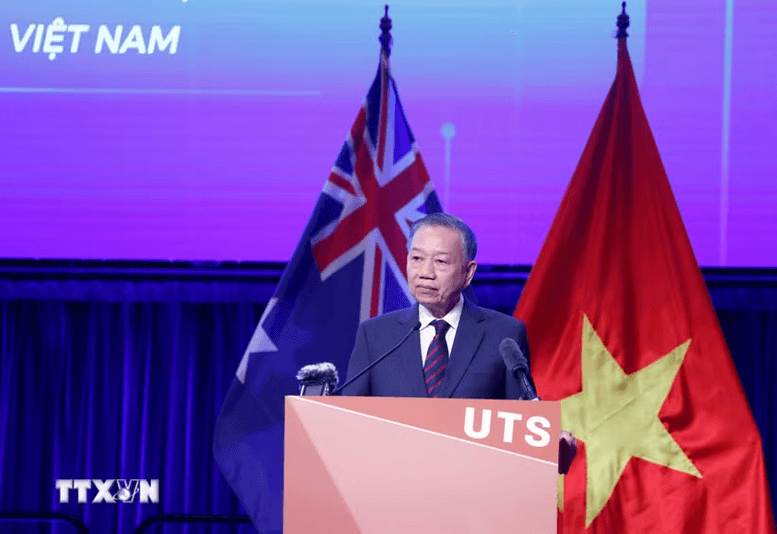
On the morning of August 10 (local time), within the framework of his state visit to Australia, the Vietnam Ministry of Foreign Affairs, the Ministry of Science and Technology, and the Ministry of Education and Training - in collaboration with the University of Technology Sydney (Australia) - organized the Vietnam-Australia Forum on Science, Technology, Innovation, Investment, Education, Training, and Human Resource Development. General Secretary and President To Lam attended and delivered a speech at the forum.
Also attending the forum were Australian Assistant Minister for Foreign Affairs, Trade and Immigration Matt Thistlethwaite; senior officials from both Vietnam and Australia; and over 500 representatives comprising scientists, business leaders, university and research institute delegates, and policymakers from both nations.
In his keynote address, Minister of Science and Technology Vu Hai Quan proposed that both sides focus investment resources on areas of strength and strategic technologies - such as artificial intelligence (AI), semiconductors, cybersecurity, quantum technology, biotechnology, clean energy, and, notably, marine technology.
It is crucial that every research project establishes a seamless cooperation chain spanning from market needs and testing to commercialization.
Both sides need to continue developing the Strategic Technology Center into a shared platform while connecting venture capital funds and technology funding sources, thereby enabling outstanding inventions to move directly from the laboratory to the market.
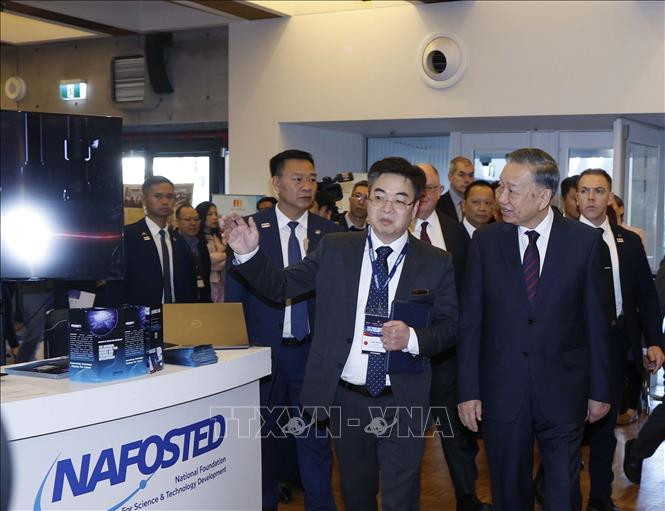
The two sides are stepping up cooperation in the digital economy and digital transformation, linked to promoting commercialization and market connectivity for businesses; they need to jointly select specific sectors and enterprises - particularly small and medium-sized enterprises (SMEs) - to implement digital transformation and AI application projects.
Each project will simultaneously address practical business challenges and provide data-backed evidence to help the government formulate better policies.
Vietnam and Australia share a particularly favorable foundation in education and people-to-people ties. Australia boasts strong universities and research institutions, while Vietnam possesses a young engineering workforce, rapidly growing technology enterprises, and a large community of Vietnamese intellectuals in Australia.
The two sides can develop joint research groups, joint laboratories, and programs enabling scientists to collaborate directly with businesses.
Speaking at the forum, Australian Assistant Minister for Foreign Affairs, Trade and Immigration Matt Thistlethwaite emphasized that advancements in science and technology lie at the heart of human progress, economic growth, and improvements in the quality of life.
For Vietnam, science and technology will drive sustained economic development, and innovation remains central to national growth plans.
Highly valuing the Politburo’s Resolution No. 57-NQ/TW on breakthroughs in national science, technology, innovation, and digital transformation, Assistant Minister Matt Thistlethwaite noted that scientific and technological progress would help nations move forward and overcome the obstacles lying ahead. Within the framework of the Vietnam-Australia Comprehensive Strategic Partnership and Australia’s Southeast Asia Economic Strategy to 2040, the two sides are exploring further avenues for collaboration and increased investment in science, research, and innovation, prioritizing bilateral initiatives that foster economic outcomes, social inclusion, and sustainable, environmentally conscious development.
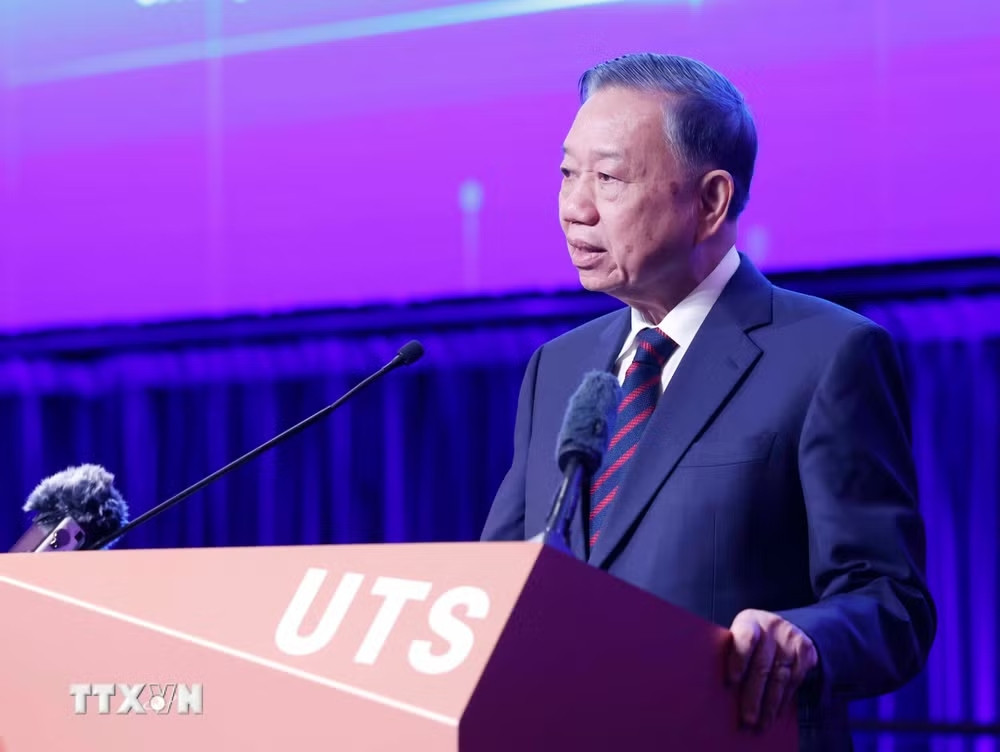
Speaking at the forum, General Secretary and President To Lam emphasized that this initiative holds special significance as the Comprehensive Strategic Partnership between Vietnam and Australia continues to flourish, deepening in substance and effectiveness - particularly in sectors that will determine the competitiveness and prosperity of both nations for decades to come.
He stated that for Vietnam, the development of science, technology, innovation, and high-quality human resources is no longer merely an option but an imperative requirement for realizing the aspiration to become a developed, high-income nation by 2045.
The Party and State of Vietnam have established a new development model in which knowledge, science, technology, innovation, digital transformation, and international integration are identified as the primary drivers of economic growth.
Key policies recently adopted by the Central Committee of the Communist Party of Vietnam reaffirm the determination to innovate development thinking, refine institutions, and build an independent, self-reliant economy deeply integrated into the global system. These policies also aim to vigorously promote the private sector and effectively attract international resources - specifically high-quality investment capital, advanced technology, modern management expertise, and high-quality human resources.
Vietnam is making a strong shift from a focus on attracting investment to cooperation for mutual development; from technology adoption to co-creation; and from mere participation in value chains to gradually securing higher value-added positions within global value chains. Australia is a partner with significant strengths that Vietnam particularly values and wishes to partner with in its development process. The two countries possess strategic advantages and complementary factors that align naturally.
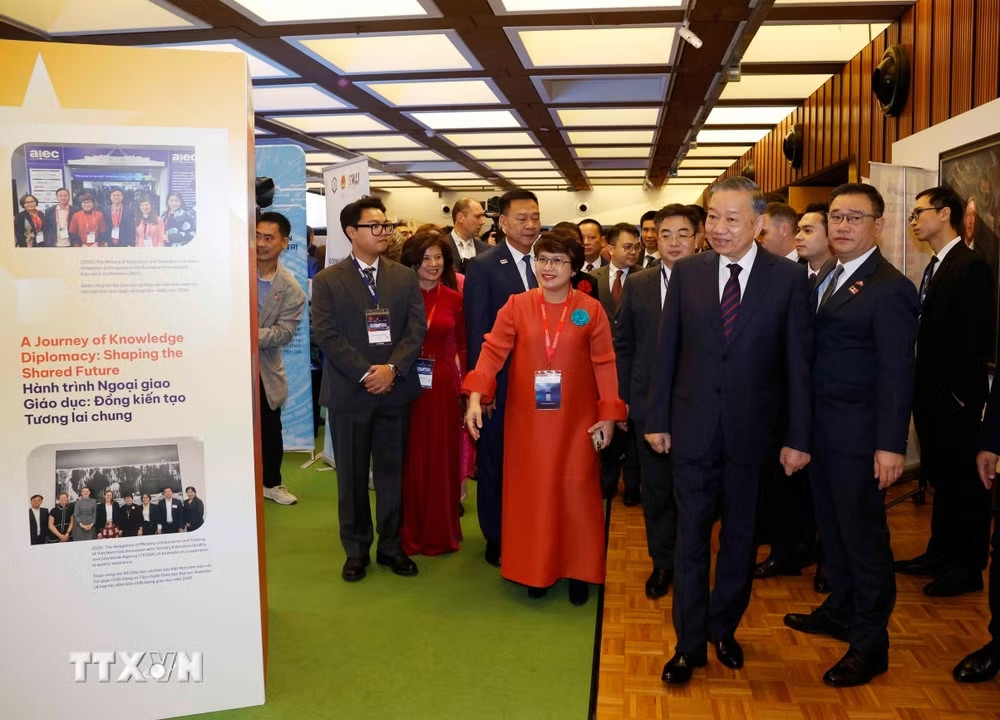
General Secretary and President To Lam wishes to share a vision for a stronger, deeper, and more strategic partnership between Vietnam and Australia in the fields of science, technology, innovation, and human resource development.
The two countries need to shift from cooperation to co-creation, from technology transfer to joint research and development, and from connecting individual organizations to linking their respective innovation ecosystems. The goal is to build a regional-scale innovation ecosystem where enterprises, universities, research institutes, and investment funds connect, innovate, and grow together.
General Secretary and President To Lam proposed that the two countries develop and implement a long-term strategy for connectivity in science, technology, and innovation, establishing this as a new pillar of the Vietnam-Australia Comprehensive Strategic Partnership.
The two countries should expand joint research programs and strengthen connections among research centers, universities, enterprises, and innovation investment funds. They should also form joint research cooperation networks in priority areas such as AI, semiconductors, digital technology, biotechnology, quantum technology, clean energy, strategic minerals, and the marine economy.
Vietnam and Australia should promote two-way investment in high-tech sectors; establish research and development (R&D) centers, joint laboratories, business incubators, and innovation projects with commercialization potential; and foster financial support mechanisms for joint research and the sharing of research risks, aiming for co-development and co-investment.
Vietnam encourages high-quality investment from Australia into the Vietnamese market; ...developing green financial products, digital infrastructure, data centers, and innovation hubs, while enhancing technical assistance and experience-sharing regarding the development of an international financial center in Vietnam.
The two countries will expand cooperation in high-quality human resource training - particularly for engineers, scientists, technology experts, and innovation managers - and strongly encourage the exchange of students, researchers, and experts. They will foster close linkages between training, research, and business needs, while promoting bilateral mechanisms and annual forums for policy dialogue, experience-sharing, and collaborative initiatives that connect the "triple helix" stakeholders: the state, academia, and the business sector.
General Secretary and President To Lam expressed confidence that, with the determination of both governments and the active participation of the business community, universities, research institutes, and scientists, the two sides will achieve breakthroughs that help establish the Vietnam-Australia relationship as a model of cooperation in science, technology, innovation, and human resource development - both regionally and globally.
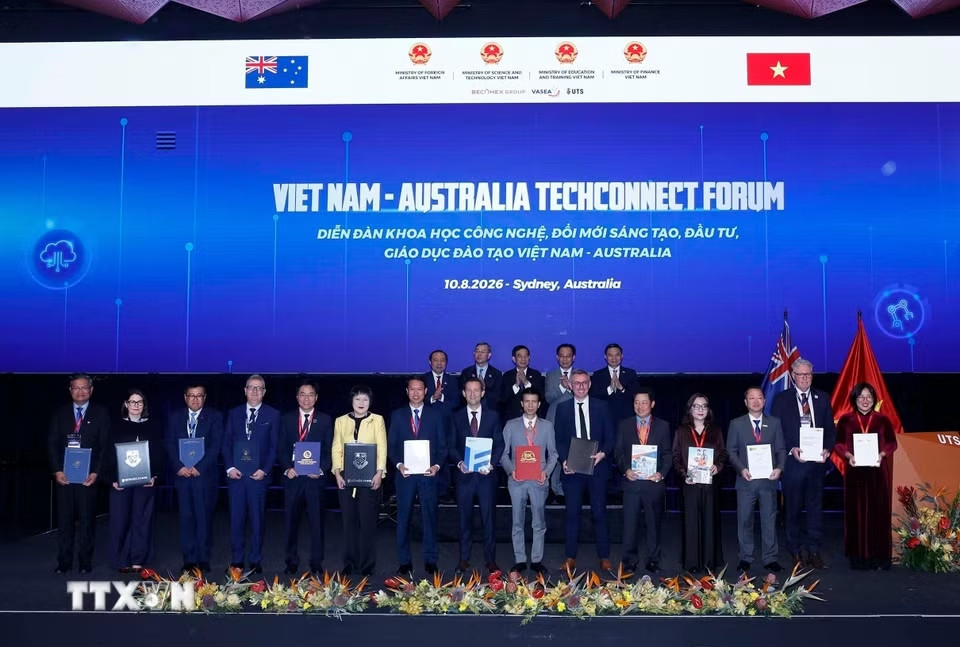
At the forum, businesses from both countries exchanged cooperation documents and announced new initiatives.
On this occasion, Vietjet Aviation Joint Stock Company officially signed a cooperation agreement with Western Sydney International Airport (Australia) and announced the launch of a direct flight route from Ho Chi Minh City to the airport starting in January 2027. This move contributes to boosting the economy, investment, trade, tourism, and people-to-people exchanges, thereby giving substance to the Comprehensive Strategic Partnership between Vietnam and Australia./.
Copyright belongs to the Vietnam Journal of Science and Technology (VJST-MOST)