
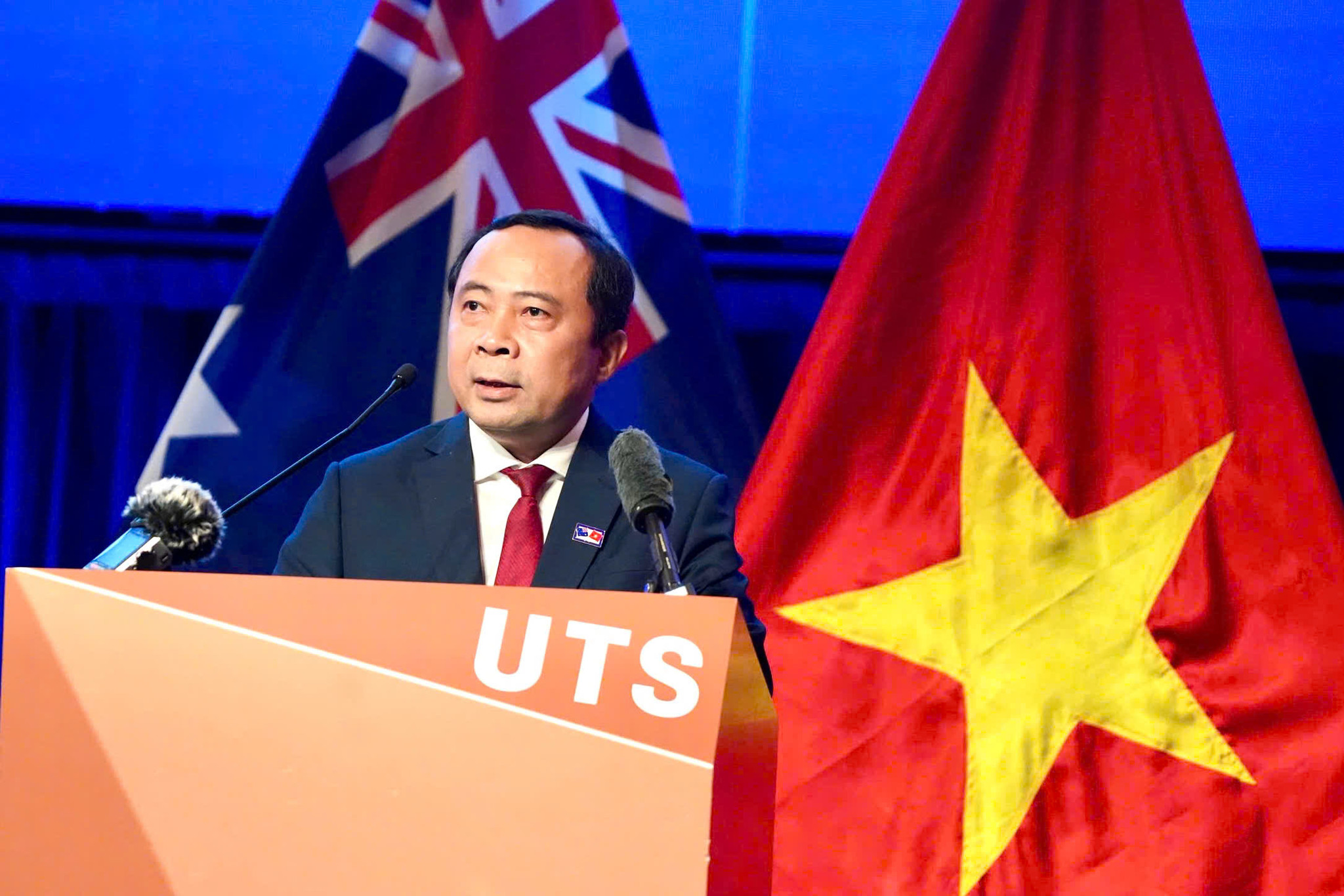
Minister Vu Hai Quan: Vietnam and Australia need to focus resources on AI, semiconductors, cybersecurity, and more
Speaking at the Vietnam-Australia Forum on Science, Technology, Innovation, Investment, Education, Training, and Human Resource Development (Tech-Connect 2026), Minister of Science and Technology Vu Hai Quan stated that both sides need to concentrate resources on AI, semiconductors, cybersecurity, quantum technology, biotechnology, clean energy, and marine technology.
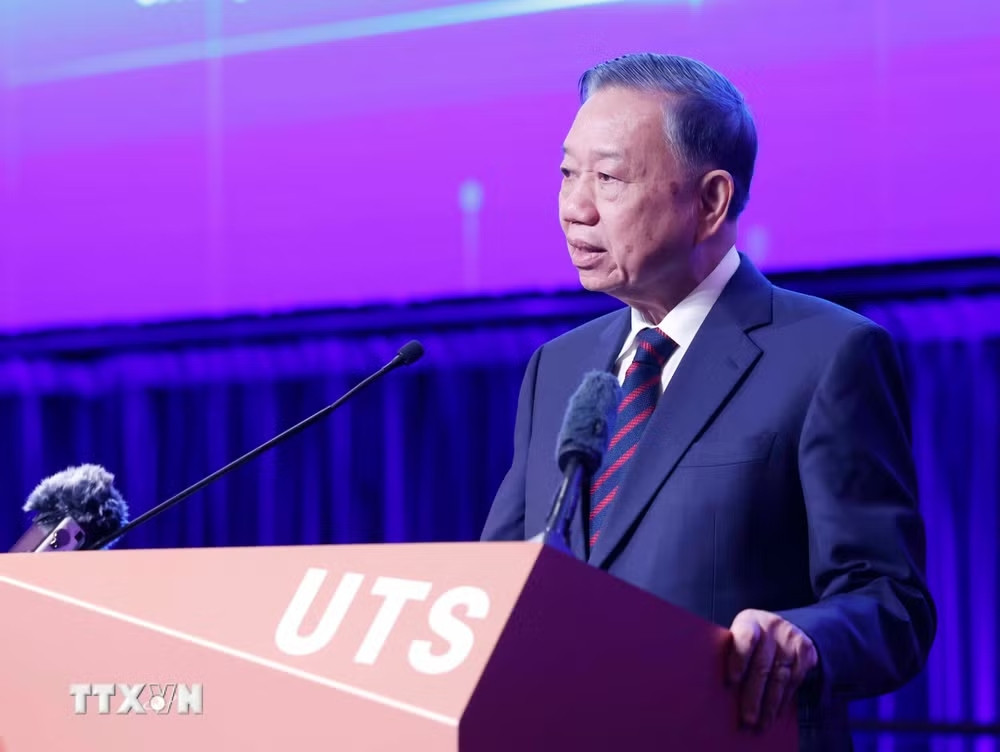
As part of the state visit to Australia, on the morning of August 10 (local time), the Ministry of Foreign Affairs, the Ministry of Science and Technology, and the Ministry of Education and Training of Vietnam, in collaboration with the University of Technology Sydney (Australia), organized the Vietnam-Australia Forum on Science, Technology, Innovation, Investment, Education, Training, and Human Resource Development (Tech-Connect 2026).
Speaking at the forum, Minister of Science and Technology Vu Hai Quan emphasized that, given that Vietnam and Australia have become Comprehensive Strategic Partners, the fields of science, technology, innovation, digital transformation, and education are increasingly affirming their vital roles.
According to the Minister, the two countries have established a robust foundation for cooperation. They are implementing the Aus4Innovation program - a 10-year initiative (2018 - 2028) - which serves as an effective bridge connecting regulatory bodies, research institutes, and businesses. The Australia-Vietnam Strategic Technology Center is expanding its research scope from 5G/6G to include AI, semiconductors, cybersecurity, and quantum technology.
Most recently, Vietnam’s Ministry of Science and Technology approved a research cooperation program focused on strategic technologies for the 2026 - 2028 period.
Concurrently, the two nations are set to sign a cooperation agreement on the digital economy and a research cooperation agreement on sustainable fisheries development in Vietnam; these moves aim to operationalize Resolution 20-NQ/TW - issued by the Third Plenum of the 14th Party Central Committee - regarding building and developing Vietnam into a strong maritime nation...
With the foundation already in place, Minister Vu Hai Quan emphasized that the next step is to connect programs, research facilities, capital sources, and markets into a collaborative system that generates greater impact. To achieve this, the new phase requires three shifts:
First, shifting from the exchange of experiences to the joint identification and resolution of major development challenges facing both nations.
Second, shifting from technology transfer to joint research, co-financing, and the creation of intellectual property and new products.
Third, shifting from isolated projects to the construction of a long-term collaborative ecosystem.
In this spirit, Minister Vu Hai Quan proposed three key areas of cooperation for the forum to discuss:
First, joint research and development of strategic technologies, placing enterprises at the heart of the innovation chain.
Both sides need to focus resources on AI, semiconductors, cybersecurity, quantum technology, biotechnology, clean energy, and marine technology. Crucially, every research initiative must establish a seamless collaborative chain - spanning from market needs and testing to commercialization.
Both sides need to continue developing the Strategic Technology Center into a shared platform while connecting venture capital funds and technology investment sources, thereby enabling outstanding inventions to move directly from the laboratory to the market.
In 2026, Vietnam will provide $1 million in funding to the Center for Critical Technologies and approximately $3 million for 10 joint research projects on critical technologies - selected from over 100 proposals received by the Ministry of Science and Technology.
Secondly, there is a need to accelerate cooperation in the digital economy and digital transformation, while simultaneously promoting commercialization and market connectivity for businesses.
Vietnam and Australia should jointly select specific sectors and enterprises to implement digital transformation projects and AI applications.
Each project will address practical business challenges while providing the evidence and data necessary for the Government to formulate better policies. This approach ensures that the digital economy cooperation framework - set to be signed by both sides - yields tangible results immediately.
Thirdly, there must be joint investment in human capital and long-term research capabilities.
Vietnam and Australia enjoy a particularly favorable foundation regarding education and people-to-people ties. Australia boasts strong universities and research institutions, while Vietnam possesses a young engineering workforce, rapidly growing technology enterprises, and a large community of Vietnamese intellectuals in Australia. The two sides can develop joint research groups, shared laboratories, and programs that enable scientists to work directly with businesses.
The Minister addressed Vietnamese students and scientists currently studying and working in Australia, noting that Vietnam is implementing policies to attract talent for research aimed at mastering critical technologies. Notably, compensation policies have been formulated by the Ministry of Science and Technology with reference to the pay scales at A*STAR (Singapore), and the list of national testing centers and key national laboratories has been officially issued.
"Universities and research institutes have opened their doors. You can return home or collaborate with domestic research groups to develop critical technologies. Regardless of where you are, the ultimate goal is a prosperous and strong Vietnam”, Minister Vu Hai Quan shared.
“Australia possesses an advanced scientific sector and experience in commercializing research applications. Under the leadership of the Party - headed by General Secretary and President To Lam - Vietnam is transitioning to a growth model driven by science, technology, innovation, and digital transformation; it is a dynamic economy with countless challenges requiring technological solutions. This represents the strategic complementarity identified by both sides”, Minister Vu Hai Quan emphasized.
The Minister expressed his hope that Tech-Connect would become a platform where ideas meet implementers, challenges meet technological solutions, and research outcomes connect with enterprises and the market./.
Copyright belongs to the Vietnam Journal of Science and Technology (VJST-MOST)